Assessing the readability and quality of online written information on epistaxis
ZR Almansoor, R Abrar, H Raja

TL;DR
This study evaluated the quality and readability of online information about nosebleeds and found it to be generally poor.
Contribution
The study provides a novel assessment of online epistaxis resources using readability and quality metrics.
Findings
Online epistaxis information has a mean DISCERN quality score of 34.3, indicating poor quality.
Readability scores suggest the content is difficult to understand for the average reader.
A weak negative correlation was found between content quality and readability.
Abstract
The objective of this study was to assess the readability and quality of online written information on epistaxis. The terms ‘epistaxis’ and ‘nosebleed’ were entered into Google. The first six webpages generated for each search term were screened. Readability was assessed using the Flesch–Kincaid Reading Ease Score (FRES), Flesch–Kincaid Grade Level (FKGL), Simple Measure of Gobbledygook (SMOG) Index and Gunning Fog Index (GFOG). Quality was assessed using the DISCERN instrument. Spearman’s correlation between quality and readability was calculated. A total of 37 websites met the inclusion criteria. The mean and 95% confidence intervals for FRES, FKGL, SMOG and GFOG were 58.9 (55.3–62.5), 9.65 (8.74–10.6), 9.18 (8.57–9.8) and 12.5 (11.5–13.5), respectively. The DISCERN score was 34.3 (32.0–36.5). Weak negative correlation was noted between DISCERN and FRES (rs = −0.15, p = 0.36).…
Genes, proteins, chemicals, diseases, species, mutations and cell lines named across the full text — each resolved to its canonical identifier and authoritative record.
Click any figure to enlarge with its caption.
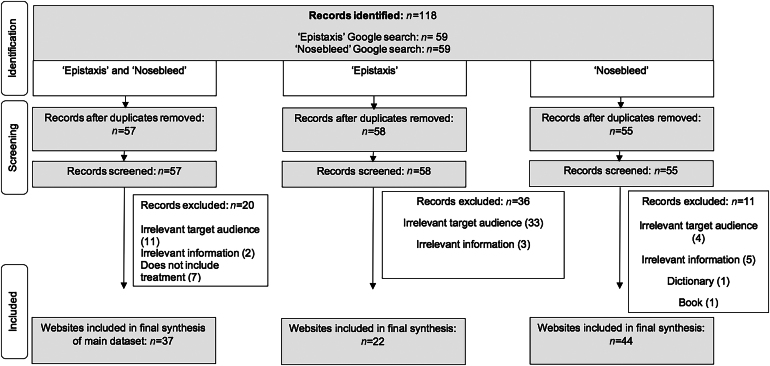 Figure 1
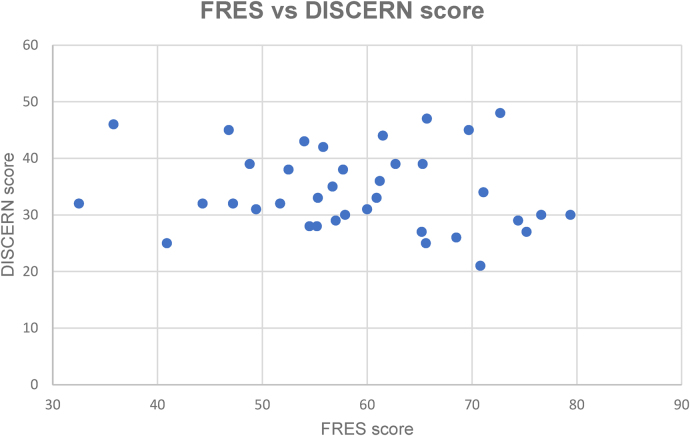 Figure 2
Peer Reviews
No public reviews on file for this paper yet. If you reviewed it on a platform where reviews are public (OpenReview, ICLR, NeurIPS, ICML), you can paste yours below so the community can read it here.
Videos
No videos yet. Explain this paper in a talk, walkthrough, or lecture? Add one.
Taxonomy
TopicsDigital Communication and Language · Vascular Anomalies and Treatments · Health Literacy and Information Accessibility