Development of a Novel Surgical Method for Endoscopic Flexor Tendon Repair: Stage 0 (Preclinical) Cadaveric Case Report and Study Protocol Following the IDEAL-D Framework
Takeru Yokota, Takuya Kameda, Nobuyuki Sasaki, Miho Sekiguchi, Yoshihiro Matsumoto

TL;DR
This paper introduces a new endoscopic technique for repairing hand tendon injuries using a preclinical cadaveric study and outlines a research protocol to evaluate its effectiveness.
Contribution
A novel endoscopic flexor tendon repair method is proposed and tested in cadavers for the first time.
Findings
The loop suture technique successfully facilitated tendon gliding and withstood 5 N tension without neurovascular injuries.
The study protocol outlines primary and secondary outcomes for evaluating the success and precision of the endoscopic repair method.
Descriptive statistics with 95% confidence intervals will be used to analyze the results of the cadaveric trials.
Abstract
Flexor tendon injuries of the hand are challenging to treat, with open surgical repair causing tissue damage, postoperative edema, and range-of-motion limitations. Minimally invasive endoscopic techniques may address these issues, but no reports describe endoscopic tendon suturing. This IDEAL-D Stage 0 (Preclinical) study presents a cadaveric case report and research protocol for a novel endoscopic flexor tendon repair technique. The case report used the left ring finger of an 88-year-old male cadaver, employing a loop suture technique under endoscopic guidance to visualize and suture tendon ends. Sutures facilitated tendon gliding, withstood 5 N tension, and caused no neurovascular injuries. The protocol involves five cadaver specimens from Fukushima Medical University, excluding those with deformities or prior hand injuries. The primary outcome is the success rate of endoscopic…
Genes, proteins, chemicals, diseases, species, mutations and cell lines named across the full text — each resolved to its canonical identifier and authoritative record.
Click any figure to enlarge with its caption.
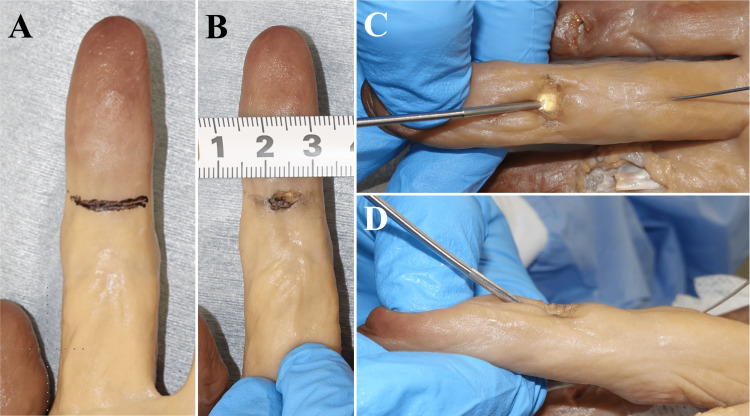 Figure 1
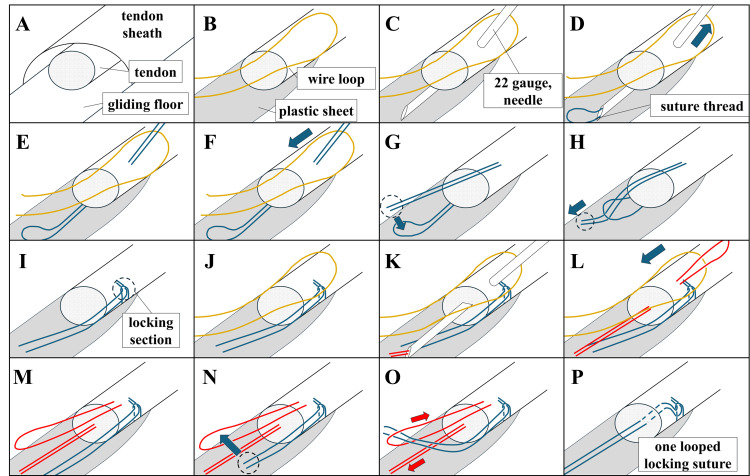 Figure 2
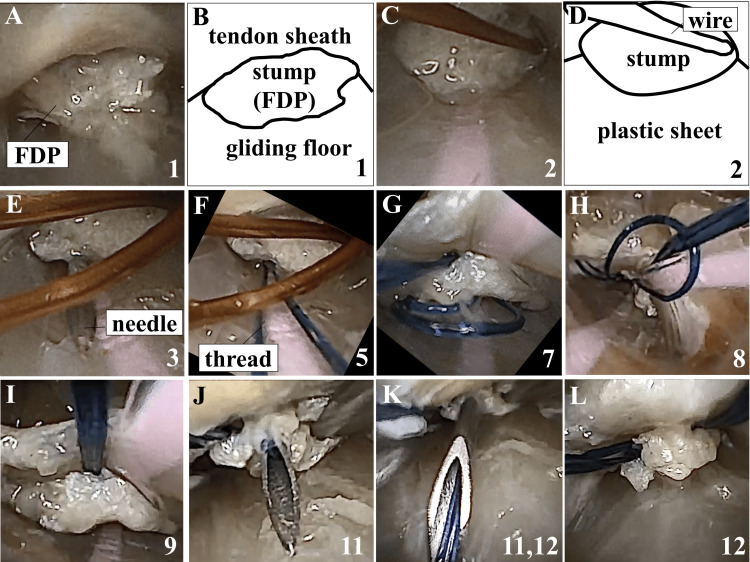 Figure 3
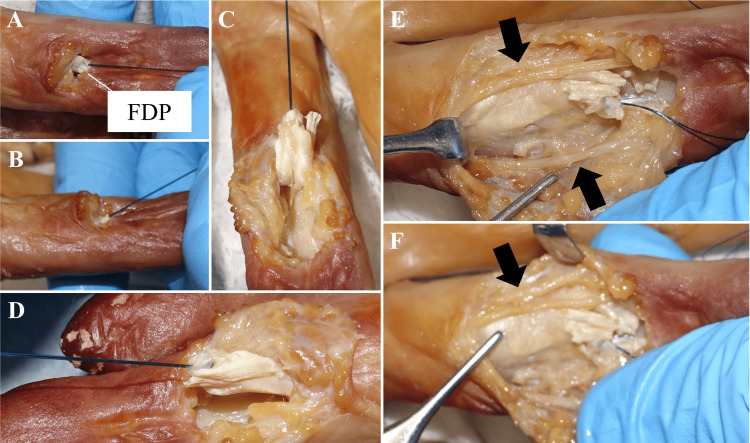 Figure 4
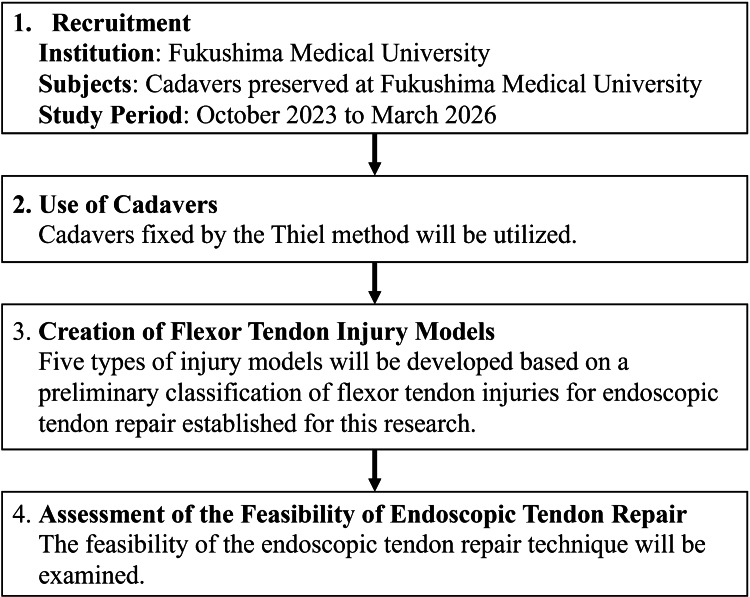 Figure 5
 Figure 6
 Figure 7
Peer Reviews
No public reviews on file for this paper yet. If you reviewed it on a platform where reviews are public (OpenReview, ICLR, NeurIPS, ICML), you can paste yours below so the community can read it here.
Videos
No videos yet. Explain this paper in a talk, walkthrough, or lecture? Add one.
Taxonomy
TopicsOrthopedic Surgery and Rehabilitation · Elbow and Forearm Trauma Treatment · Peripheral Nerve Disorders