Improving a data mining based diagnostic support tool for rare diseases on the example of M. Fabry: Gender differences need to be taken into account
Philipp Hahn, Werner Lechner, Rainer-Georg Siefen, Christina Lampe, Peter Nordbeck, Lorenz Grigull, Thomas Lücke, Naveen Joseph, Naveen Joseph, Naveen Joseph

TL;DR
This paper shows how considering gender differences improves an AI tool for diagnosing the rare disease Fabry, which affects men and women differently.
Contribution
The study demonstrates that incorporating gender-specific disease perception improves AI diagnostic accuracy for Fabry disease.
Findings
An AI achieved 88.12% sensitivity for detecting Fabry disease using a small dataset.
Gender-specific differences in disease perception significantly influence diagnostic accuracy.
Quality of life and diagnostic history did not act as confounders in the AI's performance.
Abstract
Rare diseases often present with a variety of clinical symptoms and therefore are challenging to diagnose. Fabry disease is an x-linked rare metabolic disorder. The severity of symptoms is usually different in men and women. Since therapeutic options for Fabry disease exist, early diagnosis is important. An artificial intelligence (AI)-based diagnosis support algorithm for rare diseases has been developed in preliminary studies. Our aim was to extend and train the questionnaire-based AI, capable of distinguishing patients with from those without rare diseases, to achieve satisfactory sensitivity for the detection of a single rare disease, Fabry disease, taking into account gender differences in disease perception. We collected 33 complete datasets from patients with confirmed Fabry disease. These records contained answered AI questionnaires, general information on disease progression,…
Genes, proteins, chemicals, diseases, species, mutations and cell lines named across the full text — each resolved to its canonical identifier and authoritative record.
Click any figure to enlarge with its caption.
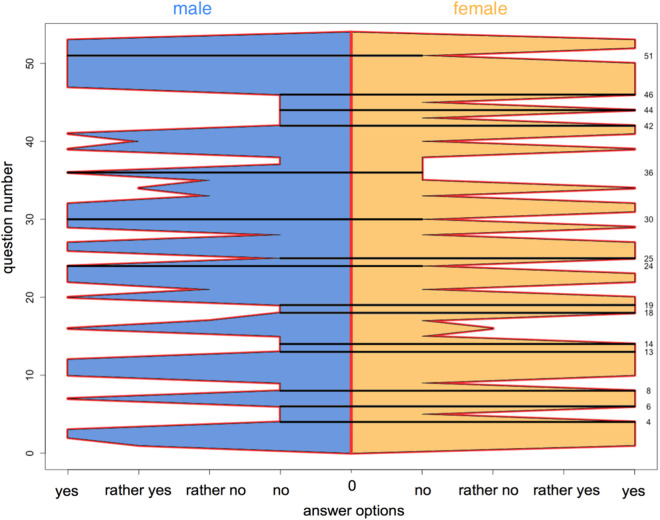 Figure 1
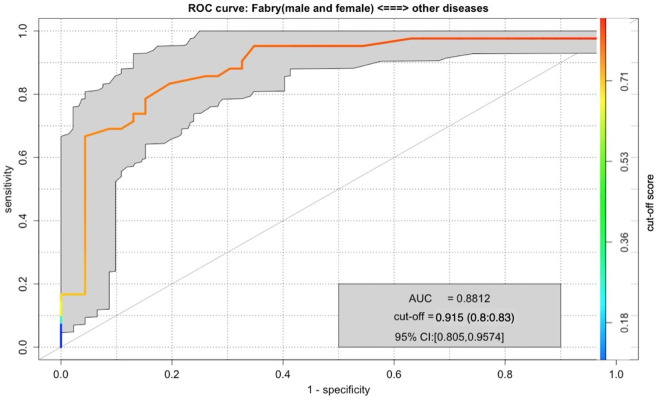 Figure 2
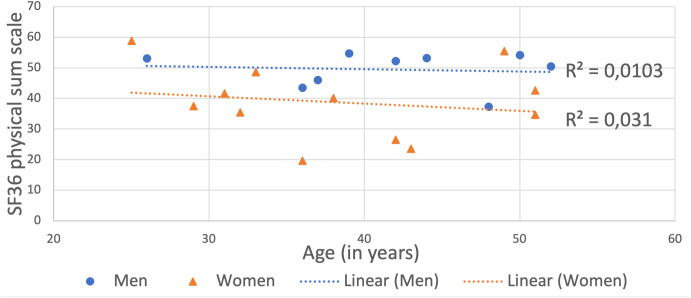 Figure 3
 Figure 4
 Figure 5
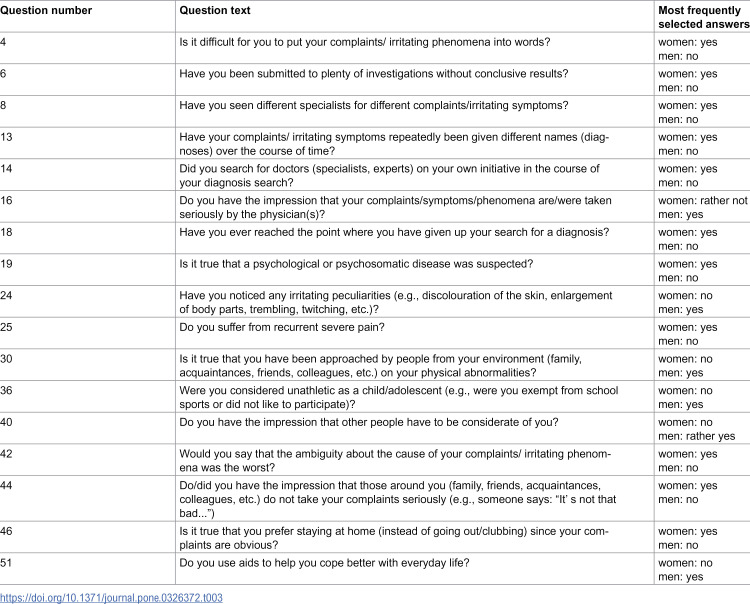 Figure 6
Peer Reviews
No public reviews on file for this paper yet. If you reviewed it on a platform where reviews are public (OpenReview, ICLR, NeurIPS, ICML), you can paste yours below so the community can read it here.
Videos
No videos yet. Explain this paper in a talk, walkthrough, or lecture? Add one.
Taxonomy
TopicsLysosomal Storage Disorders Research · Parkinson's Disease Mechanisms and Treatments · Neurological diseases and metabolism