Differentiating bacteria by their unique surface interactions
Nicholas K. Kotoulas, Stephanie Tan, Justin R. Nodwell, M. Cynthia Goh

TL;DR
This paper introduces a new method to identify bacteria based on how they interact with different surfaces, which could help in diagnosing and managing antibiotic resistance.
Contribution
The novel contribution is the development of surface interaction profiles (SIPs) for rapid and accurate bacterial differentiation.
Findings
Surface interaction profiles (SIPs) successfully distinguished various pathogenic bacteria by Gram stain and species.
SIPs identified antibiotic-resistant mutants like MRSA and VISA with high accuracy.
The method was validated using blind tests and showed strong diagnostic potential.
Abstract
New, rapid, and accessible approaches to bacterial detection are necessary to help curb the rising impacts of antimicrobial resistance. In this study, we introduce a technique that distinguishes bacteria through their unique surface interactions. By measuring and combining the interaction strengths of a bacterium across a set of chemically defined surfaces, we produced a novel bacterial identifier termed the surface interaction profile (SIP). The interaction strengths of twelve test bacteria across three discrete polyelectrolyte multilayer films (PEMs) were measured, facilitated by introducing each bacterial suspension to individual PEMs in microfluidic channels over a 10-minute interaction period and rinsing to remove bulk and loosely bound bacteria. The remaining surface-bound cells were counted via microscopy and plotted against suspension concentrations to build attachment curves…
Genes, proteins, chemicals, diseases, species, mutations and cell lines named across the full text — each resolved to its canonical identifier and authoritative record.
Click any figure to enlarge with its caption.
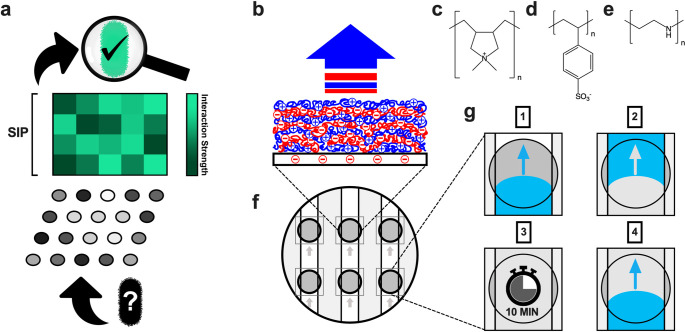 Figure 1
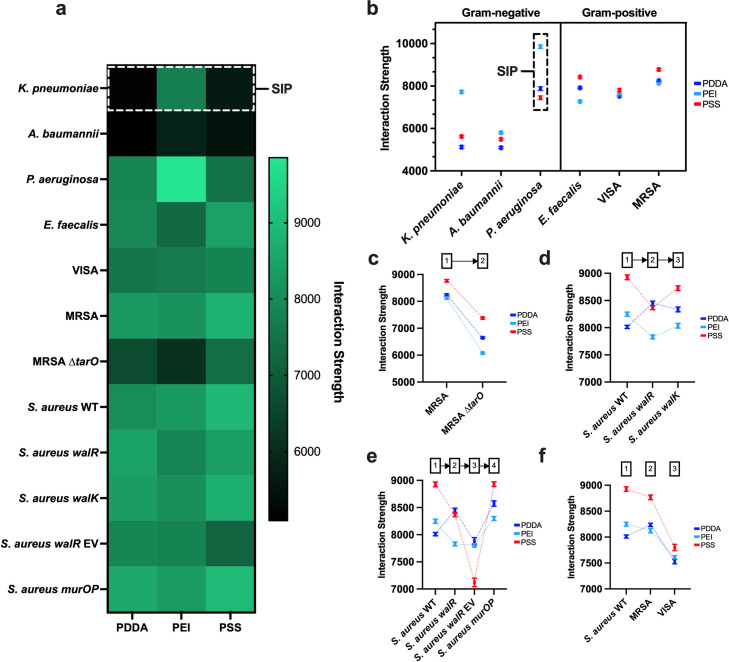 Figure 2
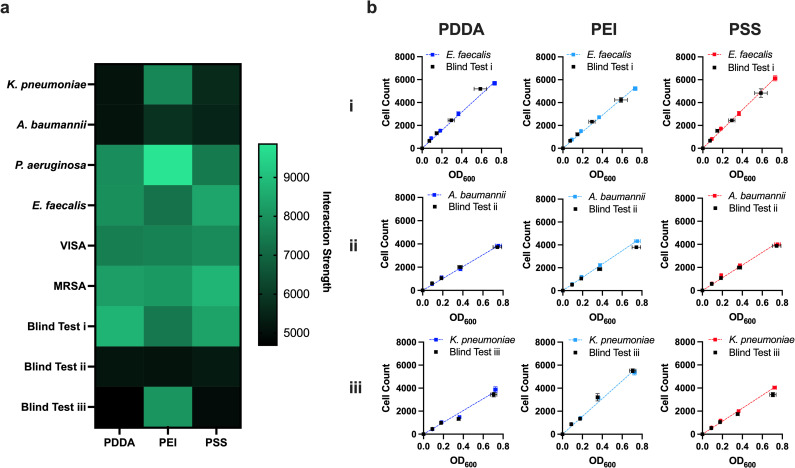 Figure 3
Peer Reviews
No public reviews on file for this paper yet. If you reviewed it on a platform where reviews are public (OpenReview, ICLR, NeurIPS, ICML), you can paste yours below so the community can read it here.
Videos
No videos yet. Explain this paper in a talk, walkthrough, or lecture? Add one.
Taxonomy
TopicsBacterial Identification and Susceptibility Testing · Bacterial biofilms and quorum sensing · Biosensors and Analytical Detection