Algorithm for using dual energy computed tomography to determine chemical composition: A feasibility study
Dong Hyeok Choi, So Hyun Ahn, Kwangwoo Park, Min Cheol Han, Jin Sung Kim, Cebastien Joel Guembou Shouop, Cebastien Joel Guembou Shouop, Cebastien Joel Guembou Shouop

TL;DR
This study presents a new algorithm using dual-energy CT to determine the chemical composition of materials with high accuracy, which could improve radiation therapy planning.
Contribution
A novel algorithm is developed to determine elemental composition and weight fractions using dual-energy CT data.
Findings
The algorithm accurately identified chemical constituents of unknown materials with differences <0.01% for compounds using mono-energetic X-rays.
For spectral X-rays, the algorithm showed 2.98% difference for compounds and 6.03% for mixtures.
The method reduces uncertainty in SPR calculations, improving dose accuracy in radiation therapy.
Abstract
Using dual-energy computed tomography (CT), this study aims to develop an algorithm to identify the chemical constituents of an unknown material (compound or mixture) and improve the accuracy of material discrimination. The algorithm requires mass attenuation coefficients (MAC) that were obtained using a dual energy CT as an input, identifies the elemental composition, and then calculates its weight fraction. To evaluate the functionality of the developed algorithm, it was used to determine the chemical constituents for human tissues. Furthermore, the results were compared with those provided by the National Institute of Standards and Technology (NIST). We used dual energies 80/140 kVp for spectral CT scans, as inputs to the algorithm, in addition to a set of 50/80 and 80/100 keV for mono-energetic X-rays. The algorithm correctly determined the chemical constituent elements of unknown…
Genes, proteins, chemicals, diseases, species, mutations and cell lines named across the full text — each resolved to its canonical identifier and authoritative record.
Click any figure to enlarge with its caption.
 Figure 1
 Figure 2
 Figure 3
 Figure 4
 Figure 5
 Figure 6
 Figure 7
 Figure 8
 Figure 9
 Figure 10
 Figure 11
 Figure 12
 Figure 13
 Figure 14
 Figure 15
 Figure 16
 Figure 17
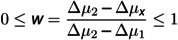 Figure 18
 Figure 19
 Figure 20
 Figure 21
 Figure 22
 Figure 23
 Figure 24
 Figure 25
 Figure 26
 Figure 27
 Figure 28
 Figure 29
 Figure 30
 Figure 31
 Figure 32
 Figure 33
 Figure 34
 Figure 35
 Figure 36
 Figure 37
 Figure 38
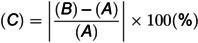 Figure 39
 Figure 40
 Figure 41
 Figure 42
 Figure 43
 Figure 44
 Figure 45
 Figure 46
 Figure 47
 Figure 48
 Figure 49
 Figure 50
Peer Reviews
No public reviews on file for this paper yet. If you reviewed it on a platform where reviews are public (OpenReview, ICLR, NeurIPS, ICML), you can paste yours below so the community can read it here.
Videos
No videos yet. Explain this paper in a talk, walkthrough, or lecture? Add one.
Taxonomy
TopicsAdvanced X-ray and CT Imaging · Radiation Dose and Imaging · Radiation Shielding Materials Analysis