Real-world Lyme disease testing results using modified vs standard two-tier test protocols
Yonghong Li, Zhen Chen, Carmen H. Tong, Ky Van, Robert S. Jones, Lance A. Bare

TL;DR
A new Lyme disease testing protocol detects more positive cases in adults compared to the traditional method.
Contribution
A real-world comparison of modified vs standard two-tier test protocols for Lyme disease in a large cohort.
Findings
MTTT identified more positive test results in adults compared to STTT.
MTTT detected more IgM-only or IgM-and-IgG-positive cases than STTT.
Abstract
The modified two-tier test (MTTT) and standard two-tier test (STTT) protocols are being used for Lyme disease serology testing in the clinic. We aimed to compare the real-world testing results of MTTT, a recently approved protocol, vs STTT, a mainstay protocol over the past decades. To this end, we obtained results of Lyme disease testing performed in a US national reference laboratory in 2022 and 2023 and constructed a matched cohort with 66,708 individuals tested using MTTT and 66,708 individuals tested using STTT. We found that, compared with STTT, MTTT identified more test positives in adults aged 18 and older and similar number of test positives in the children and adolescents. The odds ratio (95% confidence interval) of testing positive using MTTT vs STTT was 1.88 (1.79–1.98) in adults and 1.09 (0.97–1.23) in non-adults. In addition, more patients tested positive for…
Genes, proteins, chemicals, diseases, species, mutations and cell lines named across the full text — each resolved to its canonical identifier and authoritative record.
Click any figure to enlarge with its caption.
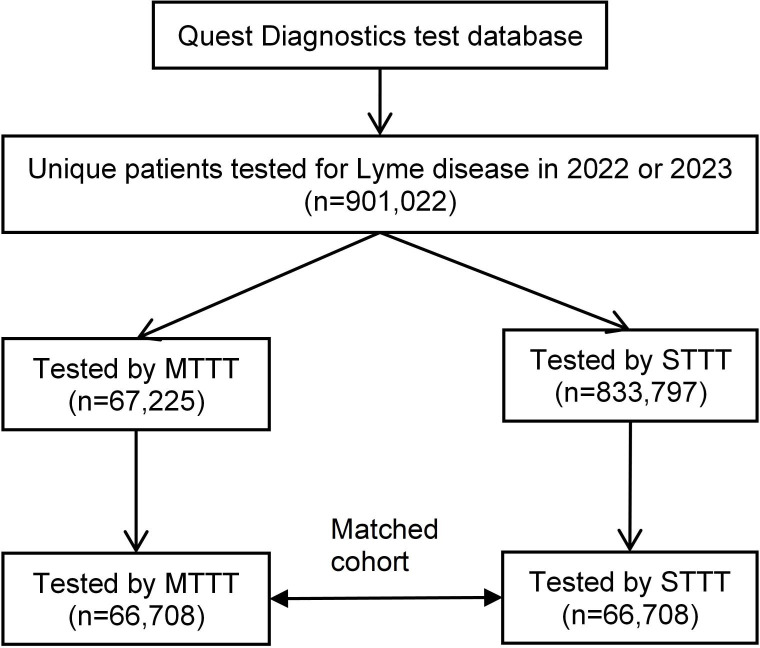 Figure 1
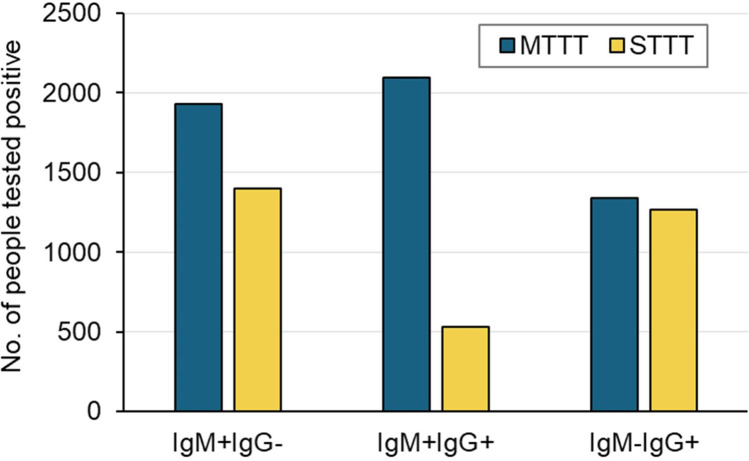 Figure 2
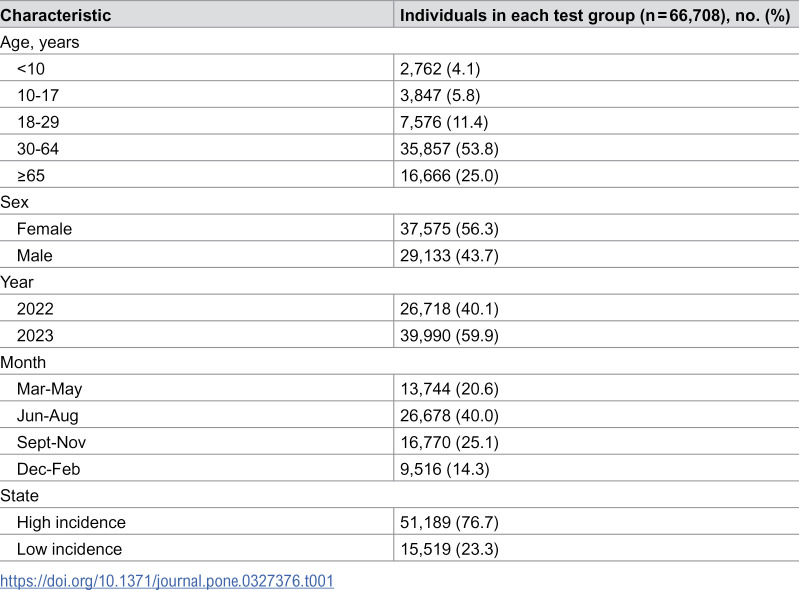 Figure 3
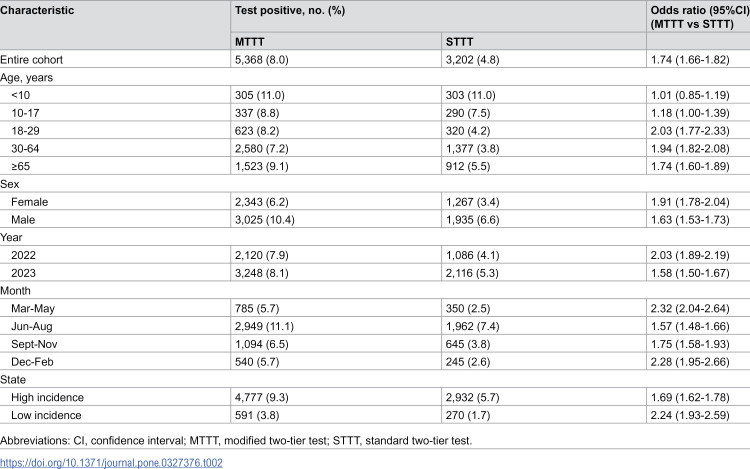 Figure 4
Peer Reviews
No public reviews on file for this paper yet. If you reviewed it on a platform where reviews are public (OpenReview, ICLR, NeurIPS, ICML), you can paste yours below so the community can read it here.
Videos
No videos yet. Explain this paper in a talk, walkthrough, or lecture? Add one.
Taxonomy
TopicsVector-borne infectious diseases · Mosquito-borne diseases and control · Viral Infections and Vectors