Behavioral and electrophysiological responses of Hippodamia variegata to plant volatiles
Yi Wang, Ying Zhang, Tao Zhang, Zihan Li, Tinghui Liu, Yanhui Lu, Yonggen Lou, Yonggen Lou, Yonggen Lou

TL;DR
This study explores how plant volatiles attract and influence the behavior of Hippodamia variegata, a ladybeetle used for pest control.
Contribution
The study identifies specific plant volatiles that significantly attract H. variegata and influence its feeding behavior.
Findings
Ethyl benzoate, octyl formate, methyl jasmonate, and methyl dihydrojasmonate were significantly attractive to H. variegata.
Higher concentrations of these compounds increased both behavioral and electrophysiological responses in H. variegata.
Feeding activity of H. variegata increased in the presence of these plant volatiles in enclosures.
Abstract
Natural enemies use odors to find prey in nature. The use of plant volatiles to attract natural enemy insects and promote their feeding on pests has great potential for practical application in integrated pest management. Of the 28 materials tested, ethyl benzoate, octyl formate, methyl jasmonate, and methyl dihydrojasmonate were significantly attractive to H. variegata. We tested the ladybeetle’s behavioral responses to three concentrations of the compounds (100, 10, and 1 µg/µL) and found that high and medium levels were both attractive to H. variegata. In electroantennography (EAG) tests, the response of H. variegata to the above four compounds increased with the increasing concentration. Also, feeding of H. variegata increased in the presence of these plant volatiles under the condition of enclosures. These findings provide a theoretical basis for future behavioral manipulation of…
Genes, proteins, chemicals, diseases, species, mutations and cell lines named across the full text — each resolved to its canonical identifier and authoritative record.
Click any figure to enlarge with its caption.
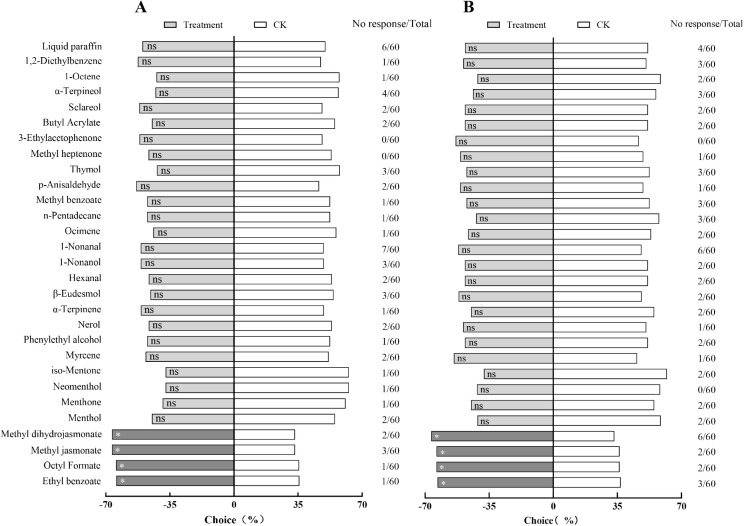 Figure 1
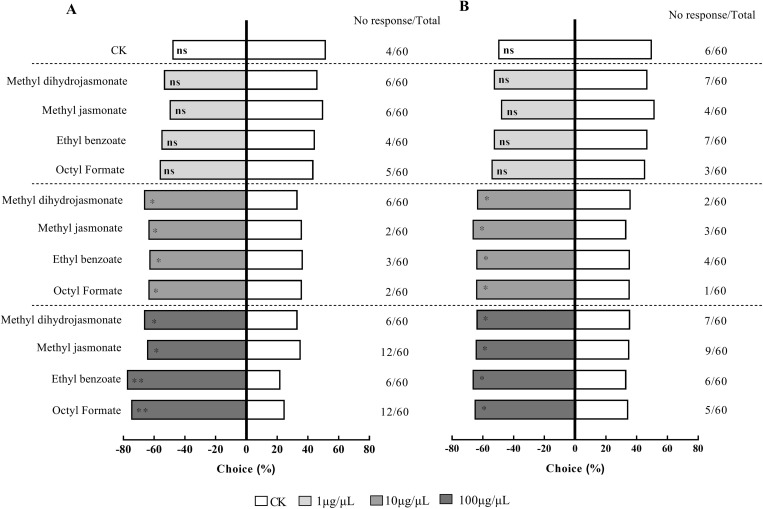 Figure 2
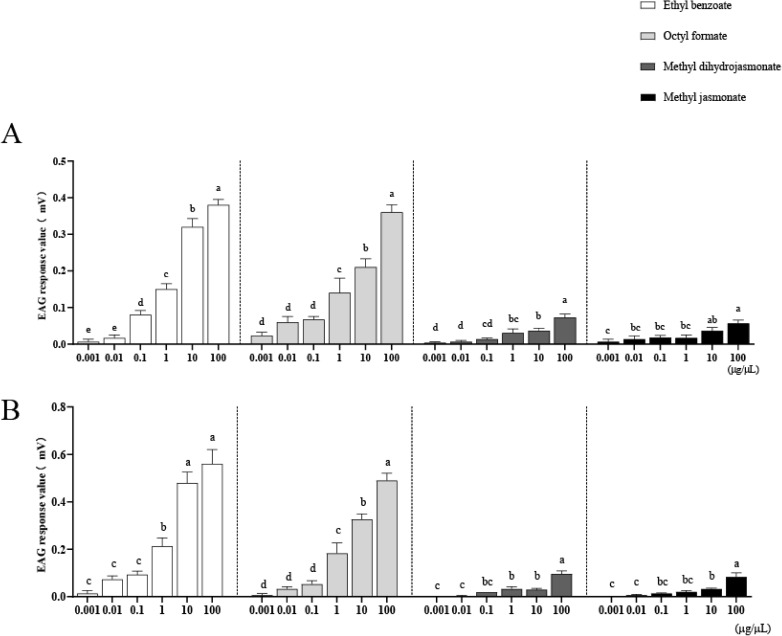 Figure 3
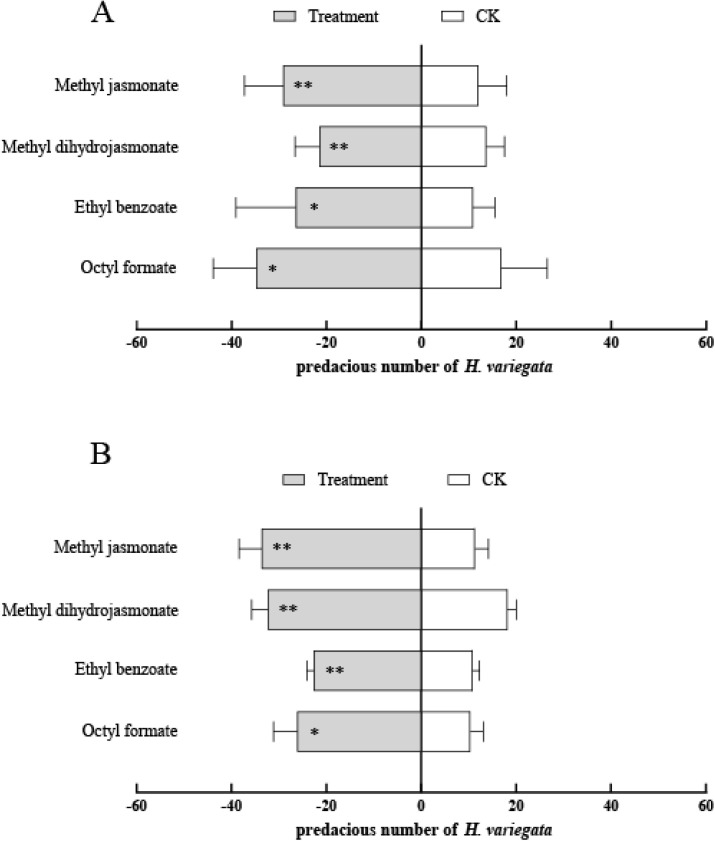 Figure 4
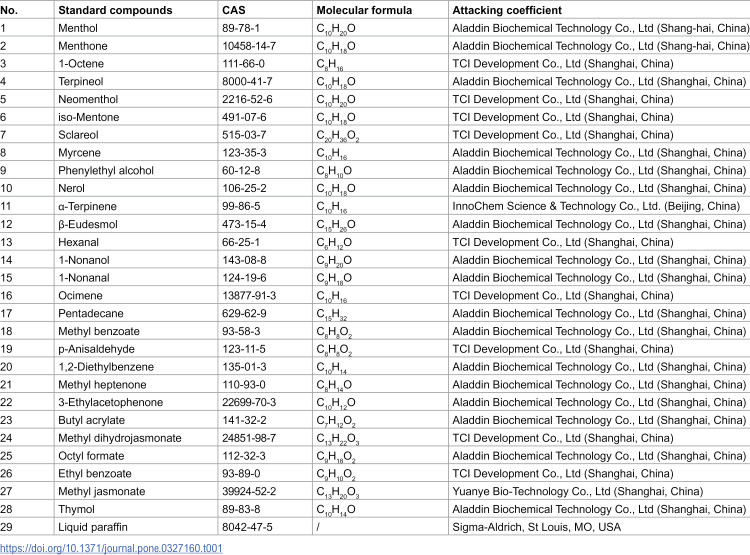 Figure 5
Peer Reviews
No public reviews on file for this paper yet. If you reviewed it on a platform where reviews are public (OpenReview, ICLR, NeurIPS, ICML), you can paste yours below so the community can read it here.
Videos
No videos yet. Explain this paper in a talk, walkthrough, or lecture? Add one.
Taxonomy
TopicsInsect-Plant Interactions and Control · Plant and animal studies · Insect Pheromone Research and Control