Developing Machine-Learning Models to Predict Bacteremia in Febrile Adults Presenting to the Emergency Department: A Retrospective Cohort Study from a Large Center
Chia-Ming Fu, Ike Ngo, Pak Sheung Lau, Yaroslav Ivanchuk, Fan-Ya Chou, Chih-Hung Wang, Chien-Yu Lin, Chu-Lin Tsai, Shey-Ying Chen, Tsung-Chien Lu, Hung-Yu Wei

TL;DR
This study developed machine-learning models to predict bacteremia in febrile adults at emergency departments using triage data, showing strong performance that could improve diagnosis and patient outcomes.
Contribution
The novel contribution is the development and evaluation of ML models using triage data to predict bacteremia in febrile emergency department patients.
Findings
CatBoost achieved the highest AUC of 0.844 in predicting bacteremia from triage data.
All tested machine-learning models demonstrated strong performance with AUCs above 0.82.
The model could potentially improve emergency care by enabling early identification of bacteremia.
Abstract
Bacteremia, a common disease but difficult to diagnose early, may result in significant morbidity and mortality without prompt treatment. We aimed to develop machine-learning (ML) algorithms to predict patients with bacteremia from febrile patients presenting to the emergency department (ED) using data that is readily available at the triage. We included all adult patients (≥18 years of age) who presented to the emergency department (ED) of National Taiwan University Hospital (NTUH), a tertiary teaching hospital in Taiwan, with the chief complaint of fever or measured body temperature more than 38°C, and who received at least one blood culture during the ED encounter. We extracted data from the Integrated Medical Database of NTUH from 2009–2018.The dataset included patient demographics, triage details, symptoms, and medical history. The positive blood culture result of at least one…
Genes, proteins, chemicals, diseases, species, mutations and cell lines named across the full text — each resolved to its canonical identifier and authoritative record.
Click any figure to enlarge with its caption.
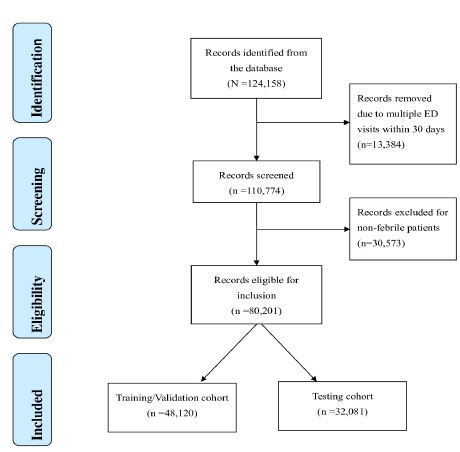 Figure 1
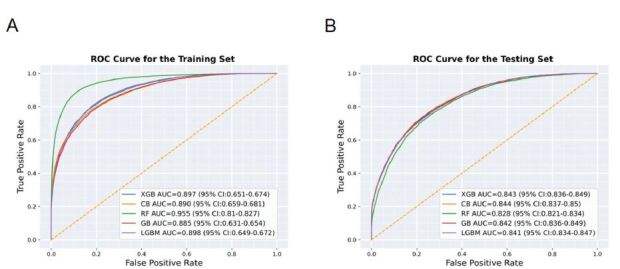 Figure 2
 Figure 3
Peer Reviews
No public reviews on file for this paper yet. If you reviewed it on a platform where reviews are public (OpenReview, ICLR, NeurIPS, ICML), you can paste yours below so the community can read it here.
Videos
No videos yet. Explain this paper in a talk, walkthrough, or lecture? Add one.
Taxonomy
TopicsCOVID-19 diagnosis using AI · Machine Learning in Healthcare