Assessing Auranofin for Second‐Line Use in Chemoresistant Ovarian Cancer: Effects on Tumour Spheroid and Primary Cell Growth
Rosamaria Militello, Matteo Becatti, Tania Gamberi, Tania Fiaschi, Alessandra Modesti, Caterina Paffetti, Flavia Sorbi, Massimiliano Fambrini, Francesca Magherini

TL;DR
This study explores auranofin as a potential treatment for chemoresistant ovarian cancer, showing it can inhibit tumor growth and induce cell death.
Contribution
The study demonstrates auranofin's effectiveness against chemoresistant ovarian cancer cells and identifies key molecular pathways involved.
Findings
Auranofin inhibited spheroid formation and growth by inducing apoptosis in ovarian cancer cell lines.
Auranofin's mode of action involves the PI3K/Akt and NF-κB pathways.
Differential sensitivities to auranofin and cisplatin were observed among cell lines and primary ovarian cancer cells.
Abstract
Ovarian cancer (OC) is the fifth leading cause of cancer‐related death among women and the most lethal gynaecological malignancy. The high mortality rate is primarily due to late diagnosis and the lack of targeted therapies. The gold standard treatment consists of debulking surgery followed by platinum/taxane‐based chemotherapy, which is initially effective in approximately 75% of patients. However, most women experience relapse and develop chemoresistance. To date, no therapy has proven to be decisive, underscoring the need for research into second‐line or alternative treatments to overcome chemoresistance and prevent relapses. Auranofin (AF) is a promising repositioned anticancer agent with a multifaceted mode of action both cancer cell type‐ and dose‐dependent. The current study evaluated AF's cytotoxicity on multicellular tumour spheroids derived from three ovarian cancer cell lines…
Genes, proteins, chemicals, diseases, species, mutations and cell lines named across the full text — each resolved to its canonical identifier and authoritative record.
Click any figure to enlarge with its caption.
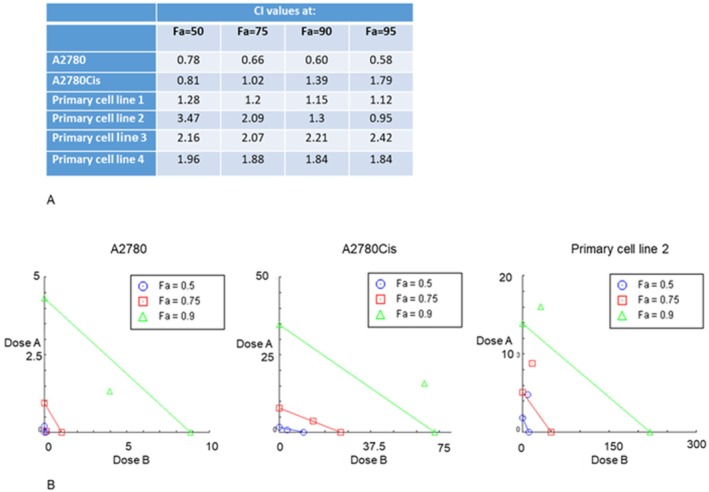 Figure 1
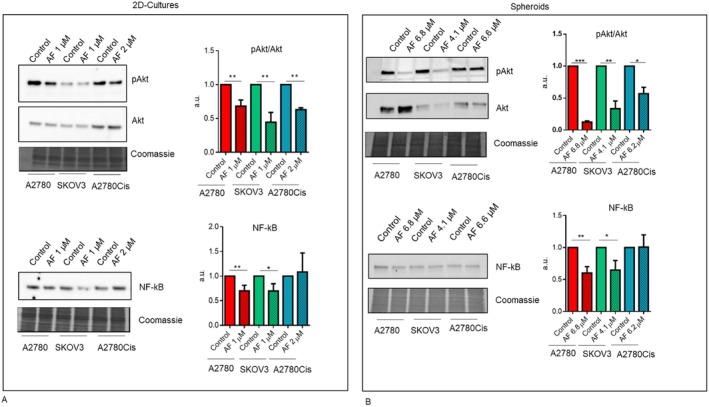 Figure 2
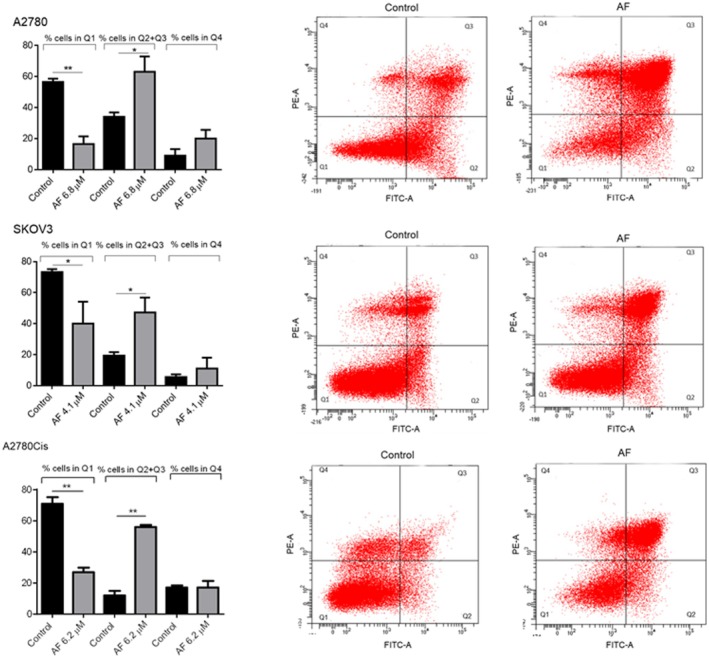 Figure 3
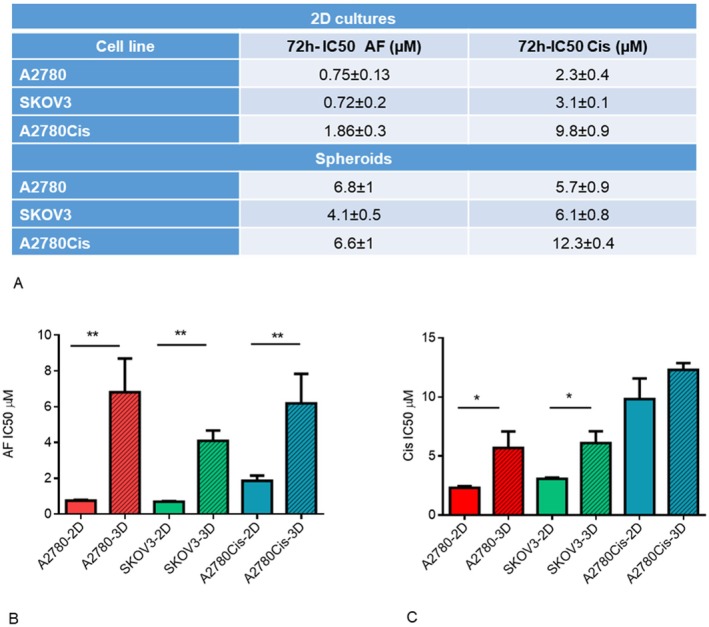 Figure 4
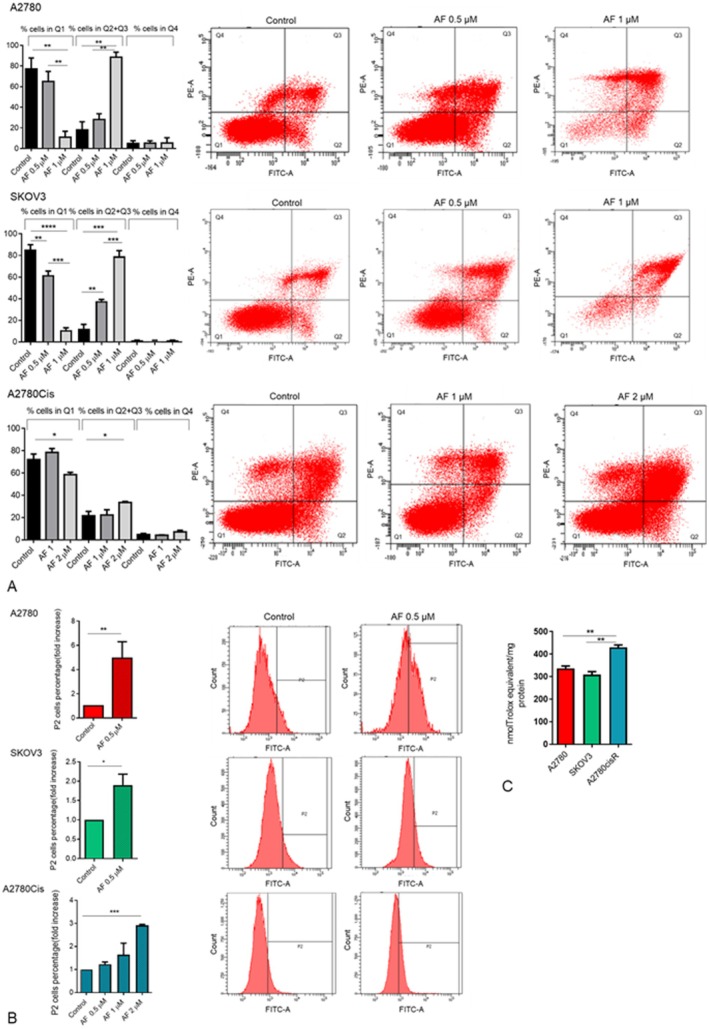 Figure 5
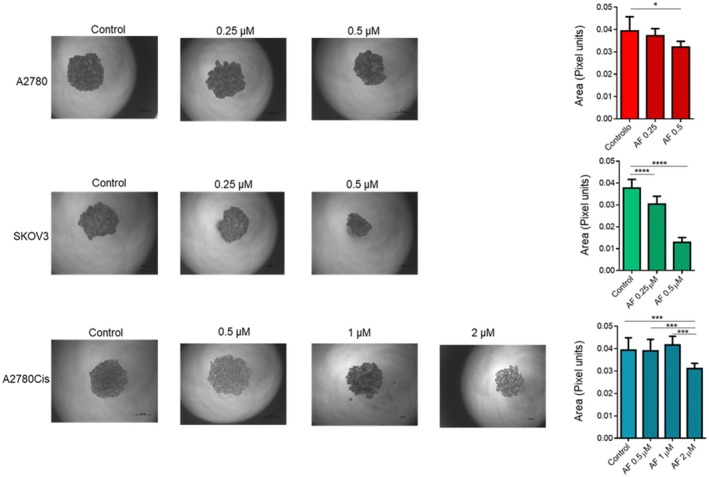 Figure 6
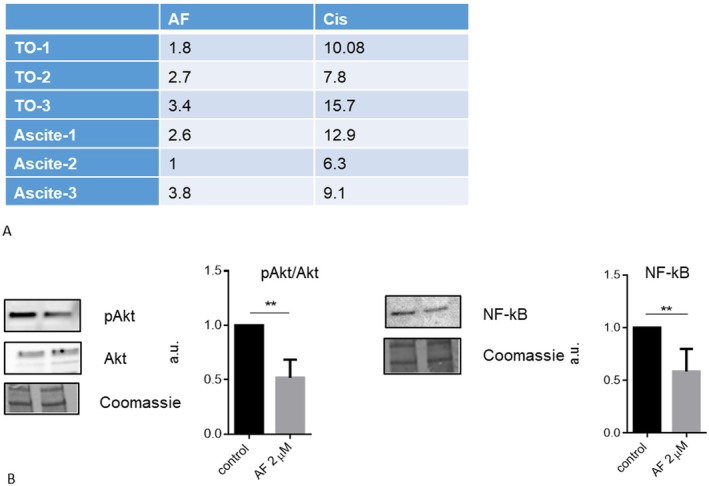 Figure 7
Peer Reviews
No public reviews on file for this paper yet. If you reviewed it on a platform where reviews are public (OpenReview, ICLR, NeurIPS, ICML), you can paste yours below so the community can read it here.
Videos
No videos yet. Explain this paper in a talk, walkthrough, or lecture? Add one.
Taxonomy
TopicsCancer, Lipids, and Metabolism · Redox biology and oxidative stress · Cholesterol and Lipid Metabolism