The complete chloroplast genome sequence of Brachybotrys paridiformis Maxim. ex Oliv. (Boraginaceae), a species from a monotypic genus in Northeast China
Yang Liu, Hao Dong, Linghong Li, Siyu Ding, Zhi Zang, Xi Lu

TL;DR
This paper reports the full chloroplast genome of Brachybotrys paridiformis, a medicinal plant from Northeast China, and its evolutionary relationships.
Contribution
The study provides the first complete chloroplast genome sequence for the monotypic genus Brachybotrys.
Findings
The chloroplast genome is 147,853 bp in size and contains 128 genes.
Phylogenetic analysis shows Brachybotrys is closely related to Trigonotis.
Abstract
Brachybotrys paridiformis is well known for its remarkable medicinal properties. Here, the complete chloroplast genome of B. paridiformis was assembled and annotated. The genome was 147,853 bp in size contained a large single-copy region (80,375 bp), a small single-copy region (17,184 bp), and a pair of inverted repeat regions (25,147 bp), respectively. It comprised 128 genes, including 83 protein-coding genes, 37 tRNA genes, and eight rRNA genes. Phylogenetic analysis revealed that Brachybotrys and Trigonotis are phylogenetically closely related. The findings of this study provide valuable information for phylogenetic and evolutionary research on Boraginaceae.
Genes, proteins, chemicals, diseases, species, mutations and cell lines named across the full text — each resolved to its canonical identifier and authoritative record.
Click any figure to enlarge with its caption.
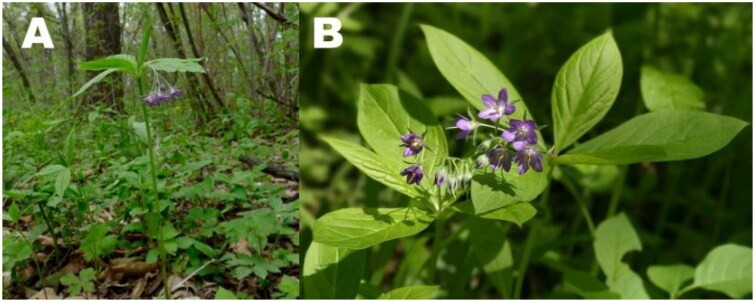 Figure 1
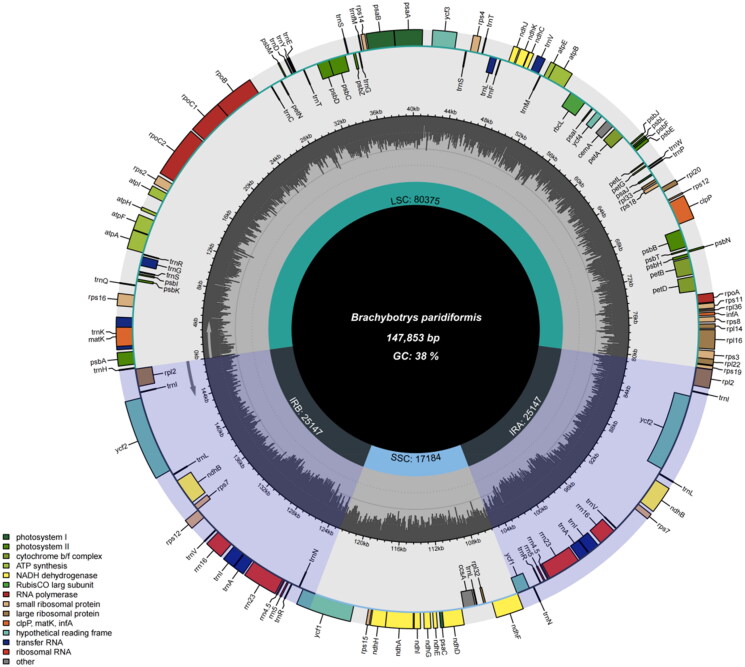 Figure 2
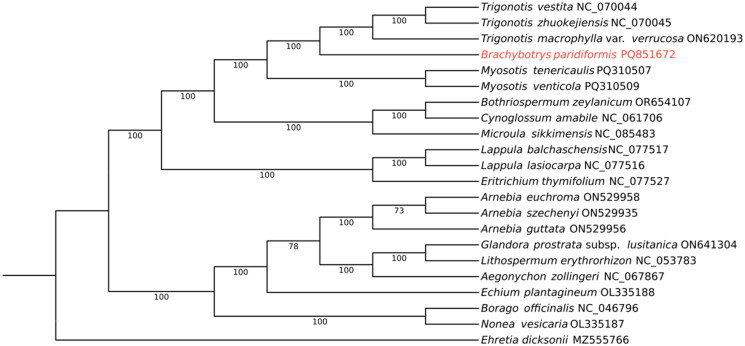 Figure 3
Peer Reviews
No public reviews on file for this paper yet. If you reviewed it on a platform where reviews are public (OpenReview, ICLR, NeurIPS, ICML), you can paste yours below so the community can read it here.
Videos
No videos yet. Explain this paper in a talk, walkthrough, or lecture? Add one.
Taxonomy
TopicsNatural product bioactivities and synthesis · Genomics and Phylogenetic Studies · Plant Diversity and Evolution