Analysis of conditioning with dexmedetomidine under endothelial dysfunction in isolated perfused hearts
Sophia De Luca-Rohner, André Heinen, Martin Stroethoff, Annika Raupach

TL;DR
This study examines how dexmedetomidine affects heart function under endothelial dysfunction in isolated rat hearts, finding that it does not reduce injury but improves function in some cases.
Contribution
The study investigates the cardioprotective effects of dexmedetomidine under endothelial dysfunction using a constant flow mode for the first time.
Findings
DEX pre- and post-treatment does not reduce infarct size or improve heart function under endothelial dysfunction or physiological conditions.
DEX pre-treatment under endothelial dysfunction improves left ventricular pressure and contractility after reperfusion.
Hemodynamic conditions may influence the cardioprotective effects of DEX due to its vasoconstrictive properties.
Abstract
Cardioprotective strategies such as pharmacological conditioning have not yet successfully undergone bench-to-bedside transfer, which is probably due to inhibition of cardioprotection by comorbidities or associated pathological changes. Endothelial dysfunction (ED) is closely associated with most cardiovascular diseases and their typical comorbidities. Therefore, cardioprotective strategies should be examined under ED. It was previously demonstrated that dexmedetomidine (DEX) maintains its cardioprotective properties against ischemia/reperfusion (I/R) injury under hyperglycaemia in the setting of pre-but not postconditioning, using a constant pressure Langendorff system. Under ED, cardioprotection by DEX preconditioning is also maintained using a constant flow mode, whereas this has not yet been investigated for postconditioning. Because DEX has vasoconstrictive properties, different…
Genes, proteins, chemicals, diseases, species, mutations and cell lines named across the full text — each resolved to its canonical identifier and authoritative record.
Click any figure to enlarge with its caption.
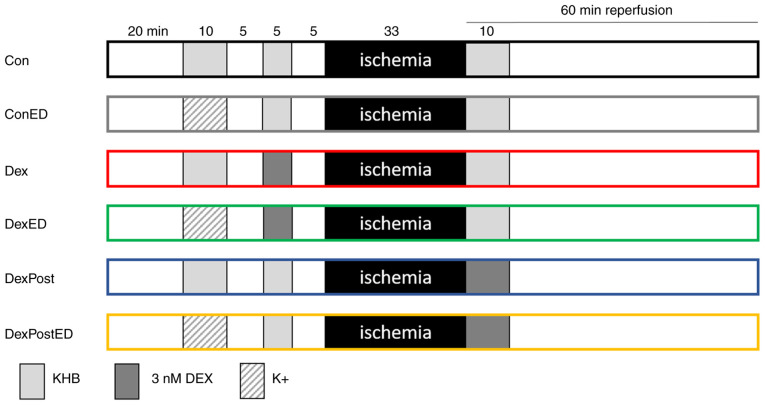 Figure 1
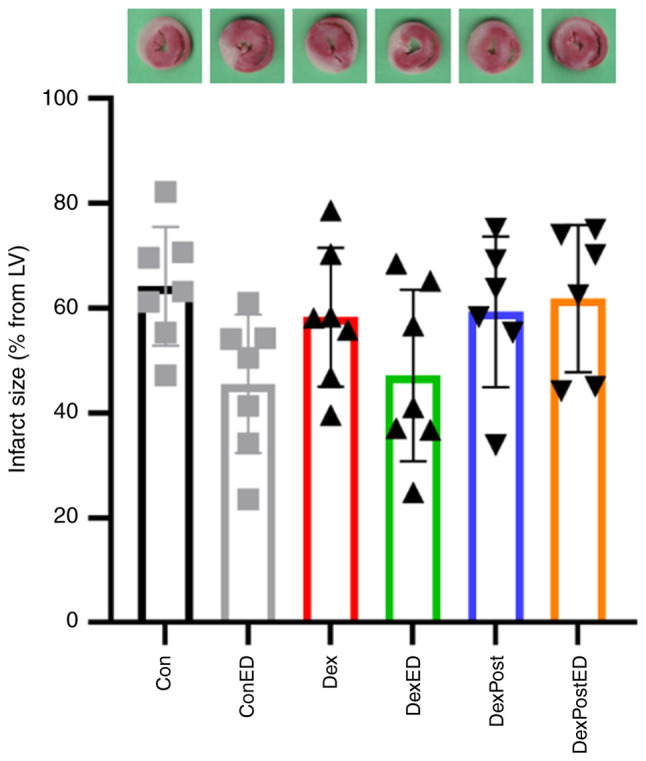 Figure 2
Peer Reviews
No public reviews on file for this paper yet. If you reviewed it on a platform where reviews are public (OpenReview, ICLR, NeurIPS, ICML), you can paste yours below so the community can read it here.
Videos
No videos yet. Explain this paper in a talk, walkthrough, or lecture? Add one.
Taxonomy
TopicsAnesthesia and Sedative Agents · Cardiac Ischemia and Reperfusion · Anesthesia and Neurotoxicity Research