The Impact of VCAM-1 expression on left ventricular performance following acute coronary syndromes
Ruxandra Copciag, Vladimir Bratu, Roxana Rimbas, Laura Lungeanu, Alexandru Corlan, Alexandru Schiopu, Maya Simionescu, Dragos Vinereanu

TL;DR
This study shows that higher levels of VCAM-1, an inflammation marker, are linked to worse heart function and changes in patients with heart attacks.
Contribution
The study is the first to systematically examine the relationship between VCAM-1 levels and left ventricular remodeling in acute coronary syndrome patients.
Findings
Baseline VCAM-1 levels were significantly correlated with changes in left ventricular end-diastolic volume and ejection fraction.
Dynamic changes in VCAM-1 were also significantly associated with adverse left ventricular remodeling.
33.3% of patients showed a ≥10% increase in left ventricular end-diastolic volume at follow-up.
Abstract
Inflammatory pathways, particularly those involving vascular cell adhesion molecule-1 (VCAM-1), play a central role in post-ischemic myocardial remodeling. However, its relationship with left ventricle (LV) performance or volumetric changes has not been systematically examined. This study aimed to investigate the association between circulating VCAM-1 levels, LV volumes, and LV ejection fraction (LVEF), quantified using three-dimensional echocardiography (3-DE), in patients with acute coronary syndrome (ACS). All patients underwent comprehensive clinical evaluation and 3-DE assessment within the first 24 hours of hospital admission. Concurrently, a full panel of locally available laboratory tests was performed, including serum sampling for VCAM-1 analysis. A follow-up evaluation, comprising repeated biological and echocardiographic measurements, was conducted two months after the index…
Genes, proteins, chemicals, diseases, species, mutations and cell lines named across the full text — each resolved to its canonical identifier and authoritative record.
Click any figure to enlarge with its caption.
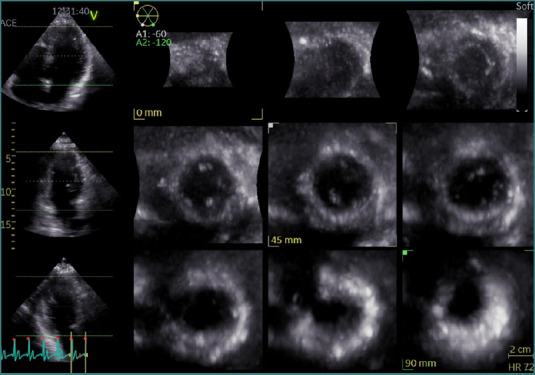 Figure 1
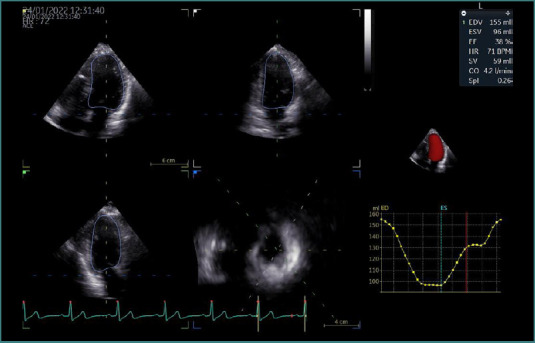 Figure 2
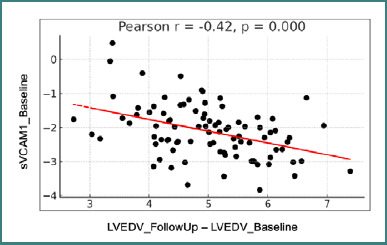 Figure 3
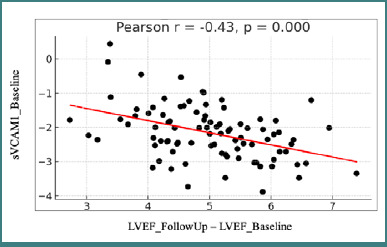 Figure 4
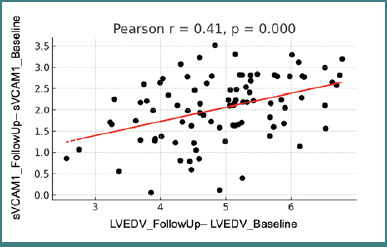 Figure 5
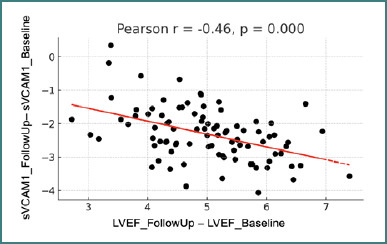 Figure 6
Peer Reviews
No public reviews on file for this paper yet. If you reviewed it on a platform where reviews are public (OpenReview, ICLR, NeurIPS, ICML), you can paste yours below so the community can read it here.
Videos
No videos yet. Explain this paper in a talk, walkthrough, or lecture? Add one.
Taxonomy
TopicsAcute Myocardial Infarction Research · Cardiovascular Function and Risk Factors · Mechanical Circulatory Support Devices