Triplet–Triplet Annihilation Upconversion Is Impeded in Liposomes that Prevent Sensitizer and Annihilator Co-Confinement
Amrutha Prabhakaran, Keshav Kumar Jha, Rengel Cane E. Sia, Mateusz Kogut, Jacek Czub, Julien Guthmuller, Colm Smith, Christopher S. Burke, Benjamin Dietzek-Ivanšić, Tia E. Keyes

TL;DR
This study shows that TTA-UC efficiency is reduced in liposomes when sensitizers and annihilators are not properly co-localized in the membrane.
Contribution
The work demonstrates the importance of co-localization for Dexter energy transfer in membrane-constrained TTA-UC systems.
Findings
TTA-UC was efficient in solution but not observed in liposomes.
Molecular dynamics simulations revealed poor co-orientation of sensitizer and annihilator in the membrane.
DPA and Ru complex occupied different regions of the membrane, limiting energy transfer.
Abstract
Triplet–triplet annihilation upconversion (TTA-UC) implemented in liposomes may be a promising tool in drug delivery and sensing. Indeed, we recently demonstrated that colocalization of lipophilic reagents to the membrane hydrophobic core improves the TTA-UC efficiency in liposomes compared to solution. Here, we examined if the counter is true, i.e., we evaluate if TTA-UC is inhibited when the sensitizer and annihilator occupy different regions within a single leaflet of a liposome membrane. To test this hypothesis, we used a Ru(II) complex, with tridentate ligand 2,6-di(quinolin-8-yl)pyridyl) (bqp) [Ru(bqp)(bpq-oct)]2+(Ru-bqp-oct) where oct is a C8 alkyl chain appended to facilitate integration into the liposome, as a sensitizer and diphenylanthracene (DPA) as an annihilator. TTA-UC from this pair was evaluated and compared in solution and liposomal nanovesicles. This Ru(II)-bqp…
Genes, proteins, chemicals, diseases, species, mutations and cell lines named across the full text — each resolved to its canonical identifier and authoritative record.
Click any figure to enlarge with its caption.
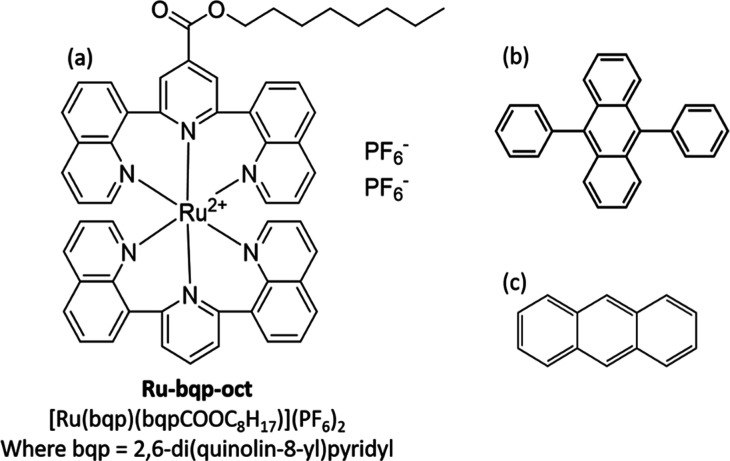 Figure 1
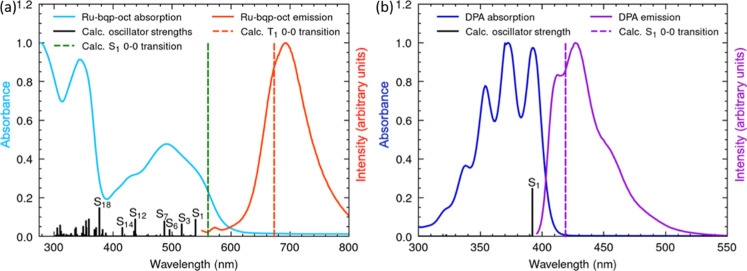 Figure 2
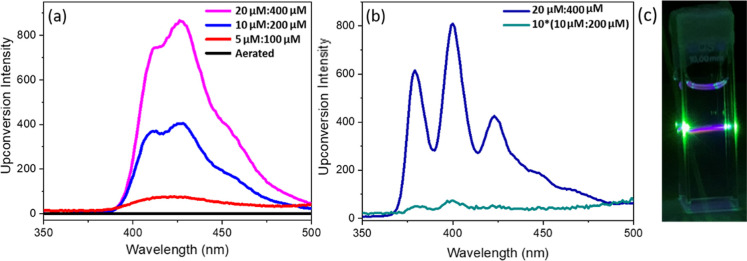 Figure 3
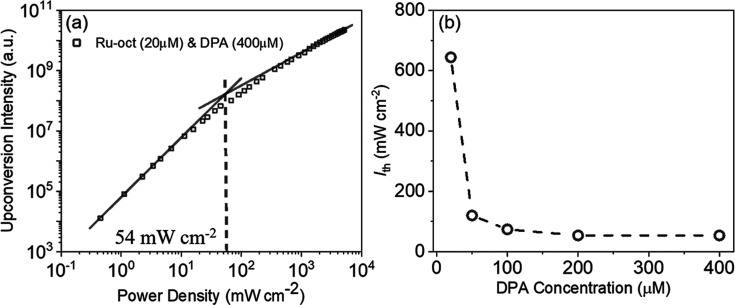 Figure 4
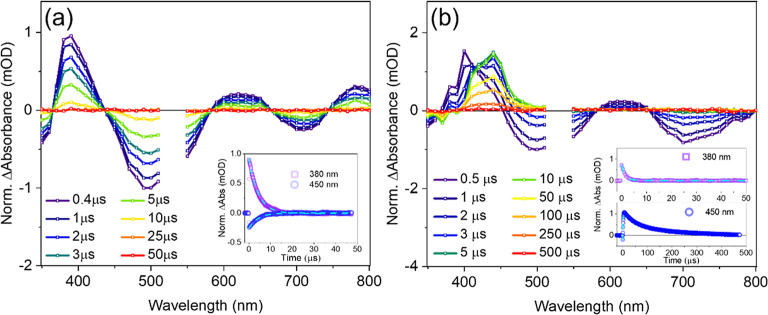 Figure 5
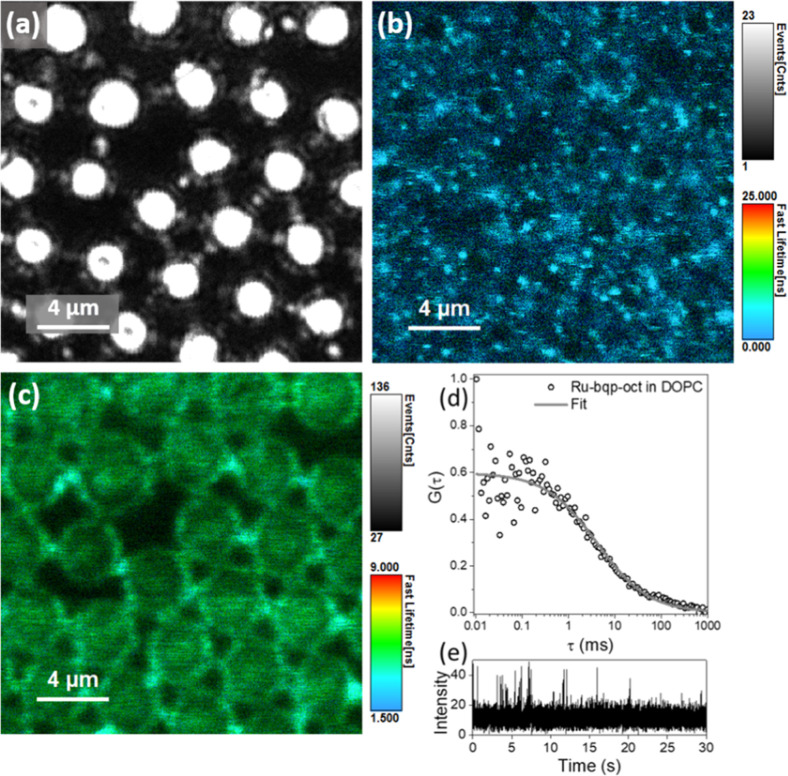 Figure 6
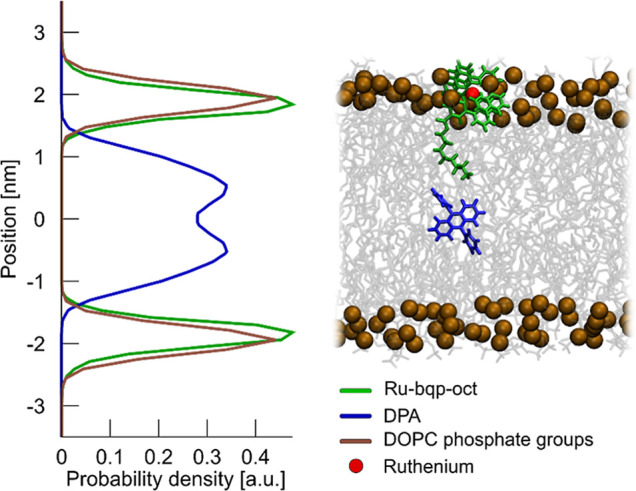 Figure 7
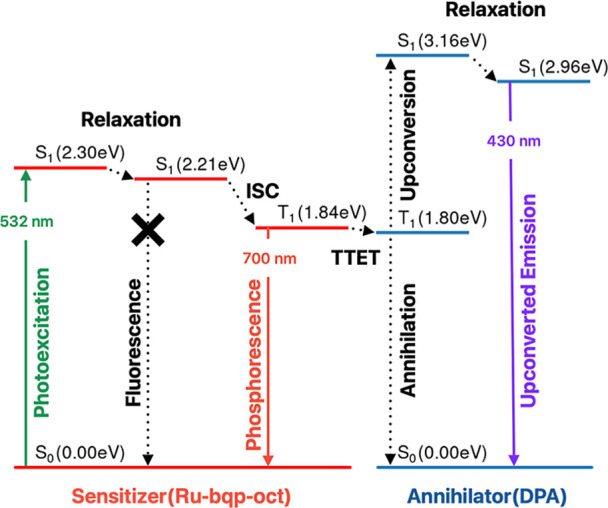 Figure 8
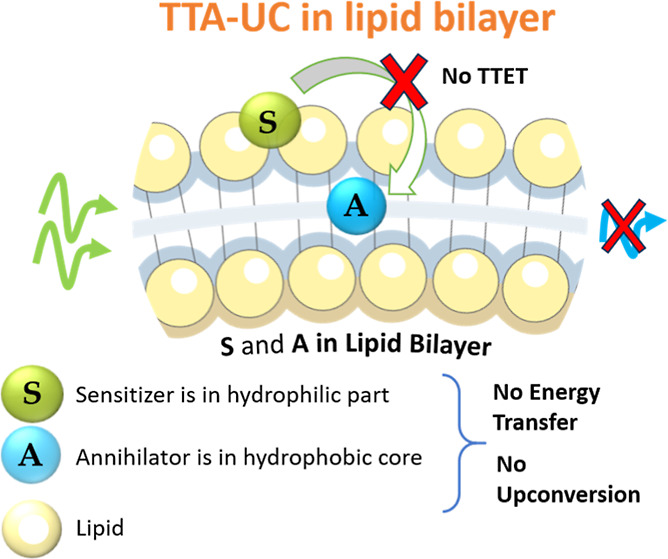 Figure 9
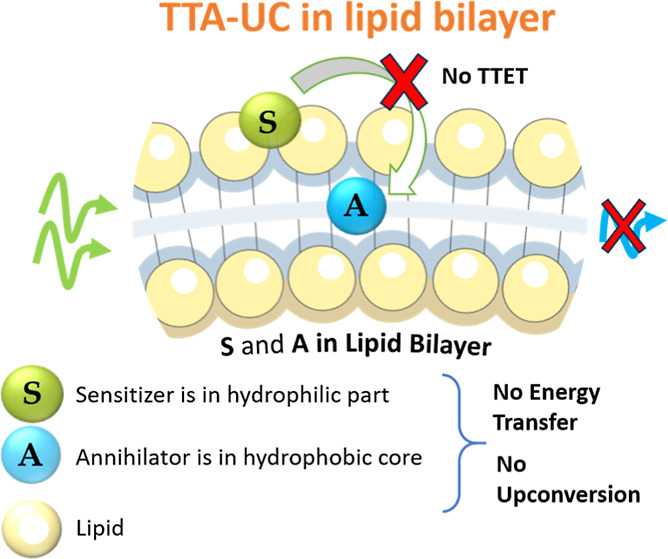 Figure 10
 Figure 11
Peer Reviews
No public reviews on file for this paper yet. If you reviewed it on a platform where reviews are public (OpenReview, ICLR, NeurIPS, ICML), you can paste yours below so the community can read it here.
Videos
No videos yet. Explain this paper in a talk, walkthrough, or lecture? Add one.
Taxonomy
TopicsLuminescence and Fluorescent Materials · Molecular Sensors and Ion Detection · Supramolecular Chemistry and Complexes