Resonance-Enhanced Multiphoton Ionization Spectrum and Computational Study of 2‑Cyclopenten-1-one in Its T 1(n, π*) State
Alexander W. Narkiewicz-Jodko, Sean W. Parsons, Hansuja Chaurasia, Stephen L. Coy, Stephen Drucker

TL;DR
This study combines experimental and computational methods to analyze the T1(n, π*) state of 2-cyclopenten-1-one, revealing vibrational frequencies and testing the accuracy of various computational models.
Contribution
The paper introduces a new computational hybrid method (CC/DFT) and compares its performance with other methods for predicting excited-state vibrational frequencies.
Findings
The REMPI spectrum of 2CP in the T1(n, π*) state reveals eight fundamental vibrational frequencies.
Out-of-plane vibrational modes show significant frequency reduction upon electronic excitation.
TDDFT methods outperform EOM-EE-CCSD in predicting excited-state fundamentals.
Abstract
The 2-cyclopenten-1-one molecule (2CP) is a cyclic conjugated enone that participates in a variety of photochemical reactions. Prior computational work indicates that the T 1(n, π*) excited state of 2CP mediates relaxation processes that can lead to photoproducts. In this paper, we report the T 1(n, π*) ← S 0 vibronically resolved spectrum of 2CP, recorded in a supersonic free-jet expansion using resonance enhanced multiphoton ionization (REMPI) detection. The REMPI spectrum covers the region extending to +900 cm–1 with respect to the T 1(n, π*) ← S 0 origin band at 25,956 cm–1. Vibronic analysis of the REMPI spectrum yielded fundamental frequencies for eight vibrational modes in the T 1(n, π*) state, including four modes that could not be observed in the jet-cooled phosphorescence excitation spectrum we reported previously. We observe that the out-of-plane, but not in-plane modes,…
Genes, proteins, chemicals, diseases, species, mutations and cell lines named across the full text — each resolved to its canonical identifier and authoritative record.
Click any figure to enlarge with its caption.
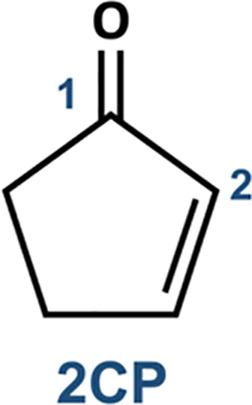 Figure 1
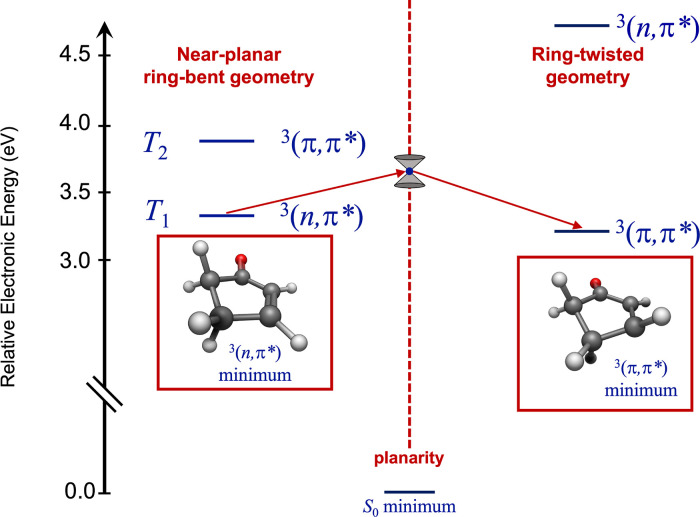 Figure 2
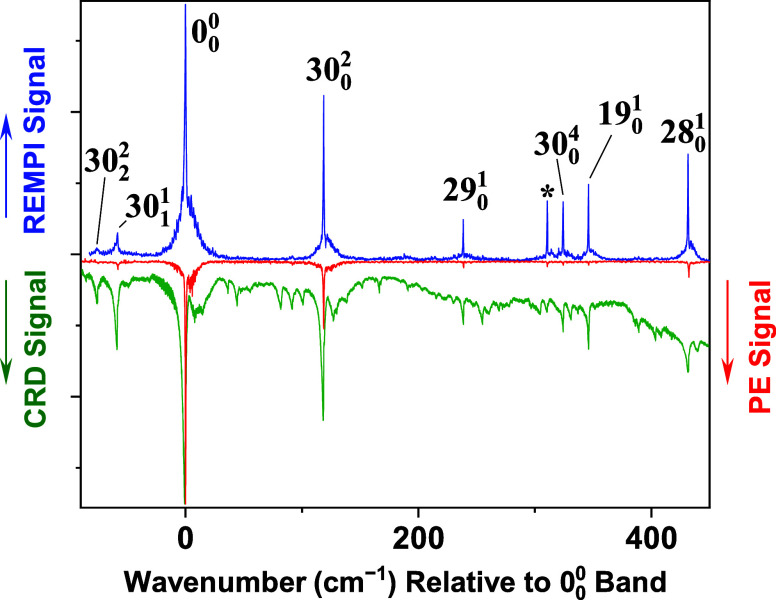 Figure 3
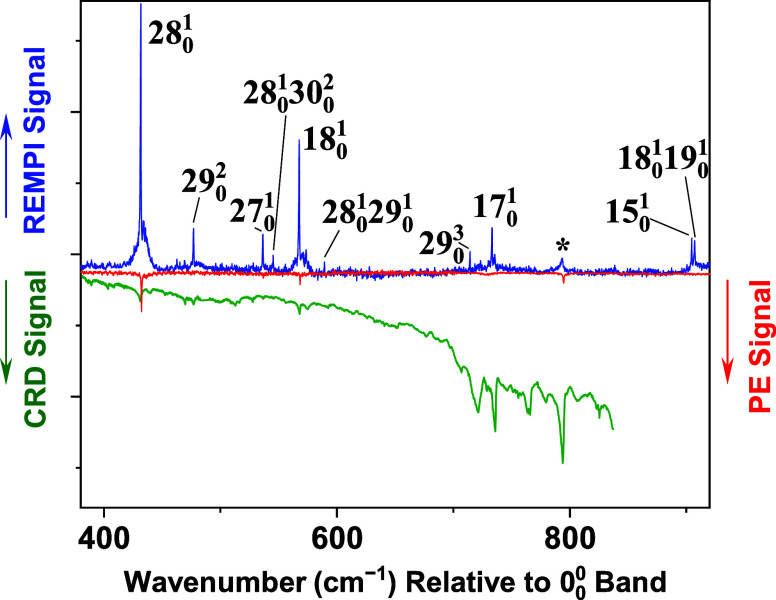 Figure 4
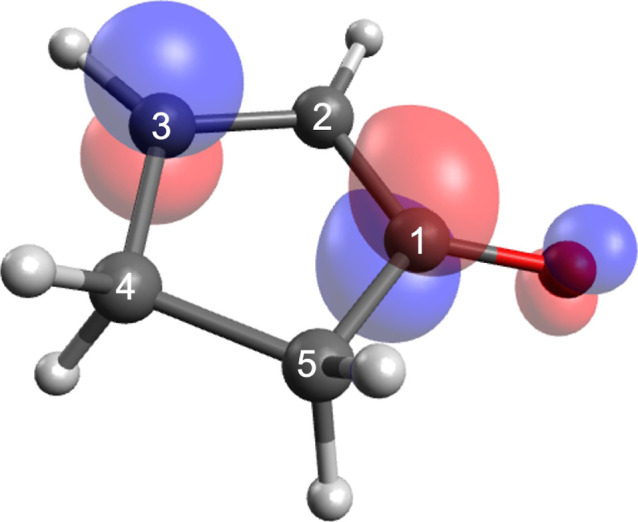 Figure 5
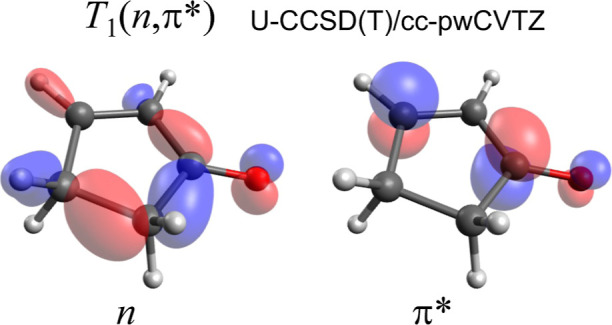 Figure 6
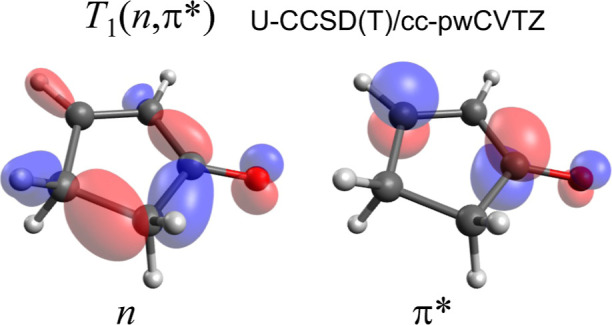 Figure 7
 Figure 8
 Figure 9
 Figure 10
Peer Reviews
No public reviews on file for this paper yet. If you reviewed it on a platform where reviews are public (OpenReview, ICLR, NeurIPS, ICML), you can paste yours below so the community can read it here.
Videos
No videos yet. Explain this paper in a talk, walkthrough, or lecture? Add one.
Taxonomy
TopicsMolecular spectroscopy and chirality · Photochemistry and Electron Transfer Studies · Porphyrin and Phthalocyanine Chemistry