CO2 Capture by Porous Polymeric Sorbents: From New cis‑/trans-Oxovanadium(IV) Catalyst to Functional Materials
Kacper Pobłocki, Marzena Białek, Katarzyna N. Jarzembska, Mateusz A. Baluk, Radosław Kamiński, Przemysław Rybiński, Krzysztof Matus, Joanna Drzeżdżon, Barbara Gawdzik, Dagmara Jacewicz

TL;DR
Scientists developed a new catalyst to create porous polymer materials that efficiently capture CO2, helping reduce greenhouse gas emissions.
Contribution
A novel oxovanadium(IV) catalyst was developed for synthesizing functional CO2 sorbent materials with high efficiency.
Findings
Oligo(3-buten-2-ol) showed high CO2 sorption (0.82 mmol g–1) and a heat of adsorption of 8.51 kJ mol–1.
The new oxovanadium(IV) catalyst demonstrated high activity in polymerizing olefins and polar monomers.
The stability constant of the complex formation was determined as log β1210 = 27.82.
Abstract
The challenge of ever-increasing greenhouse gas emissions correlates with intensive research into the development of new CO2 sorbents. The research aimed to propose a new generation of porous polymer sorbents that contribute to decarbonization. Among all oligomers and (co)polymers, the 3-buten-2-ol oligomer showed the highest CO2 sorption properties (0.82 mmol g–1). The heat of adsorption of CO2 by oligo(3-buten-2-ol) was equal to 8.51 kJ mol–1. Polyolefins and polar oligomers were synthesized using a new, innovative, and highly active oxovanadium(IV) precatalyst. An easy, one-step method for the synthesis of cis/trans-[VO(acac)2(3-ppy)] provides a unique coordination compound containing two molecules that are reciprocal geometric isomers with a spatial arrangement of acetylacetonate ligands (cis and trans). The complex shows very active catalytic properties in the polymerization…
Genes, proteins, chemicals, diseases, species, mutations and cell lines named across the full text — each resolved to its canonical identifier and authoritative record.
Click any figure to enlarge with its caption.
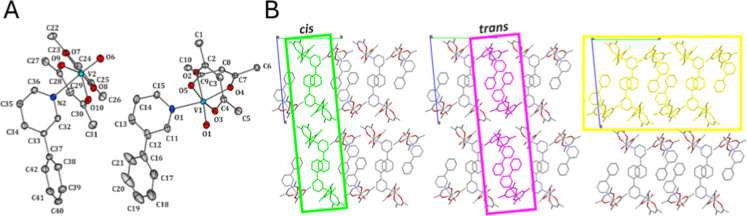 Figure 1
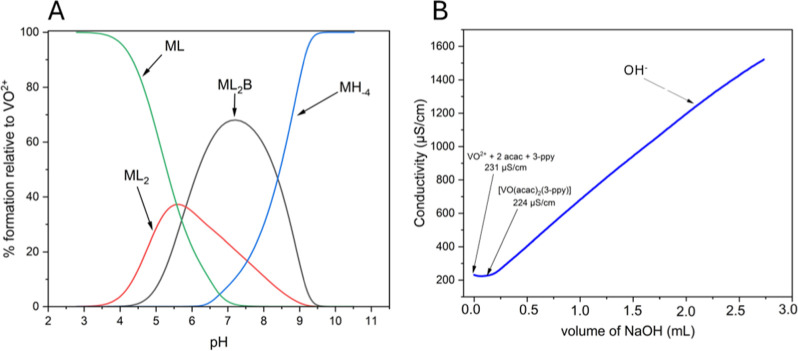 Figure 2
 Figure 3
 Figure 4
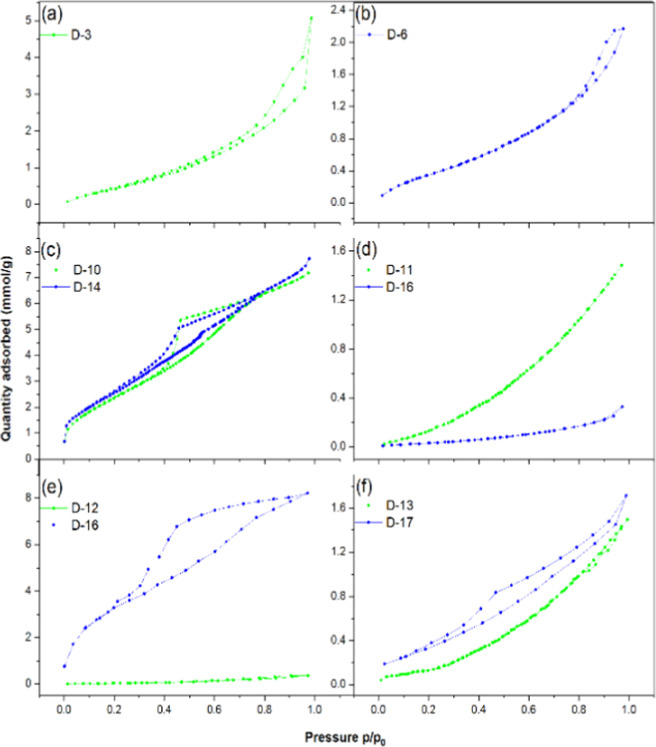 Figure 5
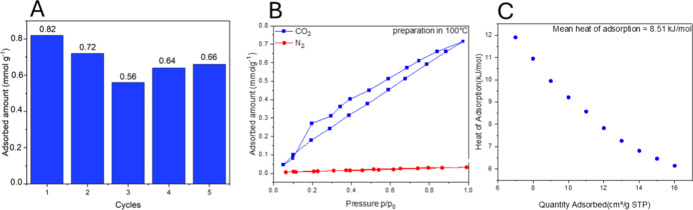 Figure 6
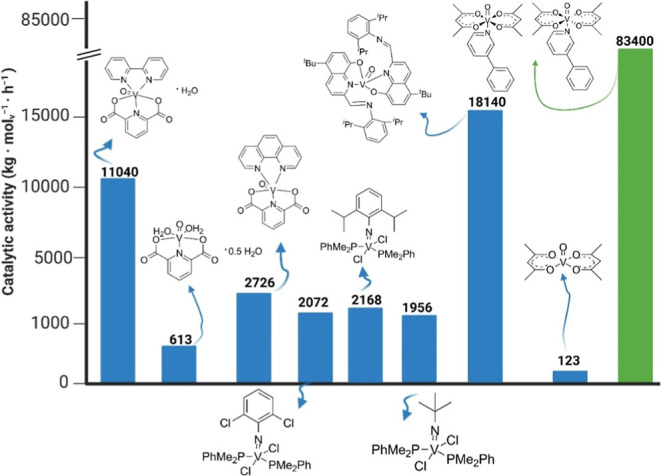 Figure 7
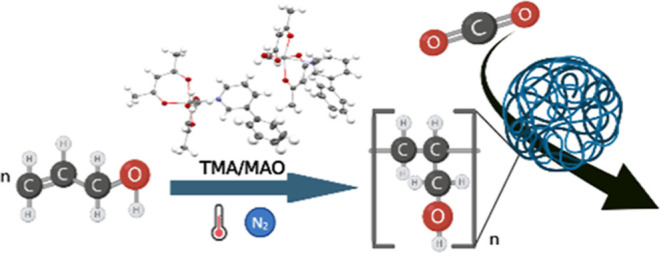 Figure 8
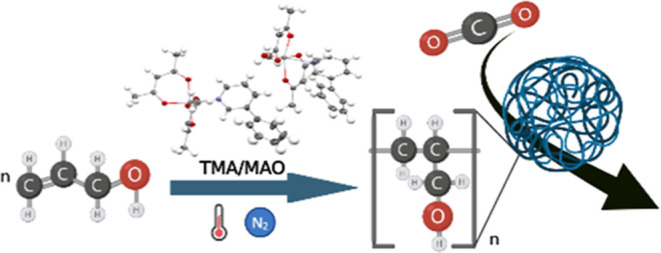 Figure 9
 Figure 10
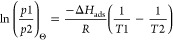 Figure 11
 Figure 12
 Figure 13
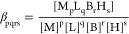 Figure 14
 Figure 15
Peer Reviews
No public reviews on file for this paper yet. If you reviewed it on a platform where reviews are public (OpenReview, ICLR, NeurIPS, ICML), you can paste yours below so the community can read it here.
Videos
No videos yet. Explain this paper in a talk, walkthrough, or lecture? Add one.
Taxonomy
TopicsMetal-Organic Frameworks: Synthesis and Applications · Ionic liquids properties and applications · Carbon dioxide utilization in catalysis