Quality of Life After Mitral Transcatheter Edge-to-Edge Repair According to Baseline Tricuspid Regurgitation
Collin J. Brooks, Neal Duggal, Milan Seth, Megan S. Joseph, Devraj Sukul, Stan J. Chetcuti, Gorav Ailawadi, Himanshu Patel, P. Michael Grossman, Raed Alnajjar, Andrew W. Harris

TL;DR
This study finds that most patients undergoing a heart procedure called M-TEER experience improved quality of life, even if they have severe tricuspid regurgitation.
Contribution
The study provides new evidence on quality of life outcomes after M-TEER in patients with varying degrees of tricuspid regurgitation.
Findings
Most patients with moderate/severe TR had large improvements in quality of life after M-TEER.
Quality of life outcomes were similar for patients with moderate/severe TR compared to no/mild TR.
Thirty-day mortality was higher in patients with moderate/severe TR, but adjusted outcomes showed no significant difference.
Abstract
There is a high prevalence of significant tricuspid regurgitation (TR) in patients undergoing mitral transcatheter edge-to-edge repair (M-TEER). Significant TR is associated with poor prognosis and affects decision-making between M-TEER and concomitant mitral and tricuspid valve surgery. Improved quality of life (QoL) is an important metric for patients. We analyzed data from 1838 patients undergoing M-TEER included in a multicenter statewide registry from 2015 to 2023. QoL was assessed using baseline and 30-day Kansas City Cardiomyopathy Questionnaire (KCCQ) scores. Patients were classified as no/mild TR or moderate/severe TR, and changes in KCCQ scores were compared. The primary outcome was an adjusted analysis consisting of survival to 30 days with a ≥15-point improvement in KCCQ score. Complete endpoint data were available for 1421 patients (77.3%). On average, patients undergoing…
Genes, proteins, chemicals, diseases, species, mutations and cell lines named across the full text — each resolved to its canonical identifier and authoritative record.
Click any figure to enlarge with its caption.
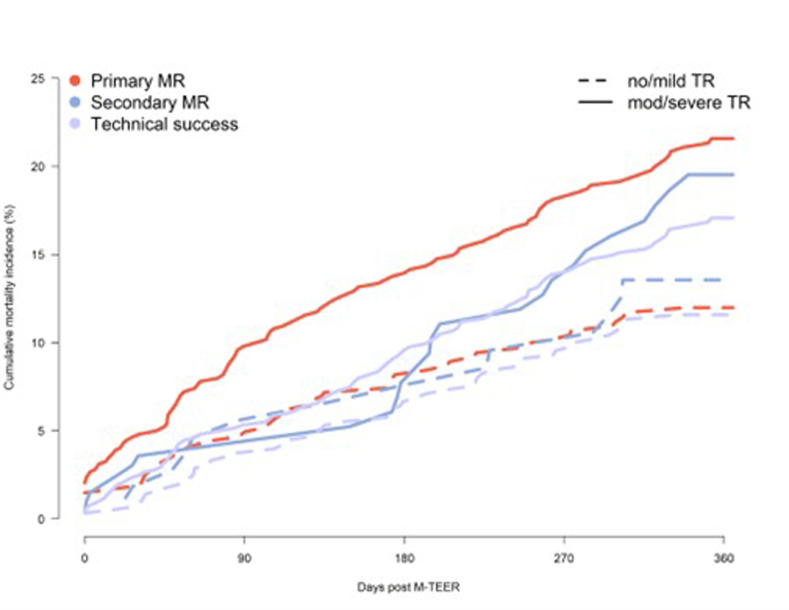 Figure 1
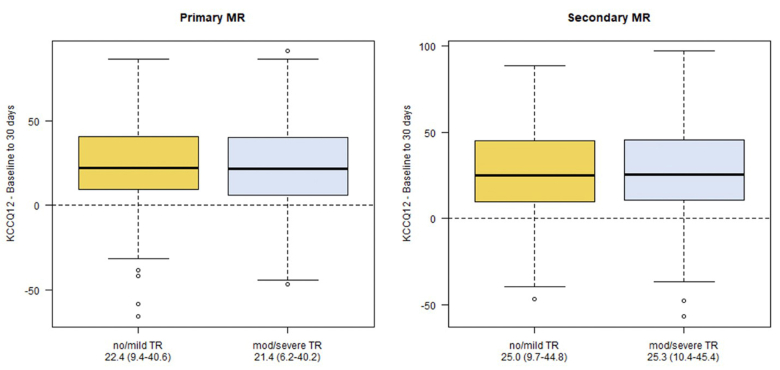 Figure 2
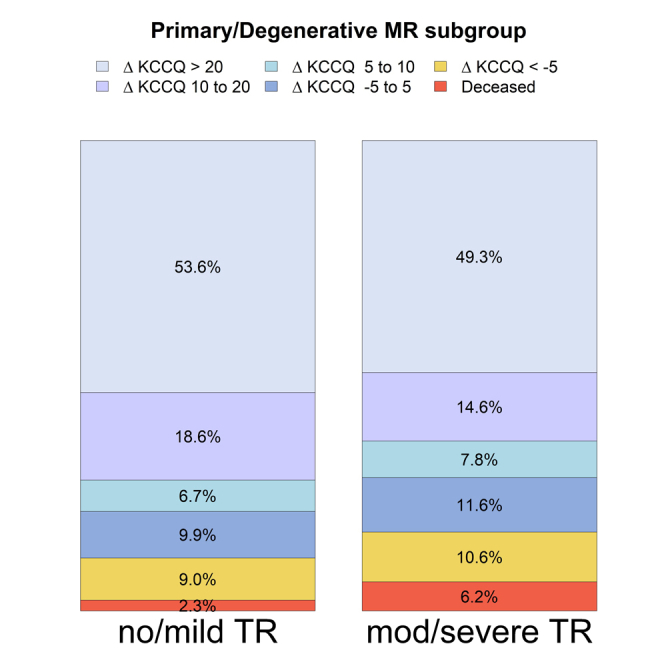 Figure 3
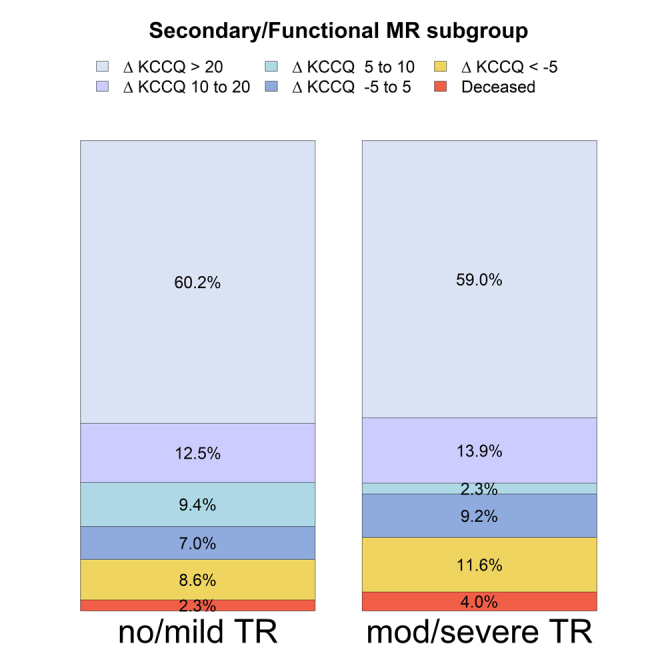 Figure 4
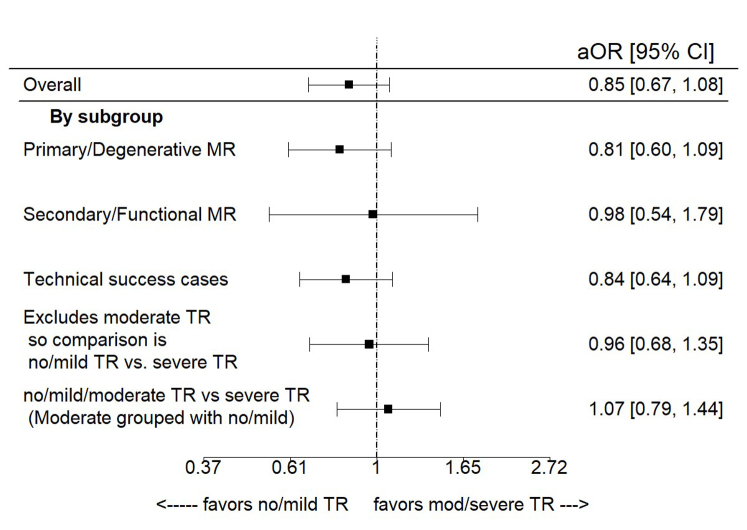 Figure 5
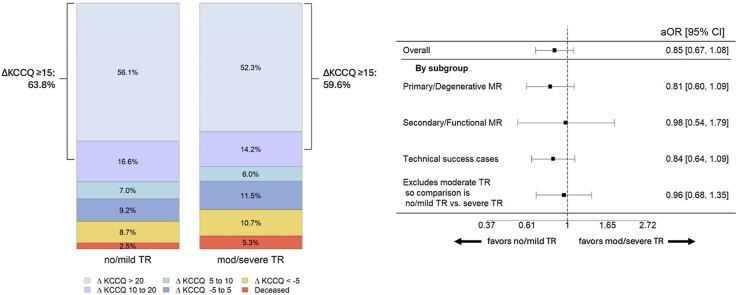 Figure 6
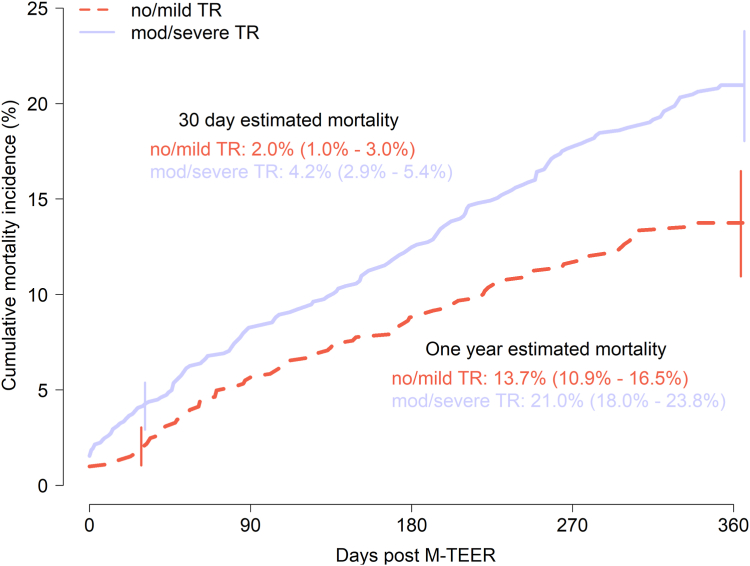 Figure 7
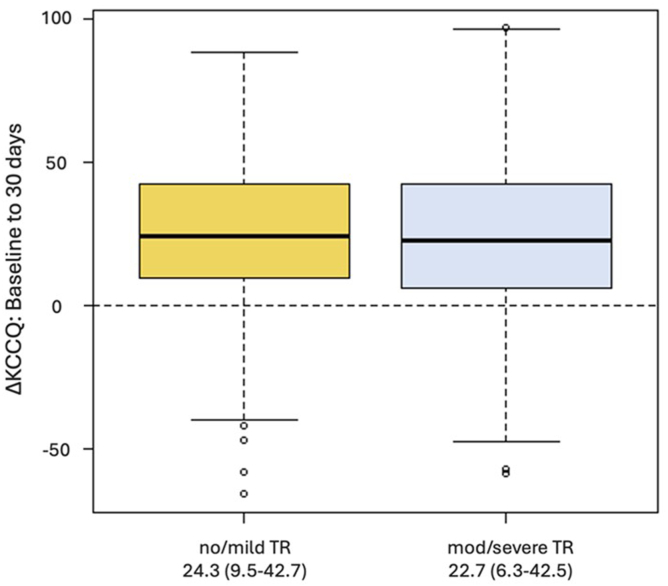 Figure 8
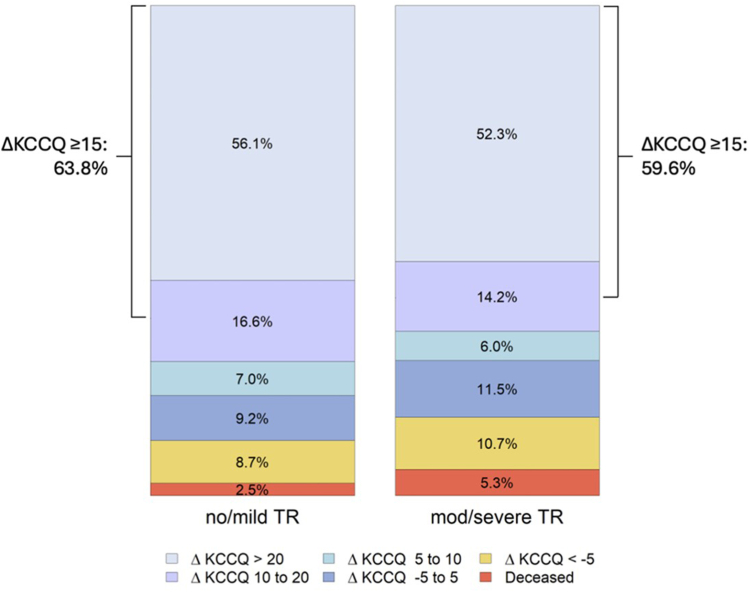 Figure 9
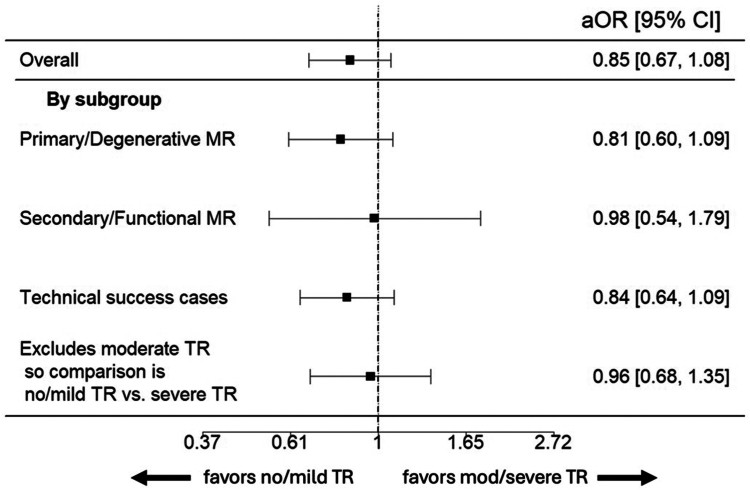 Figure 10
Peer Reviews
No public reviews on file for this paper yet. If you reviewed it on a platform where reviews are public (OpenReview, ICLR, NeurIPS, ICML), you can paste yours below so the community can read it here.
Videos
No videos yet. Explain this paper in a talk, walkthrough, or lecture? Add one.
Taxonomy
TopicsCardiac Valve Diseases and Treatments · Cardiovascular Function and Risk Factors · Cardiac pacing and defibrillation studies