Premenstrual Syndrome, Ultra‐Processed Food Intake, and Food Cravings: A New Perspective
Mahmut Bodur, Nursena Ersoy‐Söke, Emine Karademir, Beyzanur Özkan, Aslı Uçar

TL;DR
This study finds that young women with premenstrual syndrome consume more ultra-processed foods and experience stronger food cravings, suggesting diet changes could help manage symptoms.
Contribution
The study establishes a novel link between ultra-processed food consumption, food cravings, and premenstrual syndrome severity in young women.
Findings
Women with PMS consumed significantly more ultra-processed foods during the menstrual phase.
Food cravings and UPF consumption were significant predictors of PMS symptom scores.
Reducing UPF intake and managing cravings may help alleviate PMS symptoms.
Abstract
To investigate the relationship between premenstrual syndrome (PMS) prevalence, ultra‐processed food (UPF) consumption, and food cravings in young adult women. A cross‐sectional study was conducted over one menstrual cycle, utilizing the Premenstrual Syndrome Scale to assess PMS symptoms and the Food Craving Questionnaire‐Trait to evaluate food cravings. Dietary data, including UPF consumption, were collected through self‐reported dietary records. The study was carried out among young adult women, focusing on their dietary behaviors and menstrual health. A total of 230 women participated in the study, with a mean age of 20.6 ± 1.8 years. The prevalence of PMS was 61.3% among the participants. Women with PMS reported significantly higher UPF consumption and increased food craving scores compared to those without PMS. UPF energy intake during the menstrual phase was significantly higher…
Genes, proteins, chemicals, diseases, species, mutations and cell lines named across the full text — each resolved to its canonical identifier and authoritative record.
Click any figure to enlarge with its caption.
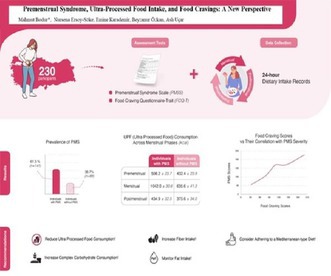 Figure 1
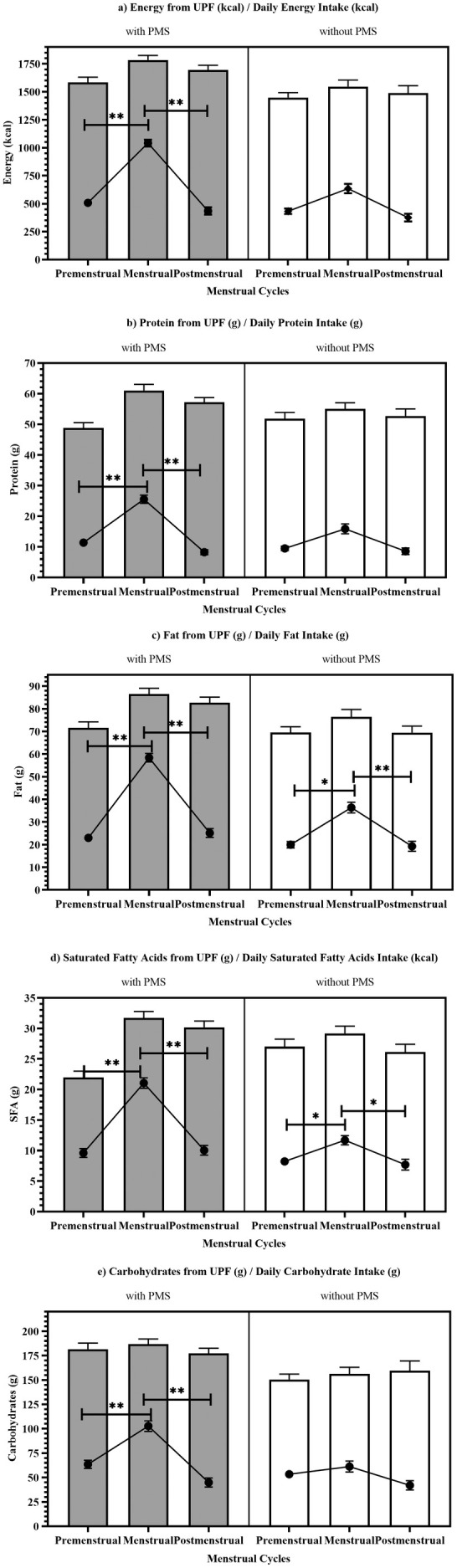 Figure 2
Peer Reviews
No public reviews on file for this paper yet. If you reviewed it on a platform where reviews are public (OpenReview, ICLR, NeurIPS, ICML), you can paste yours below so the community can read it here.
Videos
No videos yet. Explain this paper in a talk, walkthrough, or lecture? Add one.
Taxonomy
TopicsConsumer Attitudes and Food Labeling · Nutrition, Genetics, and Disease · Obesity, Physical Activity, Diet