Musical auditory feedback BCI: clinical pilot study of the Encephalophone
Thomas A. Deuel, James Wenlock, Alana McGovern, James Rosenthal, Juan Pampin

TL;DR
A new brain-computer interface called the Encephalophone helps people with severe motor disabilities create music using brain signals, improving their ability to express themselves.
Contribution
The study introduces a novel auditory BCI system that enables real-time musical expression without physical movement.
Findings
Subjects improved pitch-matching accuracy by 15.6 percentage points and increased hits by 58.7% over three sessions.
All participants scored above random probability in pitch-matching tasks, indicating meaningful performance improvement.
Participants reported positive experiences with self-expression, enjoyment, and control during music improvisation.
Abstract
Therapeutic strategies for patients with severe acquired motor disability are relatively limited and show variable efficacy. Innovative technologies such as brain-computer interfaces (BCIs) have been developed recently that might benefit certain types of patients. Here, we tested a previously described auditory BCI, the Encephalophone, which may offer new options to improve quality of life and function. Eleven subjects with acquired moderate to severe motor disability, who had lost their ability to express themselves musically, were enrolled and 10 completed a clinical pilot study of the hands-free Encephalophone brain-computer interface (BCI). Subjects were briefly instructed on the use of the Encephalophone BCI, which uses EEG measured motor imagery to allow users to generate musical notes in real time without requiring movement. Subjects then underwent a pitch-matching task, a…
Genes, proteins, chemicals, diseases, species, mutations and cell lines named across the full text — each resolved to its canonical identifier and authoritative record.
Click any figure to enlarge with its caption.
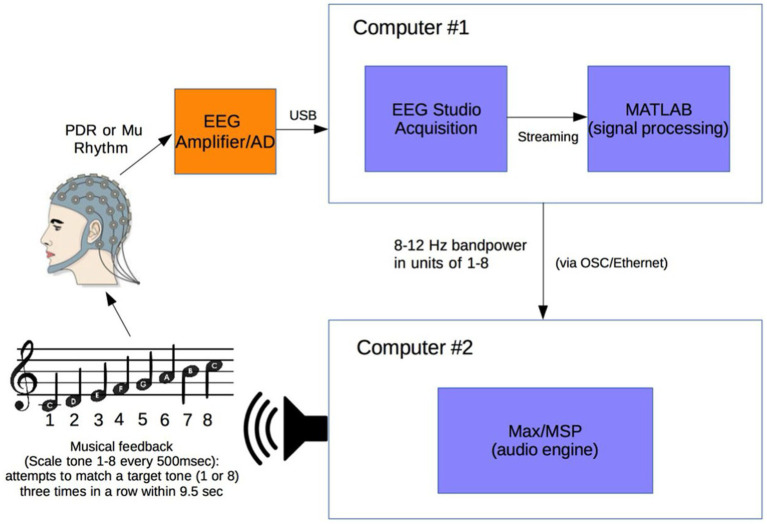 Figure 1
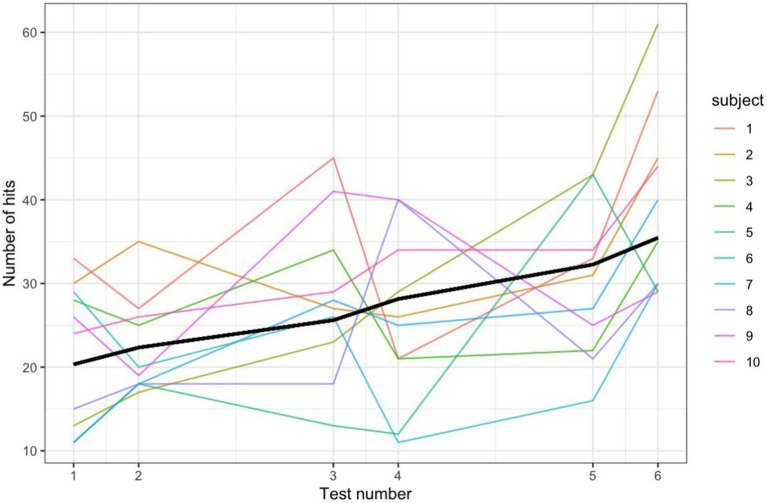 Figure 2
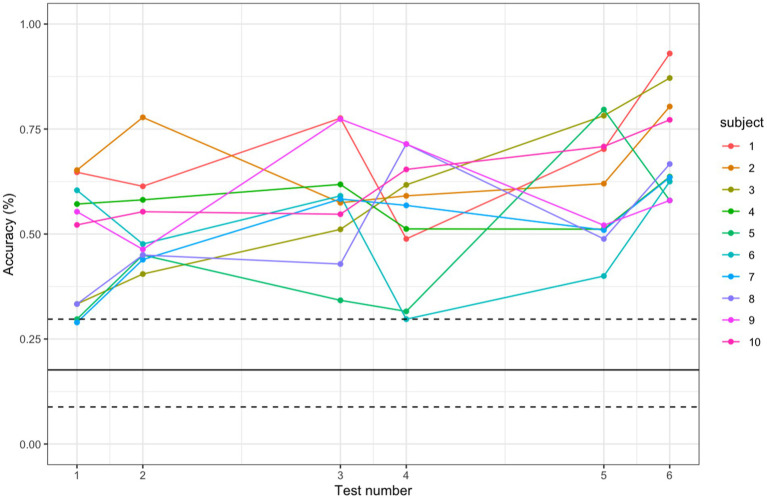 Figure 3
Peer Reviews
No public reviews on file for this paper yet. If you reviewed it on a platform where reviews are public (OpenReview, ICLR, NeurIPS, ICML), you can paste yours below so the community can read it here.
Videos
No videos yet. Explain this paper in a talk, walkthrough, or lecture? Add one.
Taxonomy
TopicsEEG and Brain-Computer Interfaces · Neural and Behavioral Psychology Studies · Neuroscience and Music Perception