Clinical features of benign paroxysmal positional vertigo in the elderly
Ran Zhou, Huan Wang, Jiachen Shan, Chengcheng Li, Lin Han

TL;DR
This study compares how benign paroxysmal positional vertigo affects older adults versus middle-aged individuals, showing it has a greater impact on the elderly's daily life and balance.
Contribution
The study highlights the unique clinical features and outcomes of BPPV in elderly patients compared to middle-aged individuals.
Findings
Elderly BPPV patients had higher DHI scores, indicating greater disability from dizziness.
Elderly patients had lower BBS scores, suggesting worse balance.
Elderly patients had lower maneuver rates and higher fall rates compared to middle-aged patients.
Abstract
The typical age of benign paroxysmal positional vertigo (BPPV) is between 50 and 60 years. With the development of diagnostic techniques and the growth of the elderly, the number of elderly patients has been on the rise gradually. This study compared the clinical characteristics, treatments, and prognoses with patients. Patients were divided into two age groups based on age at onset of the disease: middle-aged BPPV (50–59 years) and elderly BPPV (60–80 years old). We compared clinical characteristics, treatment, prognosis, BPPV location, questionnaires between the two groups. Female patients constituted a high proportion in both the middle-aged BPPV group (21, 75.0%) and the elderly BPPV group (39, 67.2%). The elderly group had significantly higher median scores in the DHI impact than the middle-aged group (24 vs. 16, p = 0.008). In contrast, the BBS score decreased (44 vs. 49, p =…
Genes, proteins, chemicals, diseases, species, mutations and cell lines named across the full text — each resolved to its canonical identifier and authoritative record.
Click any figure to enlarge with its caption.
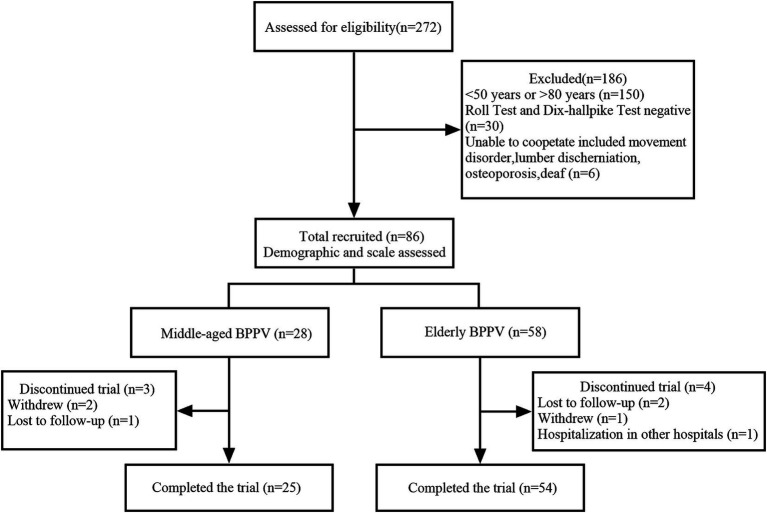 Figure 1
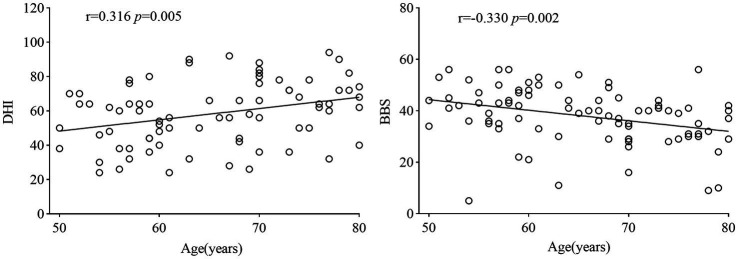 Figure 2
Peer Reviews
No public reviews on file for this paper yet. If you reviewed it on a platform where reviews are public (OpenReview, ICLR, NeurIPS, ICML), you can paste yours below so the community can read it here.
Videos
No videos yet. Explain this paper in a talk, walkthrough, or lecture? Add one.
Taxonomy
TopicsVestibular and auditory disorders · Ophthalmology and Eye Disorders · Glaucoma and retinal disorders