Obtaining new brewing yeasts using regional Chilean wine yeasts through an adaptive evolution program
Ángela Contreras, Manuel Villalobos-Cid, Cristian Valdés, Carlos A. Villarroel, Felipe Castro, Ignacio Farías, Gustavo Lorca

TL;DR
Researchers evolved Chilean wine yeasts to function as brewing yeasts by adapting them to high osmotic stress and low temperatures.
Contribution
A novel adaptive evolution method was used to convert non-brewing wine yeasts into effective brewing yeasts.
Findings
An evolved strain successfully fermented high gravity wort at low temperatures.
Genome analysis revealed gene duplications in maltose metabolism and copy losses in wine-specific stress genes.
The evolved strain could replace traditional brewing yeasts without specialized purchases.
Abstract
Beer consumption has increased worldwide, positioning it as the most consumed alcoholic beverage on the market. Saccharomyces cerevisiae brewing yeasts have specific genetic characteristics that allow them to survive in malt wort using maltose and maltotriose as the principal carbon source. However, metabolizing these sugars is challenging for non-brewery Saccharomyces strains under typical brewing conditions, which involve high osmotic stress and low temperatures. These conditions restrict beer producers to a limited range of yeast strains, increasing their cost and contributing to beer flavors uniformity. Here, we performed an adaptive evolution process to improve the fermentative capacities of S. cerevisiae winemaking yeasts isolated from Chilean vineyards to allow their use in brewing. Initially, we screened 50 strains of viticultural origin collected from different areas of Chile.…
Genes, proteins, chemicals, diseases, species, mutations and cell lines named across the full text — each resolved to its canonical identifier and authoritative record.
Click any figure to enlarge with its caption.
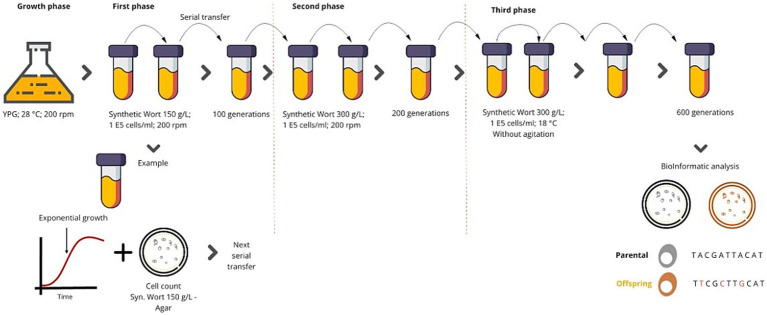 Figure 1
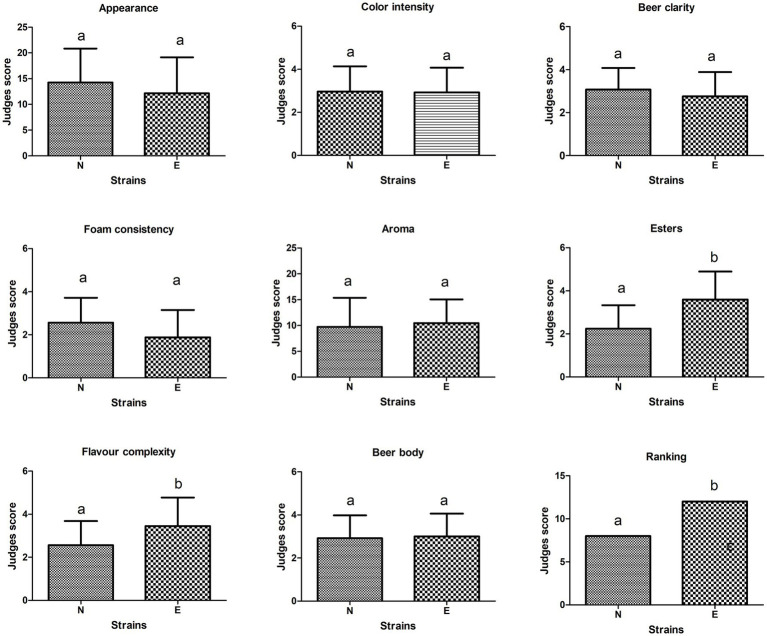 Figure 2
Peer Reviews
No public reviews on file for this paper yet. If you reviewed it on a platform where reviews are public (OpenReview, ICLR, NeurIPS, ICML), you can paste yours below so the community can read it here.
Videos
No videos yet. Explain this paper in a talk, walkthrough, or lecture? Add one.
Taxonomy
TopicsFermentation and Sensory Analysis · Fungal and yeast genetics research · Microbial Metabolic Engineering and Bioproduction