Inhalation and inflammation: examining aeroallergens and eosinophilic esophagitis
Sitharthan Sekar, Kate Kelly, Dipa Sheth, Marianna Papademetriou

TL;DR
This paper explores how airborne allergens contribute to the development and symptoms of eosinophilic esophagitis, a chronic inflammatory gastrointestinal disease.
Contribution
The paper highlights the growing role of aeroallergens in EoE and emphasizes the need for a multidisciplinary approach to patient care.
Findings
Aeroallergens are increasingly linked to the development and clinical features of EoE.
Seasonality and allergen-specific mechanisms are important factors in EoE.
Collaboration between allergists and gastroenterologists improves patient management.
Abstract
Eosinophilic esophagitis (EoE) is a chronic immune-mediated disease leading to inflammation in the esophageal lining. EoE has become a significant cause of gastrointestinal illness in both children and adults. While there is significant focus on dietary triggers in the pathophysiology of the disease, aeroallergens are also increasingly implicated in both the development and clinical presentation. Possible mechanisms, seasonality and current evidence for the role of aeroallergens in EoE are discussed, including seasonality, allergen specific mechanisms and therapeutic options. A multidisciplinary team between allergists and gastroenterologists is optimal for coordinated patient management.
Genes, proteins, chemicals, diseases, species, mutations and cell lines named across the full text — each resolved to its canonical identifier and authoritative record.
Click any figure to enlarge with its caption.
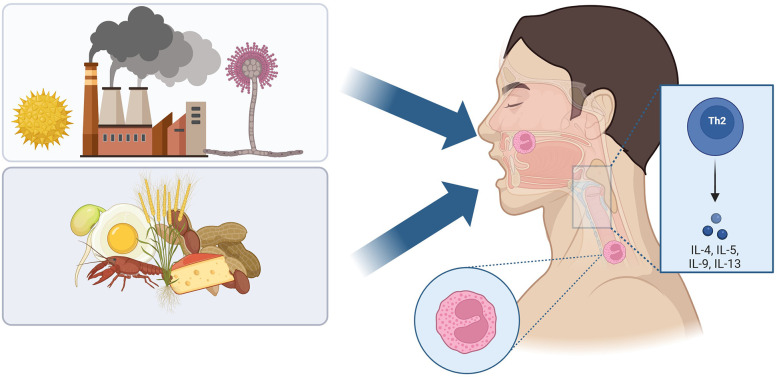 Figure 1
Peer Reviews
No public reviews on file for this paper yet. If you reviewed it on a platform where reviews are public (OpenReview, ICLR, NeurIPS, ICML), you can paste yours below so the community can read it here.
Videos
No videos yet. Explain this paper in a talk, walkthrough, or lecture? Add one.
Taxonomy
TopicsEosinophilic Esophagitis · Eosinophilic Disorders and Syndromes · IL-33, ST2, and ILC Pathways