Added value of dual-phase 99mTc-HYNIC-FAPI-04 SPECT/CT in postoperative follow-up of colorectal cancer
Donghua Sun, Yan Liu, Renhua Hou, Jianan Li, Ye Peng, Yingqiu Wang

TL;DR
This study shows that using dual-phase SPECT/CT imaging with 99mTc-HYNIC-FAPI-04 improves the detection of cancer recurrence in colorectal cancer patients after surgery.
Contribution
The study demonstrates that dual-phase imaging provides better diagnostic accuracy than single-phase imaging for distinguishing benign and malignant lesions in postoperative colorectal cancer follow-up.
Findings
Dual-phase imaging showed higher diagnostic efficiency with an AUC of 0.889 compared to single-phase methods.
TBR-delayed and RI values were significantly higher in malignant lesions than in benign ones.
Combining TBR-early, TBR-delayed, and RI improved sensitivity and specificity for lesion differentiation.
Abstract
To assess the added value of dual-phase 99mTc-HYNIC-FAPI-04 single-photon emission computed tomography/computed tomography (SPECT/CT) compared with single-phase imaging in postoperative follow-up of colorectal cancer (CRC). Early and delayed 99mTc-HYNIC-FAPI-04 SPECT/CT imaging were undertaken in 21 patients with CRC after surgery. The mean radioactivity count of the lesion site and abdominal aorta in secondary imaging was delineated and measured. The early and delayed target background ratio (TBR) and retention index (RI) were calculated, respectively. The results of biopsy or postoperative pathology, clinical and imaging follow-up were used as the “gold standard” of tumor metastasis. Lesions were divided into “benign” and “malignant” groups. The uptake rate and metabolic rate of 99mTc-HYNIC-FAPI-04 in the two groups were observed. The diagnostic efficiency of early imaging, delayed…
Genes, proteins, chemicals, diseases, species, mutations and cell lines named across the full text — each resolved to its canonical identifier and authoritative record.
Click any figure to enlarge with its caption.
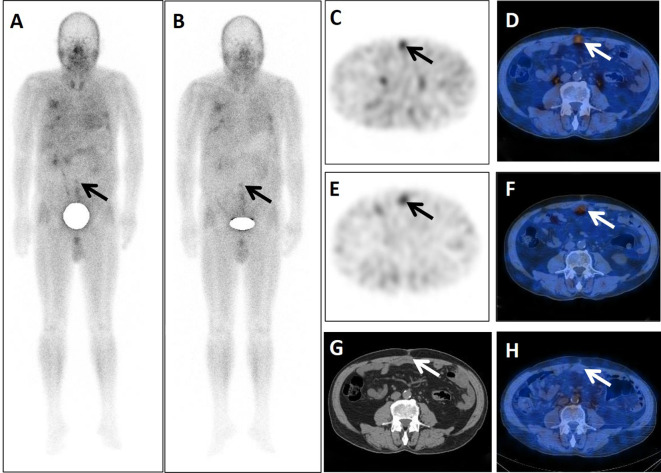 Figure 1
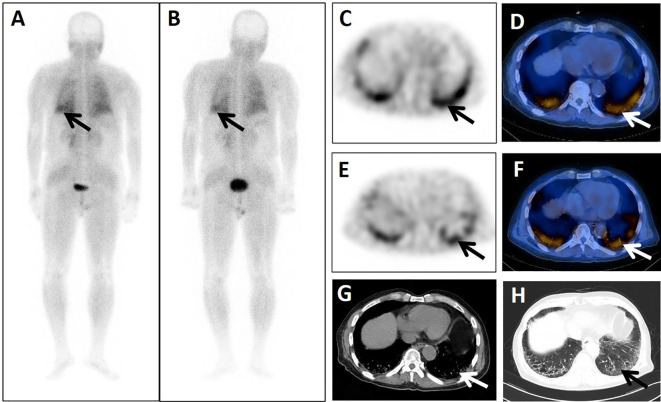 Figure 2
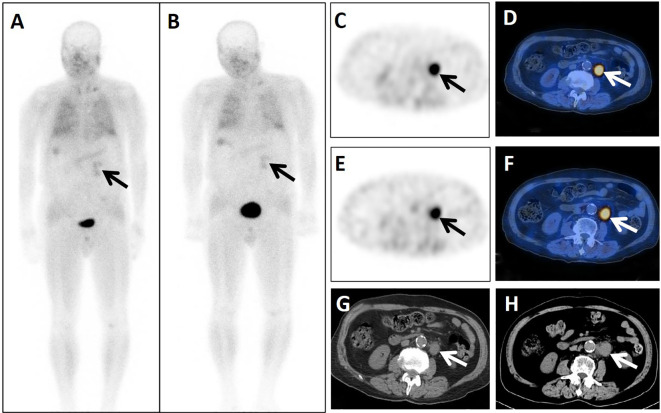 Figure 3
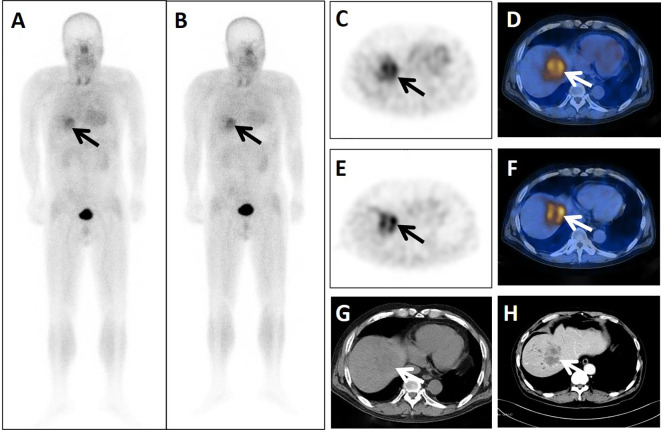 Figure 4
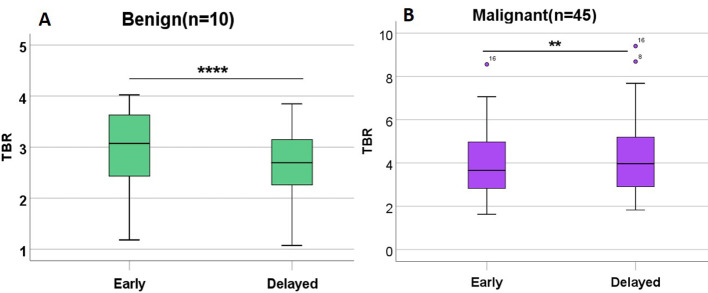 Figure 5
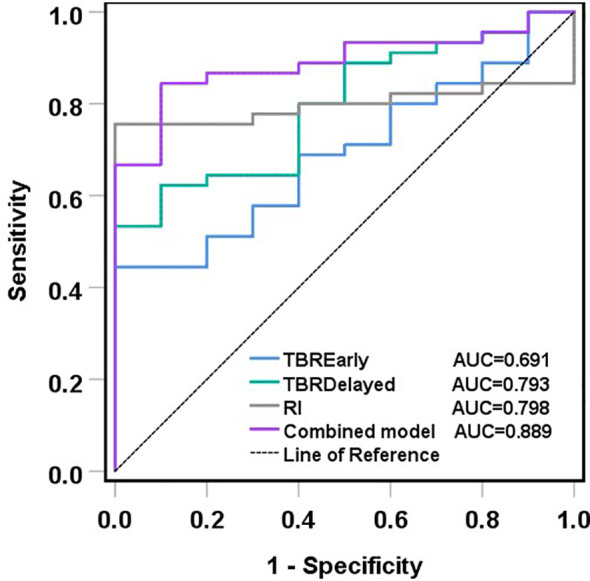 Figure 6
Peer Reviews
No public reviews on file for this paper yet. If you reviewed it on a platform where reviews are public (OpenReview, ICLR, NeurIPS, ICML), you can paste yours below so the community can read it here.
Videos
No videos yet. Explain this paper in a talk, walkthrough, or lecture? Add one.
Taxonomy
TopicsPeptidase Inhibition and Analysis · Radiopharmaceutical Chemistry and Applications · Protease and Inhibitor Mechanisms