Comparative efficacy of the modified minimally invasive “Parachute Technique” vs. the intermuscular GAP Approach in proximal humeral fracture management: a prospective study
Jia Jia Wei, Jun Li, Tao Chen, Hong Chi Yi, Wen Tao Zhao, Tian Tian, Jian Wei Wang

TL;DR
This study compares two surgical techniques for treating shoulder fractures in elderly patients and finds one method to be faster, less invasive, and more effective for recovery.
Contribution
The study provides a direct comparison of two surgical approaches for proximal humeral fractures using a prospective design.
Findings
The Parachute Technique had significantly shorter operation times and less blood loss compared to the Intermuscular Gap Approach.
Functional recovery was better in the Parachute Technique group at 3, 6, and 12 months.
Radiographic healing showed a trend toward better union in the Parachute Technique group at 6 months.
Abstract
Proximal humeral fractures (PHFs) are common in elderly individuals, often resulting from osteoporosis and falls. Surgical intervention is required for displaced fractures to restore shoulder function. This study compares the Modified Minimally Invasive Parachute Technique and the Intermuscular Gap Approach in the management of displaced PHFs. To compare clinical outcomes, including surgical efficiency, complication rates, functional recovery, and radiographic healing, between the two surgical techniques. A total of 40 patients aged 60 or older with displaced two- or three-part PHFs were randomized into two groups (n = 20 per group). Primary outcomes included surgical duration, intraoperative blood loss, and postoperative drainage. Secondary outcomes included pain relief (Visual Analog Scale), shoulder function (Neer Shoulder Score), and fracture healing (Radiographic Union Scoring…
Genes, proteins, chemicals, diseases, species, mutations and cell lines named across the full text — each resolved to its canonical identifier and authoritative record.
Click any figure to enlarge with its caption.
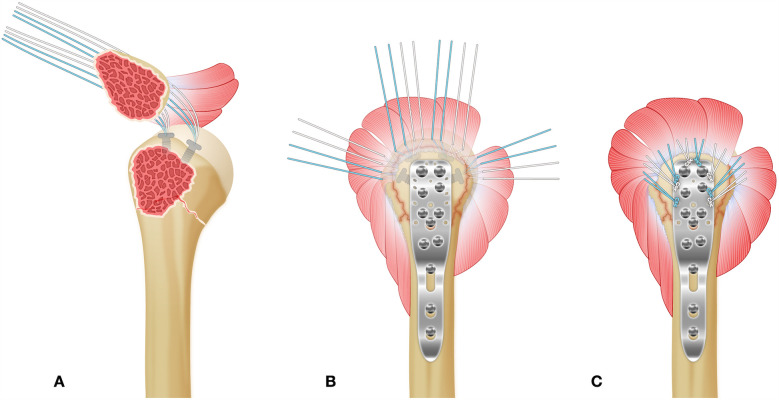 Figure 1
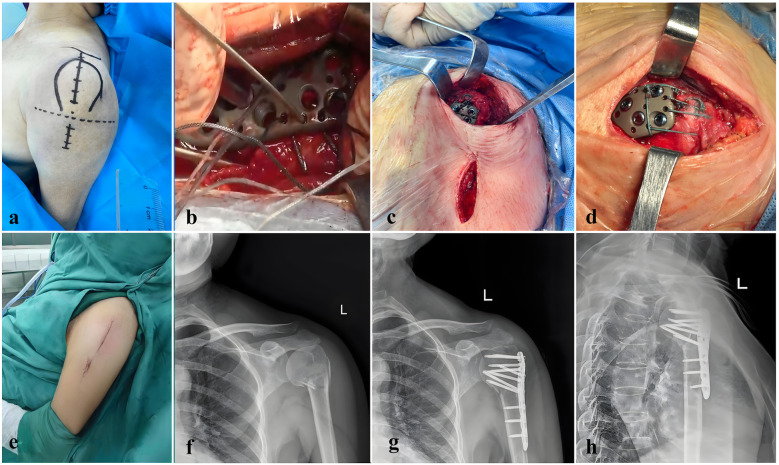 Figure 2
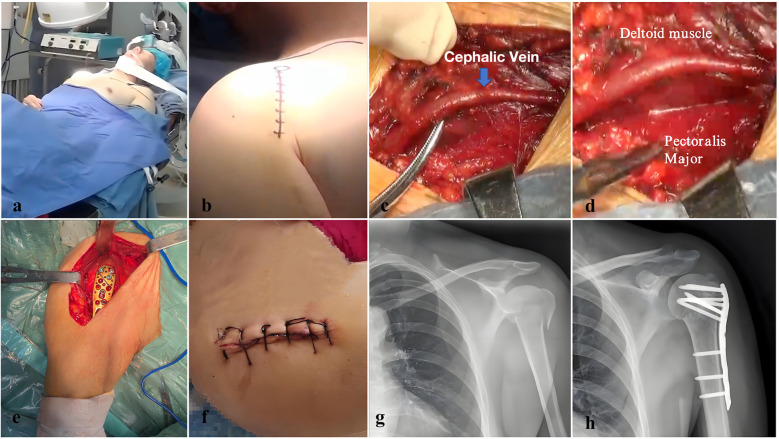 Figure 3
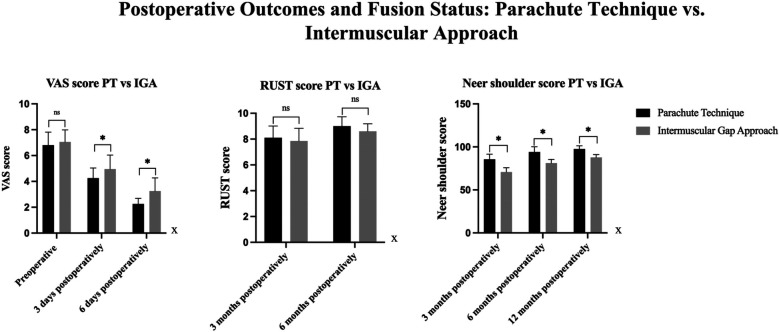 Figure 4
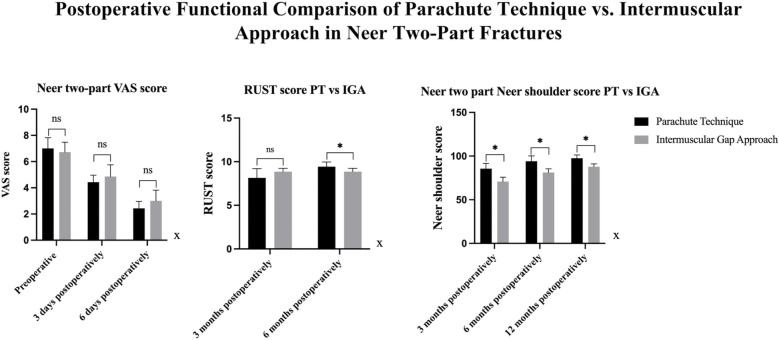 Figure 5
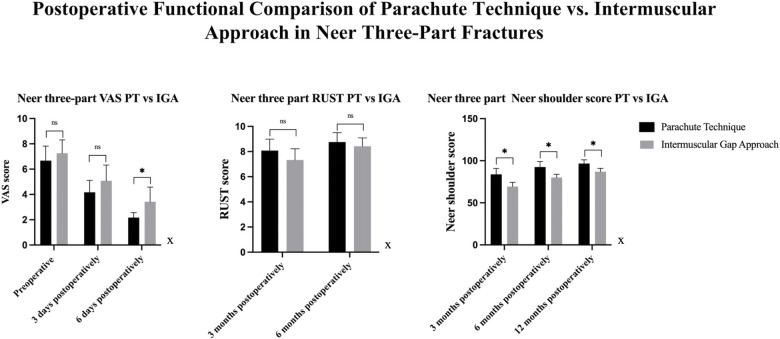 Figure 6
Peer Reviews
No public reviews on file for this paper yet. If you reviewed it on a platform where reviews are public (OpenReview, ICLR, NeurIPS, ICML), you can paste yours below so the community can read it here.
Videos
No videos yet. Explain this paper in a talk, walkthrough, or lecture? Add one.
Taxonomy
TopicsShoulder Injury and Treatment · Pelvic and Acetabular Injuries · Shoulder and Clavicle Injuries