Noninvasive brain oxygen saturation measurement during caloric response in vertigo patients—preliminary report
Magdalena Nowaczewska, Maria Marzec, Łukasz Kluczyński, Katarzyna Sierakowska, Maciej Wróbel

TL;DR
This study explores how brain oxygen levels change during a vertigo test and finds a link between oxygen fluctuations and side effects like dizziness and nausea.
Contribution
The study introduces a noninvasive method to measure brain oxygen saturation during VNG and identifies a correlation with procedure-related side effects.
Findings
No significant changes in brain oxygen levels were observed before and after the caloric test.
Fluctuations in oxygen saturation during the test correlated with the severity of side effects, especially in the right hemisphere.
Abstract
Although videonystagmography (VNG) is a useful test for evaluating patients with vestibular symptoms, it may cause undesirable side effects. The aim of this study was to measure cerebral tissue oxygen saturation in patients with vertigo undergoing VNG and assess its relationship with clinical parameters, including the severity of the procedure-related side effects. Continuous measurement of regional oxygen saturation (rSO2) from both hemispheres during VNG with caloric stimulation was performed in patients with chronic vertigo using a near-infrared spectroscopy sensor. This sensor, connected to a regional oximetry system (O3™, Masimo, Irvine, CA), was placed on the participant’s forehead. During and after the VNG procedure, patient-perceived dizziness, discomfort, headache, and nausea—side effects related to VNG testing—were assessed using a 0-to-10 visual analog scale (VAS). A total…
Genes, proteins, chemicals, diseases, species, mutations and cell lines named across the full text — each resolved to its canonical identifier and authoritative record.
Click any figure to enlarge with its caption.
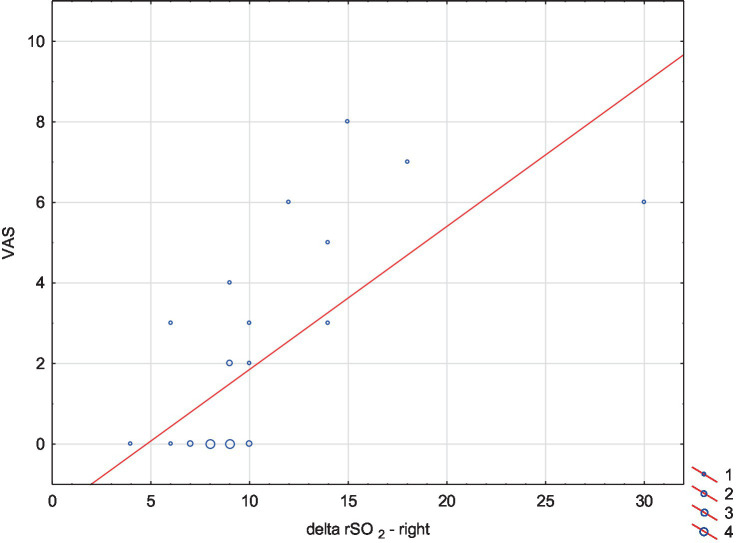 Figure 1
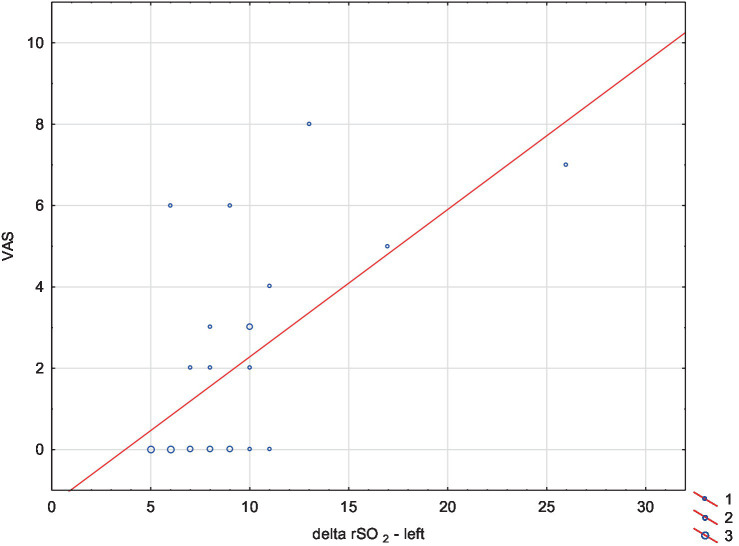 Figure 2
Peer Reviews
No public reviews on file for this paper yet. If you reviewed it on a platform where reviews are public (OpenReview, ICLR, NeurIPS, ICML), you can paste yours below so the community can read it here.
Videos
No videos yet. Explain this paper in a talk, walkthrough, or lecture? Add one.
Taxonomy
TopicsVestibular and auditory disorders · Non-Invasive Vital Sign Monitoring · Optical Imaging and Spectroscopy Techniques