Lipid metabolic adaptations during inflammation are controlled by the circadian clock and impaired by light at night
Beata Benedikova, Viera Sebenova Jerigova, Michal Zeman, Monika Okuliarova

TL;DR
The body's ability to adapt its fat metabolism during inflammation is controlled by the circadian clock and disrupted by exposure to light at night.
Contribution
This study reveals how circadian clocks regulate lipid metabolism during inflammation and how this is impaired by dim light at night.
Findings
Fatty acid mobilization in visceral white adipose tissue was higher after daytime compared to nighttime LPS injection under normal light/dark cycles.
Disruption of the circadian rhythm by dim light at night impaired the body's lipid metabolic adaptations during inflammation.
Circadian clocks in the liver and adipose tissue showed time-of-day-dependent responses to LPS, linking them to metabolic and inflammatory regulation.
Abstract
Immune defence requires systemic metabolic changes to redirect energy and nutrients to activated immune cells. The circadian clock is known to control the immune response, but its role in regulating metabolic adaptations following the immune challenge remains poorly understood. We aimed to examine the inflammatory and metabolic responses in rat liver and visceral white adipose tissue (vWAT) after time-of-day-dependent endotoxin stimulation under a regular light/dark cycle or dim artificial light at night (ALAN; ~2 lx), which disrupts immune and metabolic rhythms. Male rats were challenged with lipopolysaccharide (LPS) either during the day or night and acute changes in metabolic pathways and the peripheral metabolic clocks were analysed at both systemic and molecular levels. In the control light/dark cycle, we observed higher fatty acid (FA) mobilization in vWAT after daytime than…
Genes, proteins, chemicals, diseases, species, mutations and cell lines named across the full text — each resolved to its canonical identifier and authoritative record.
Click any figure to enlarge with its caption.
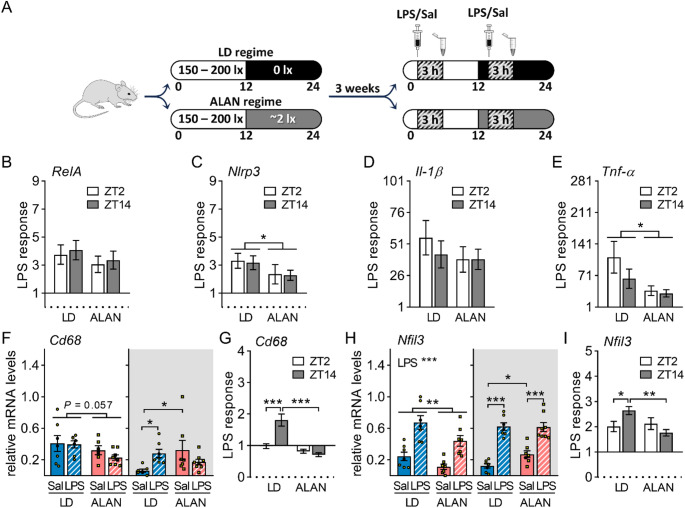 Figure 1
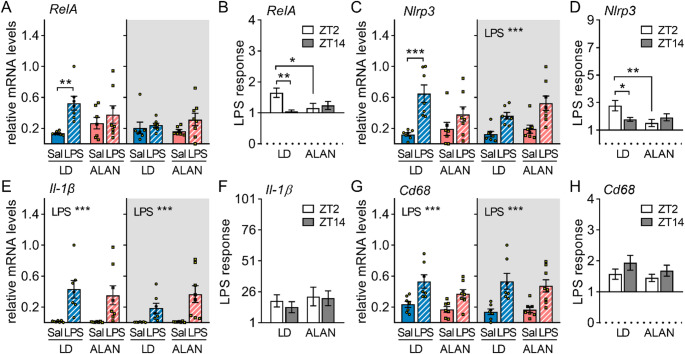 Figure 2
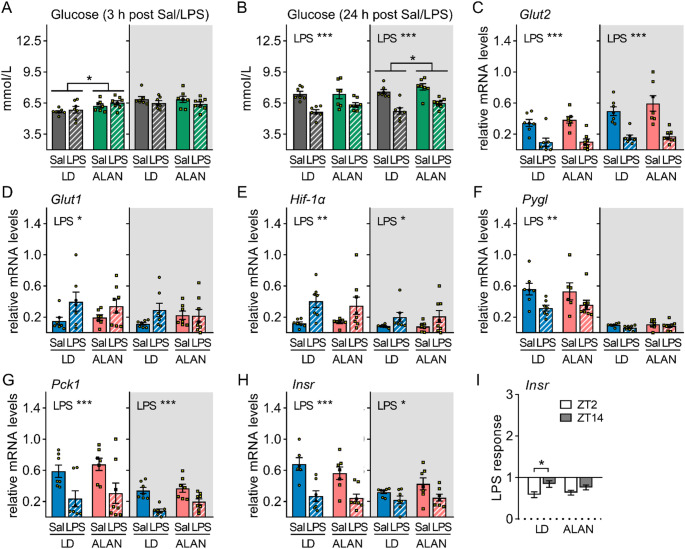 Figure 3
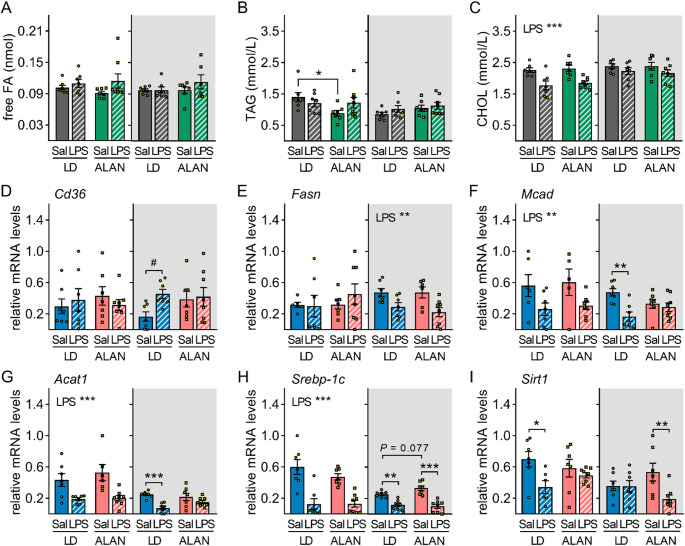 Figure 4
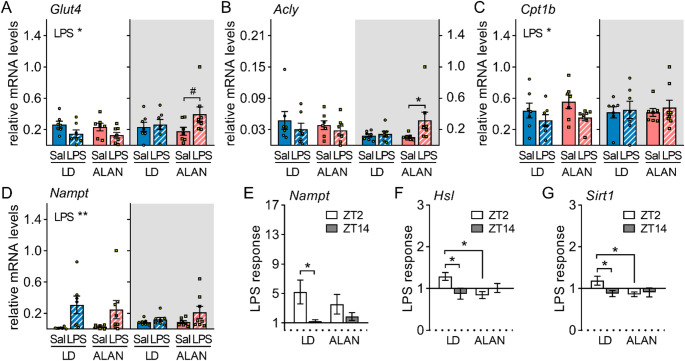 Figure 5
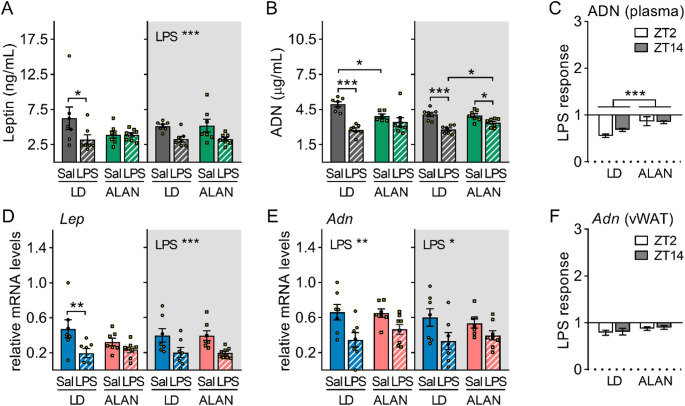 Figure 6
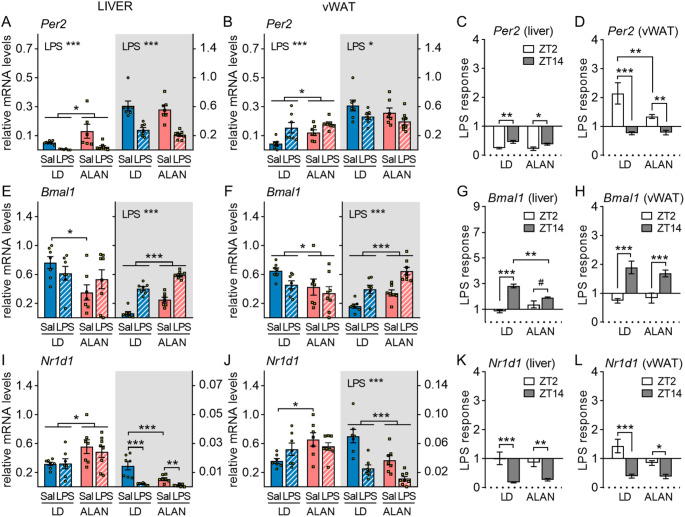 Figure 7
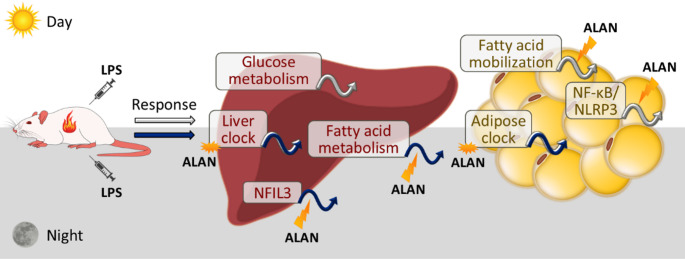 Figure 8
Peer Reviews
No public reviews on file for this paper yet. If you reviewed it on a platform where reviews are public (OpenReview, ICLR, NeurIPS, ICML), you can paste yours below so the community can read it here.
Videos
No videos yet. Explain this paper in a talk, walkthrough, or lecture? Add one.
Taxonomy
TopicsCircadian rhythm and melatonin · Dietary Effects on Health · Climate Change and Health Impacts