Chinese herbal medicine (Tangshen Formula) formula treatment of patients with diabetic kidney disease: a systematic review and meta-analysis
Peng Zhao, Yang Li, Yu Sun, Shiwen Yan, Xiaqing Su, Yunying Sun, Jiacheng Shi, Xiaoping Zhu

TL;DR
This study reviews and analyzes the effectiveness of Tangshen Formula in treating diabetic kidney disease, finding it may reduce urinary protein and improve kidney function.
Contribution
The study provides a meta-analysis of Tangshen Formula's efficacy in diabetic kidney disease, highlighting its potential as a complementary treatment.
Findings
TSF significantly reduced urinary albumin excretion rate (UAER) and 24-hour urine protein (24h UP) in DKD patients.
TSF showed no significant changes in estimated glomerular filtration rate (eGFR) or TCM scores.
TSF had a lower probability of adverse events compared to conventional treatment in patients with massive proteinuria.
Abstract
Diabetic Kidney Disease (DKD) is a severe complication of diabetes mellitus and is one of the main causes of end-stage renal disease globally. Tangshen Formula (TSF) plays an important role in the treatment of DKD. The purpose of this study was to evaluate the efficacy and safety of TSF compound therapy in treating DKD patients with macroalbuminuria through systematic review and meta-analysis methods. Multiple databases, including PubMed, Embase, Cochrane Library and Web of Science, were searched to find eligible RCTs. The main outcome indicators included renal Primary Outcomes(UAER, 24h UP), Secondary Outcomes(eGFR and TCM system scores) and adverse events. Statistical analysis was conducted using RevMan 5.3 software, and the fixed-effect model or random-effect model was selected based on the heterogeneity among the studies. From 637 retrieved articles, 4 RCTs were finally included,…
Genes, proteins, chemicals, diseases, species, mutations and cell lines named across the full text — each resolved to its canonical identifier and authoritative record.
Click any figure to enlarge with its caption.
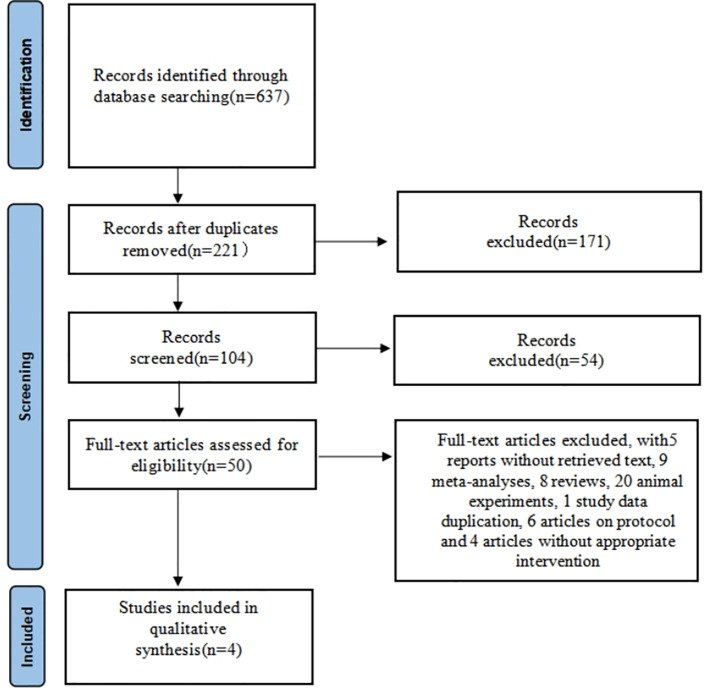 Figure 1
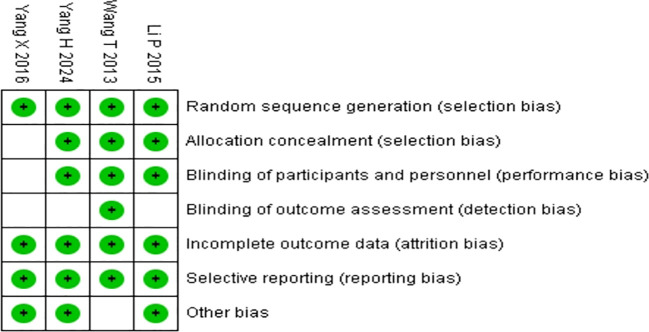 Figure 2
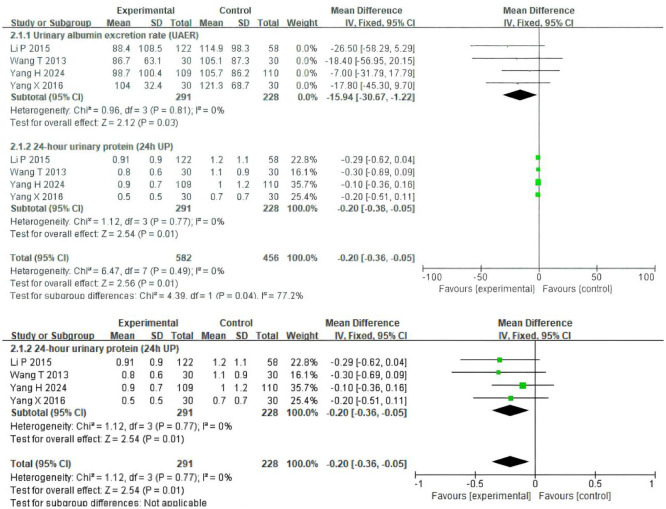 Figure 3
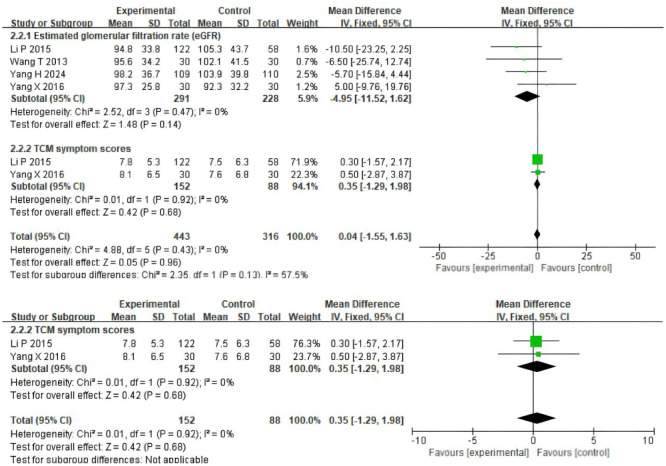 Figure 4
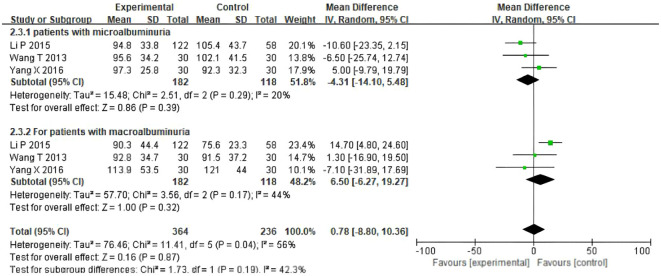 Figure 5
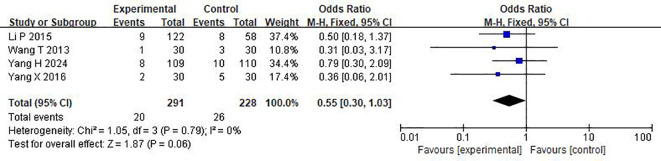 Figure 6
Peer Reviews
No public reviews on file for this paper yet. If you reviewed it on a platform where reviews are public (OpenReview, ICLR, NeurIPS, ICML), you can paste yours below so the community can read it here.
Videos
No videos yet. Explain this paper in a talk, walkthrough, or lecture? Add one.
Taxonomy
TopicsTraditional Chinese Medicine Studies · Acupuncture Treatment Research Studies · Complementary and Alternative Medicine Studies