Beyond Clots: The Role of Cardiac Anesthesiologists in a Case of ECMO for Massive Pulmonary Embolism
Vimal Varma, Isqandar Adnan, Engku Naim, Rusnaini Mustapha

TL;DR
A 35-year-old man with a severe blood clot in his lungs was treated with a combination of mechanical and drug-based clot removal, supported by ECMO, and eventually recovered.
Contribution
Highlights the role of cardiac anesthesiologists in managing complex pulmonary embolism cases requiring ECMO and thrombectomy.
Findings
The patient required venoarterial ECMO after cardiogenic shock during thrombectomy.
Catheter-directed thrombolysis was used post-ECMO initiation.
The patient was successfully weaned off ECMO and discharged home after 7 days.
Abstract
We present a case of a 35-year-old male who presented with sudden-onset severe chest pain and breathlessness. CTPA revealed massive bilateral pulmonary embolism. The patient underwent catheter-directed mechanical thrombectomy (CDMT) under general anesthesia, complicated by cardiogenic shock necessitating cardiopulmonary resuscitation (CPR). Post ROSC, venoarterial ECMO was initiated, and catheter-directed thrombolysis was performed. CDMT was reattempted but not fully successful, and the patient developed right heart failure with pulmonary hypertension. ECMO continued for 5 days and gradually weaned off. He was extubated successfully on Day 7 and discharged home later.
Genes, proteins, chemicals, diseases, species, mutations and cell lines named across the full text — each resolved to its canonical identifier and authoritative record.
Click any figure to enlarge with its caption.
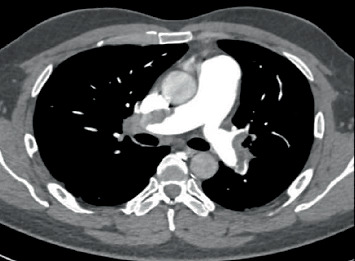 Figure 1
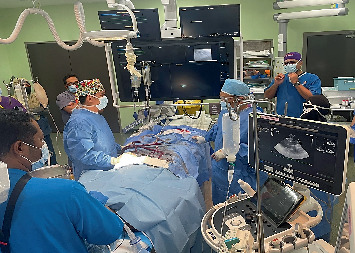 Figure 2
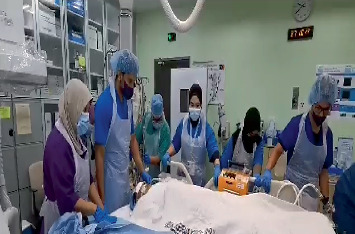 Figure 3
Peer Reviews
No public reviews on file for this paper yet. If you reviewed it on a platform where reviews are public (OpenReview, ICLR, NeurIPS, ICML), you can paste yours below so the community can read it here.
Videos
No videos yet. Explain this paper in a talk, walkthrough, or lecture? Add one.
Taxonomy
TopicsMechanical Circulatory Support Devices · Cardiac Arrest and Resuscitation · Cardiac, Anesthesia and Surgical Outcomes