A Case of Endosteal Hyperostosis Caused by a Mutation of the Low-Density Lipoprotein Receptor-Related Protein 5 (LRP5) Gene
Lauren H Beshay

TL;DR
This paper reports a rare case of a bone disease caused by a mutation in the LRP5 gene, leading to increased bone density and facial changes.
Contribution
The paper presents a new clinical case of Worth syndrome with a confirmed LRP5 gene mutation in an 18-year-old female.
Findings
The patient exhibited endosteal hyperostosis and torus palatinus due to an LRP5 mutation.
Facial changes, including an elongated mandible, were observed during adolescence.
The case highlights the need for further research on long-term outcomes and treatment options.
Abstract
Worth syndrome, also known as autosomal dominant osteosclerosis and high bone mineral density, is a rare disease caused by a gain-of-function mutation of the low-density lipoprotein receptor-related protein 5 (LRP5) gene leading to endosteal hyperostosis. It is characterized by increased bone density and benign bony structures on the palate, known as torus palatinus. The skeleton is normal in childhood, but facial metamorphoses occur in adolescence, as the mandible becomes elongated and the forehead flattens. Torus palatinus can lead to loss of teeth or malocclusion. We present the case of an 18-year-old female patient found to have a heterozygous variant of the LRP5 mutation on genetic testing. Given the rarity of this disease, long-term sequelae and treatment options are not fully understood.
Genes, proteins, chemicals, diseases, species, mutations and cell lines named across the full text — each resolved to its canonical identifier and authoritative record.
Click any figure to enlarge with its caption.
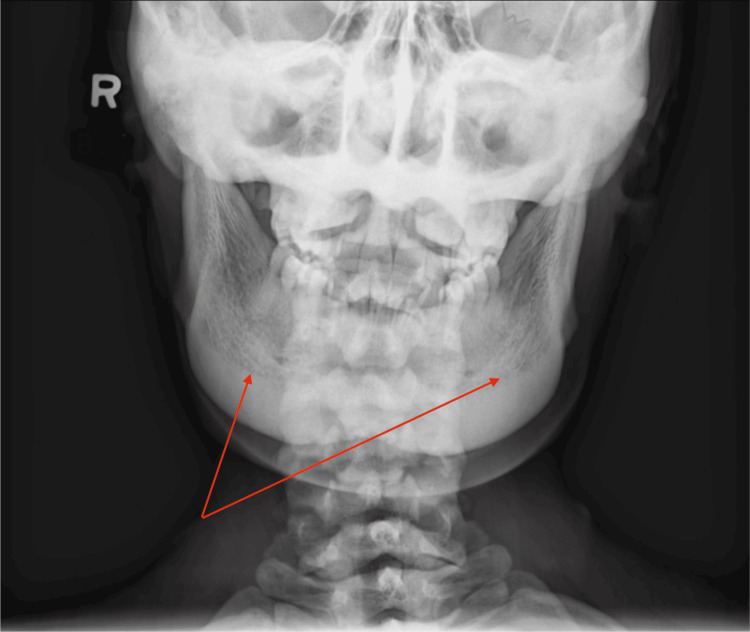 Figure 1
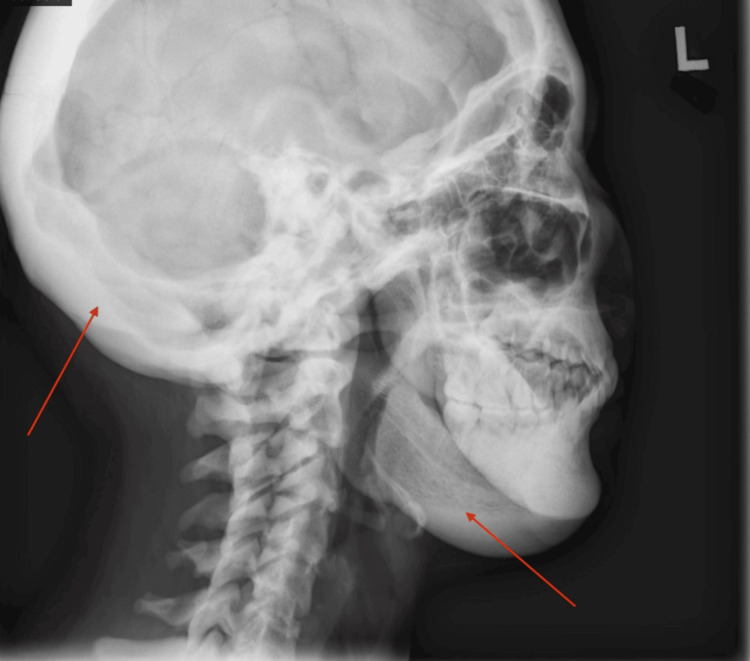 Figure 2
Peer Reviews
No public reviews on file for this paper yet. If you reviewed it on a platform where reviews are public (OpenReview, ICLR, NeurIPS, ICML), you can paste yours below so the community can read it here.
Videos
No videos yet. Explain this paper in a talk, walkthrough, or lecture? Add one.
Taxonomy
TopicsDermatological and Skeletal Disorders · Hypertrophic osteoarthropathy and related conditions · Bone health and treatments