Longitudinal Analysis of the Deep Brain Stimulation Impairment Scale for Subthalamic Nucleus Stimulation in Parkinson’s Disease
Paula Broetzmann, Carolin Semmler, Hannah Jergas, Gregor A. Brandt, Christina van der Linden, Charlotte Schedlich-Teufer, Franziska Maier, Elke Kalbe, Veerle Visser-Vandewalle, Michael T. Barbe, Juan Carlos Baldermann

TL;DR
This study examines how deep brain stimulation affects quality of life in Parkinson’s patients, finding improvements in movement and cognition but also device-related issues impacting older individuals.
Contribution
The study longitudinally evaluates the Deep Brain Stimulation Impairment Scale (DBS-IS) to track post-surgical outcomes and device-related complications in Parkinson’s patients.
Findings
DBS improves postural instability, gait difficulty, and cognitive impairment in Parkinson’s patients.
Device-related problems affect 43% of patients and reduce quality of life improvements.
Older patients are more likely to experience device-related complications.
Abstract
•The DBS-IS was developed to assess quality of life-limiting impairments after surgery, yet their post-surgical development remains unclear.•Impairments evaluated by the DBS-IS improve after surgery in subscales postural instability and gait difficulty and cognitive impairment.•Device-related problems are related to reduced quality of life and are more common among older individuals. The DBS-IS was developed to assess quality of life-limiting impairments after surgery, yet their post-surgical development remains unclear. Impairments evaluated by the DBS-IS improve after surgery in subscales postural instability and gait difficulty and cognitive impairment. Device-related problems are related to reduced quality of life and are more common among older individuals. Deep brain stimulation (DBS) of the subthalamic nucleus (STN) is an established treatment for people with Parkinson’s…
Genes, proteins, chemicals, diseases, species, mutations and cell lines named across the full text — each resolved to its canonical identifier and authoritative record.
Click any figure to enlarge with its caption.
 Figure 1
 Figure 2
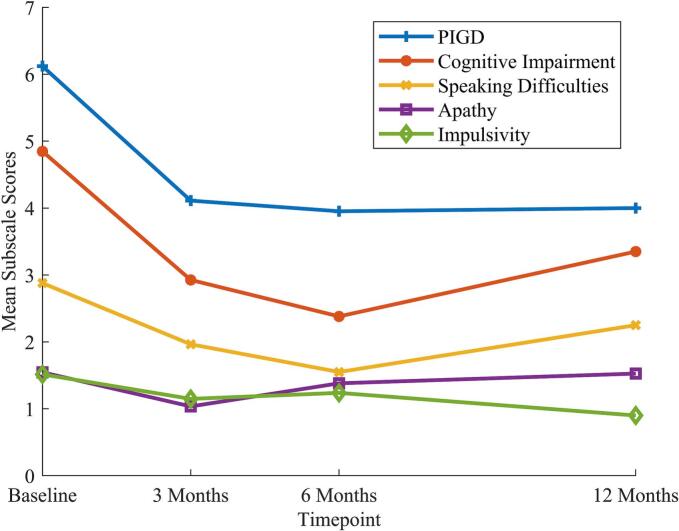 Figure 3
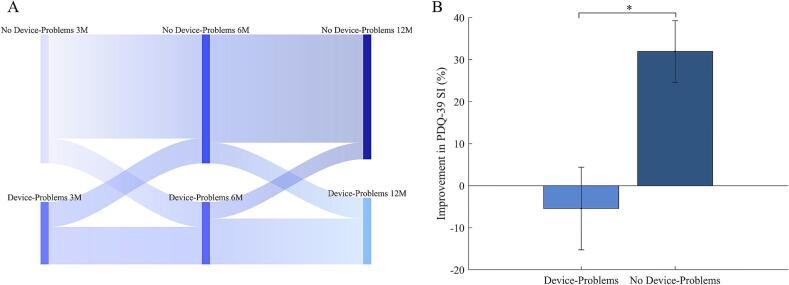 Figure 4
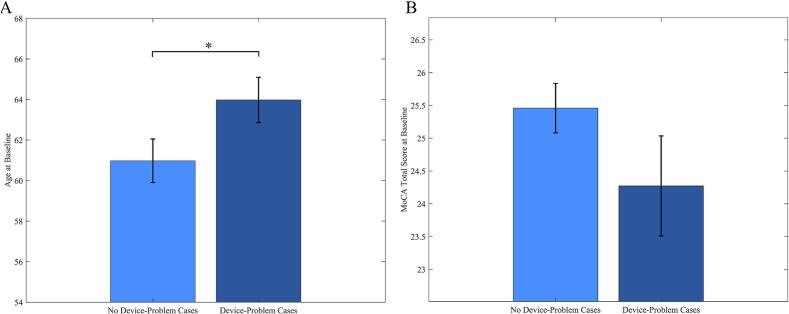 Figure 5
Peer Reviews
No public reviews on file for this paper yet. If you reviewed it on a platform where reviews are public (OpenReview, ICLR, NeurIPS, ICML), you can paste yours below so the community can read it here.
Videos
No videos yet. Explain this paper in a talk, walkthrough, or lecture? Add one.
Taxonomy
TopicsNeurological disorders and treatments · Parkinson's Disease Mechanisms and Treatments · Transcranial Magnetic Stimulation Studies