Prediction of methotrexate neurotoxicity using clinical, sociodemographic, and area-based information in children with acute lymphoblastic leukemia
Rachel D Harris, Olga A Taylor, Maria Monica Gramatges, Amy E Hughes, Mark Zobeck, Sandi Pruitt, M Brooke Bernhardt, Ashley Chavana, Van Huynh, Kathleen Ludwig, Laura Klesse, Kenneth Heym, Timothy Griffin, Rodrigo Erana, Juan Carlos Bernini, Ashley Choi, Yuu Ohno

TL;DR
This study uses machine learning to predict neurotoxicity from methotrexate in children with leukemia, aiming to improve personalized treatment.
Contribution
A novel risk prediction model for methotrexate-related neurotoxicity using clinical and demographic data in pediatric ALL patients.
Findings
Neurotoxicity occurred in 8.7% of patients, with older age and Latino ethnicity as significant risk factors.
The random forest model achieved 77% accuracy in predicting neurotoxicity with 73% sensitivity and 69% specificity.
The model may help reduce neurotoxicity burden through personalized treatment strategies.
Abstract
Methotrexate is a critical component of pediatric acute lymphoblastic leukemia (ALL) therapy that can result in neurotoxicity which has been associated with an increased risk of relapse. We leveraged machine learning to develop a neurotoxicity risk prediction model in a diverse cohort of children with ALL. We included children (age 2-20 years) diagnosed with ALL (2005-2019) and treated in Texas without pre-existing neurologic disease. Clinical information was obtained by medical record review. Neurotoxicity occurring post-induction and prior to maintenance therapy was defined as neurologic episodes occurring within 21 days of methotrexate. Suspected cases were independently confirmed by 2 pediatric oncologists. Demographic and clinical factors were compared using logistic regression. The dataset was randomly split (80/20) for training and testing. random forest (RF) with boosting and…
Genes, proteins, chemicals, diseases, species, mutations and cell lines named across the full text — each resolved to its canonical identifier and authoritative record.
Click any figure to enlarge with its caption.
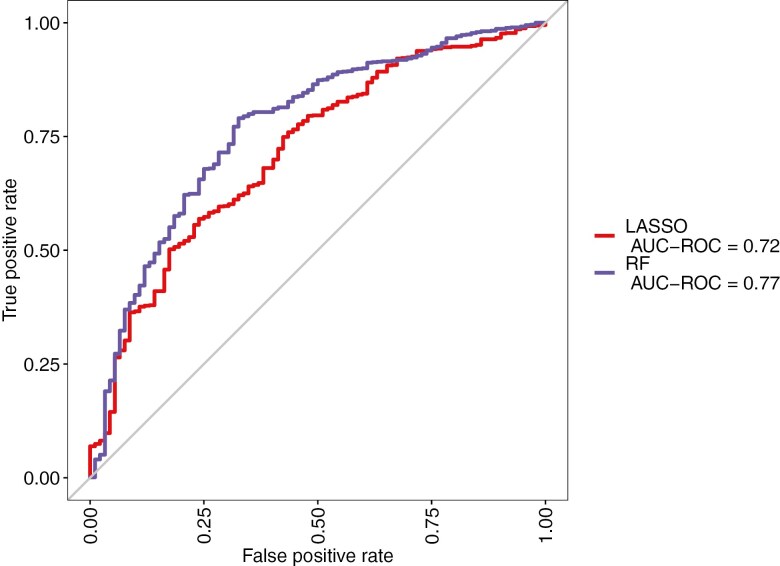 Figure 1
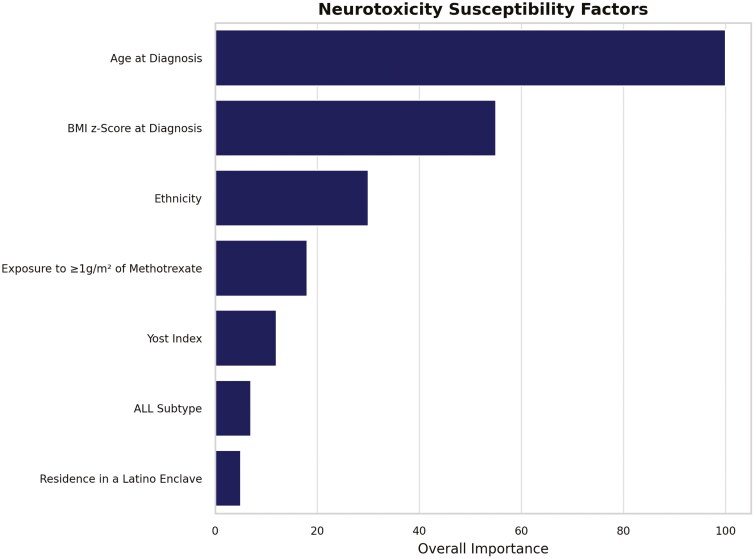 Figure 2
Peer Reviews
No public reviews on file for this paper yet. If you reviewed it on a platform where reviews are public (OpenReview, ICLR, NeurIPS, ICML), you can paste yours below so the community can read it here.
Videos
No videos yet. Explain this paper in a talk, walkthrough, or lecture? Add one.
Taxonomy
TopicsAcute Lymphoblastic Leukemia research · Childhood Cancer Survivors' Quality of Life · Glioma Diagnosis and Treatment