The “Slash Pack” as a Temporary Method for Initial Hemorrhage Control of Penetrating Neck Trauma in the Emergency Department: A Report of Two Cases
Steven J Laxton, Jordan Yutzy, Tanner Whiting, Joe Pflederer, Jacqueline Dovgalyuk, Nina Fredericks, Eric Bruno

TL;DR
A new method called the 'slash pack' is used to control severe neck bleeding in community hospitals before transferring patients to specialized centers.
Contribution
The 'slash pack' is introduced as a novel, temporary hemorrhage control technique for penetrating neck trauma in resource-limited settings.
Findings
The slash pack technique successfully stabilized two patients with life-threatening neck injuries.
Both patients were transferred to a level 1 trauma center and made full recoveries.
The method shows promise for use in community hospitals lacking immediate surgical resources.
Abstract
Penetrating trauma to the neck poses a critical challenge in the emergency department. These wounds have the potential to lead to rapid blood loss, hemorrhagic shock, and an increase in mortality. Large academic tertiary centers typically have vast resources and consultants to allow for rapid assessment and treatment of penetrating neck trauma. In community emergency departments, this is not typically the case, as surgical backup is usually not readily available and lacks the additional subspecialty coverage to aid in the management of the trauma patient. This situation often necessitates innovative methods of achieving hemostasis in certain life-threatening situations. This report explores a novel approach, termed the “slash pack,” as a potential solution for managing such traumatic injuries. The report discusses two cases in which penetrating neck trauma was successfully managed with…
Genes, proteins, chemicals, diseases, species, mutations and cell lines named across the full text — each resolved to its canonical identifier and authoritative record.
Click any figure to enlarge with its caption.
 Figure 1
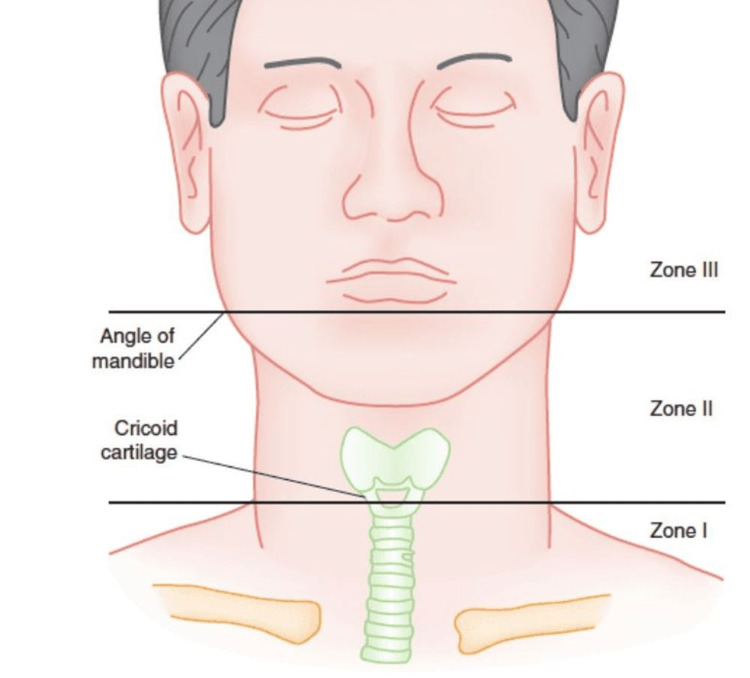 Figure 2
Peer Reviews
No public reviews on file for this paper yet. If you reviewed it on a platform where reviews are public (OpenReview, ICLR, NeurIPS, ICML), you can paste yours below so the community can read it here.
Videos
No videos yet. Explain this paper in a talk, walkthrough, or lecture? Add one.
Taxonomy
TopicsTrauma Management and Diagnosis · Traumatic Ocular and Foreign Body Injuries · Restraint-Related Deaths