Assessing Native Liver Post-Kasai Portoenterostomy for Biliary Atresia Through Stool Proteome Analysis
Eiichiro Watanabe, Takeshi Saito, Masahito Yoshihara, Ryo Konno, Jun Fujishiro, Shinya Takazawa, Akinori Ichinose, Kazue Miyake, Tomo Kakihara, Tetsuya Ishimaru, Akira Nishi, Akinari Fukuda, Mureo Kasahara, Osamu Ohara, Yusuke Kawashima

TL;DR
This study uses stool proteome analysis to assess liver health in biliary atresia patients after Kasai surgery, revealing differences linked to clinical outcomes.
Contribution
The study introduces stool proteome analysis as a novel method to evaluate native liver conditions in biliary atresia patients post-Kasai surgery.
Findings
Stool profiles of patients with favorable outcomes after Kasai surgery resemble those of healthy controls.
Patients with repeated cholangitis show elevated C-reactive protein and reduced sodium/hydrogen exchanger 3 levels.
Stool proteome analysis reflects clinical status and native liver conditions in biliary atresia patients.
Abstract
Biliary atresia (BA) is a severe neonatal condition, characterized by jaundice and hyperbilirubinemia, resulting in cholestasis. Although early diagnosis followed by Kasai portoenterostomy (KPE) can rescue patients, they are prone to complications such as cholangitis. Moreover, a comprehensive study assessing intestinal environment is currently lacking. Therefore, in this study, we aimed to elucidate the stool protein profiles of patients with BA following KPE, provide insights into the native liver condition of BA, and open new avenues for clinical approaches through stool proteome analysis. In this prospective study, stool proteome analysis was conducted on samples from 4 patients with well-controlled conditions, 4 patients with repeated cholangitis, and 3 patients with prolonged jaundice without cholangitis, all of whom had undergone KPE. Fifteen healthy individuals without BA were…
Genes, proteins, chemicals, diseases, species, mutations and cell lines named across the full text — each resolved to its canonical identifier and authoritative record.
Click any figure to enlarge with its caption.
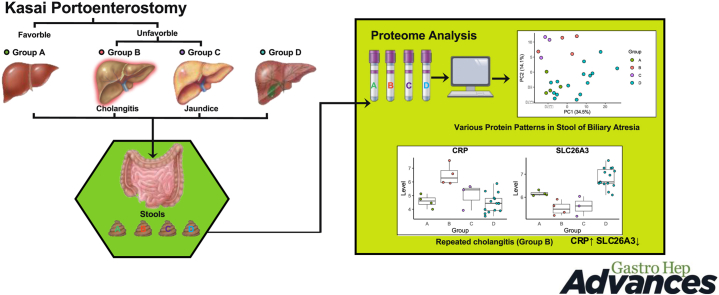 Figure 1
 Figure 2
 Figure 3
 Figure 4
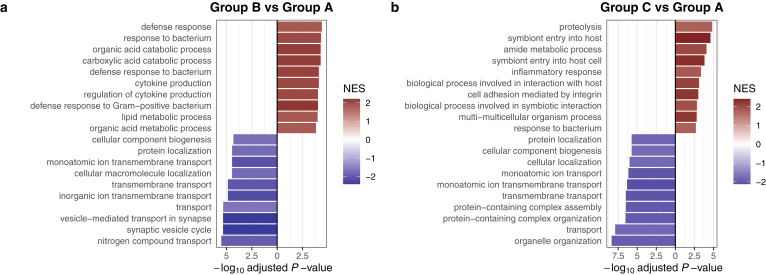 Figure 5
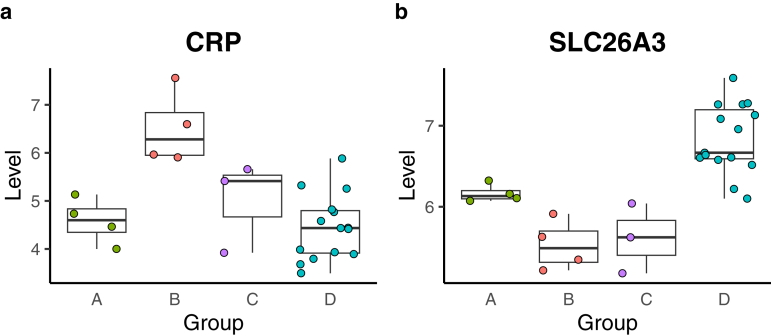 Figure 6
Peer Reviews
No public reviews on file for this paper yet. If you reviewed it on a platform where reviews are public (OpenReview, ICLR, NeurIPS, ICML), you can paste yours below so the community can read it here.
Videos
No videos yet. Explain this paper in a talk, walkthrough, or lecture? Add one.
Taxonomy
TopicsPediatric Hepatobiliary Diseases and Treatments · Intestinal Malrotation and Obstruction Disorders · Gallbladder and Bile Duct Disorders