Wearables-derived risk score for unintrusive detection of α-synuclein aggregation or dopaminergic deficit
Ann-Kathrin Schalkamp, Kathryn J. Peall, Neil A. Harrison, Valentina Escott-Price, Payam Barnaghi, Cynthia Sandor

TL;DR
Smartwatch data can detect early signs of Parkinson's disease before diagnosis, potentially serving as a non-invasive screening tool.
Contribution
A digital risk score derived from smartwatch data is shown to correlate with biological markers of Parkinson's disease pathology.
Findings
The digital risk score achieved an area under precision-recall curve of 0.96 in distinguishing Parkinson's disease from healthy controls.
The digital risk score correlated more strongly with DaTscan putamen binding ratio than traditional MDS criteria.
Combining hyposmia and digital risk score improved sensitivity to 0.71 in detecting synucleinopathy or neurodegeneration.
Abstract
Smartwatch data has been found to identify Parkinson's disease (PD) several years before the clinical diagnosis. However, it has not been assessed against the gold standard but costly and invasive biological and pathological markers for PD. These include dopaminergic imaging (DaTscan) and cerebrospinal fluid alpha-synuclein seed amplification assay (SAA), which are being studied as markers thought to represent the onset of PD pathology. Here, we combined clinical and biological data from the Parkinson's Progression Marker Initiative (PPMI) cohort with long-term (mean: 485 days) at-home digital monitoring data collected using the Verily Study Watch. We derived a digital risk score based on sleep, vital signs, and physical activity features to distinguish between PD (N = 143) and healthy controls (N = 34), achieving an area under precision-recall curve of 0.96 ± 0.01. We compared it with…
Genes, proteins, chemicals, diseases, species, mutations and cell lines named across the full text — each resolved to its canonical identifier and authoritative record.
Click any figure to enlarge with its caption.
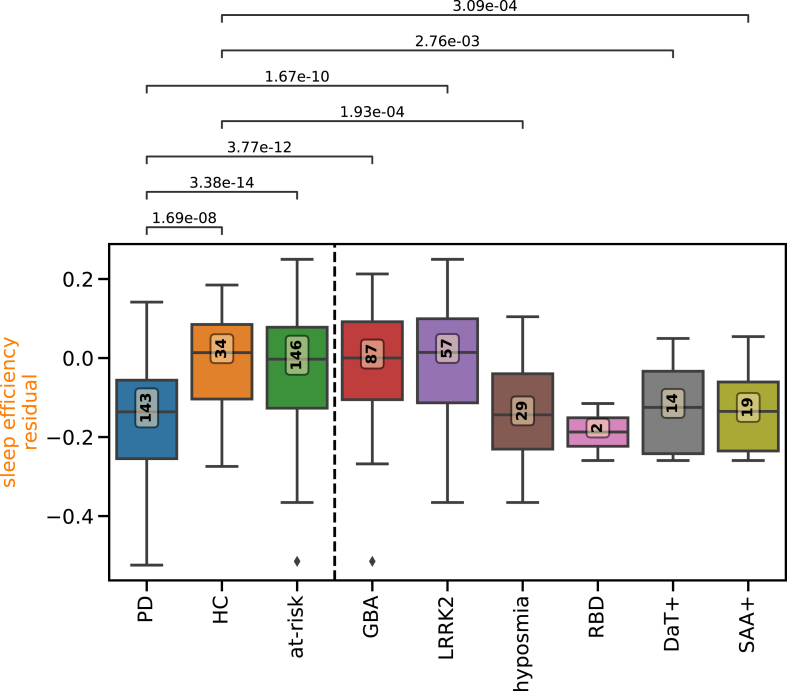 Figure 1
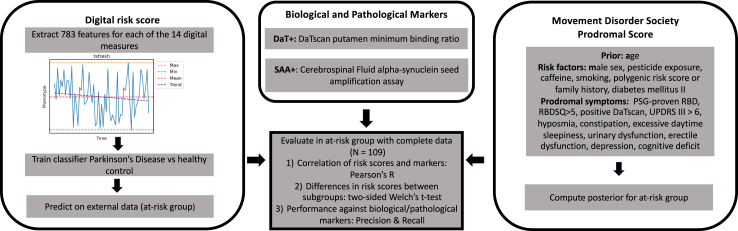 Figure 2
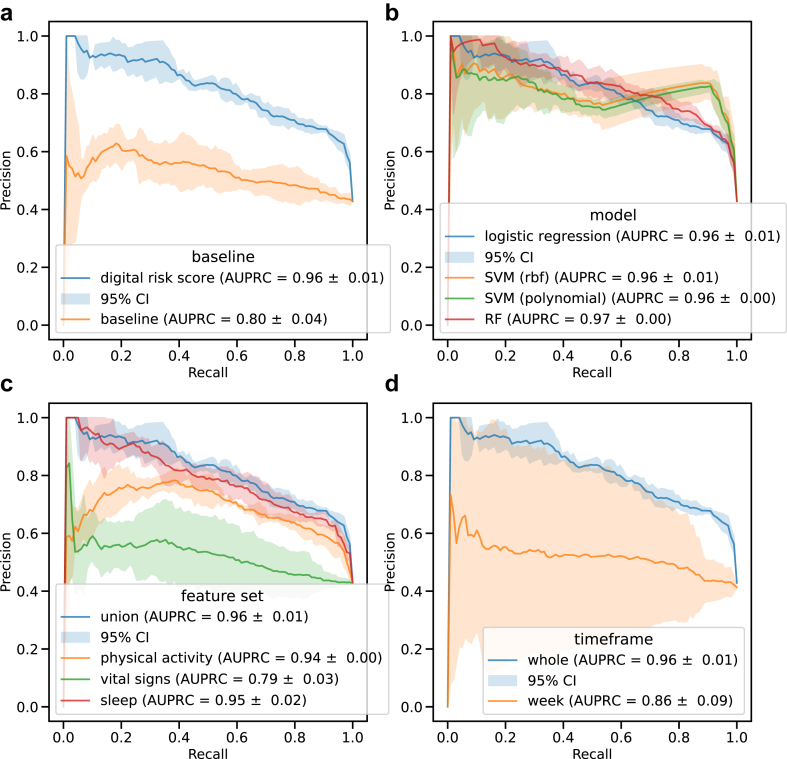 Figure 3
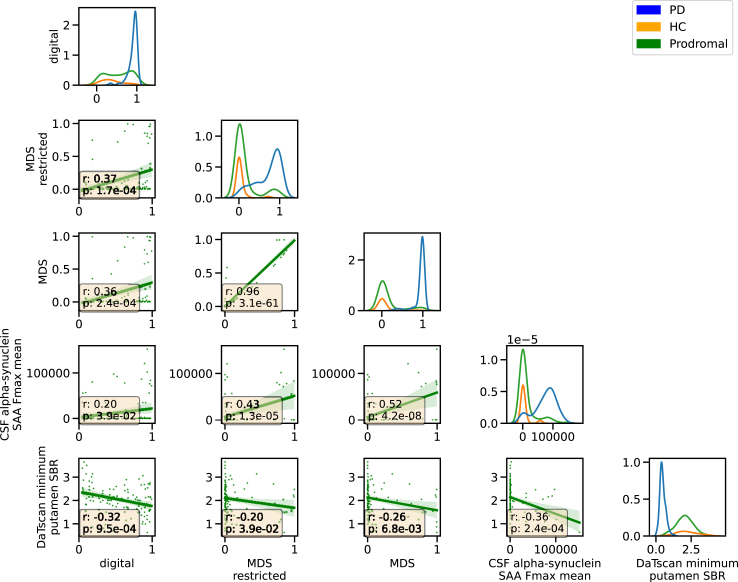 Figure 4
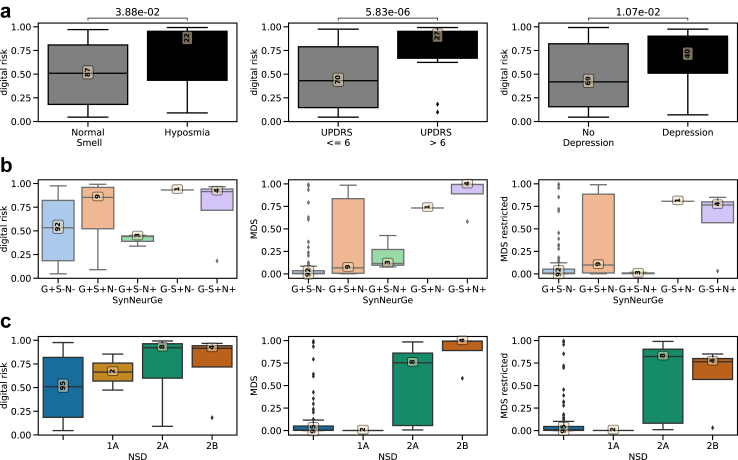 Figure 5
Peer Reviews
No public reviews on file for this paper yet. If you reviewed it on a platform where reviews are public (OpenReview, ICLR, NeurIPS, ICML), you can paste yours below so the community can read it here.
Videos
No videos yet. Explain this paper in a talk, walkthrough, or lecture? Add one.
Taxonomy
TopicsParkinson's Disease Mechanisms and Treatments · Neurological disorders and treatments · Autism Spectrum Disorder Research