A core outcome set for cranioplasty following stroke or traumatic brain injury - The COAST study
H. Mee, T.K. Korhonen, A.M. Castaño-Leon, A. Adeleye, J. Allanson, F. Anwar, I.D. Bhagavatula, K. Bond, C. Clement, A.M. Rubiano, K. Grieve, G. Hawryluk, A. Helmy, S. Honeybul, C. Iaccarino, A. Lagares, H. Marcus, N. Marklund, S. Muehlschlegel, N. Owen, M. Paul, V. Pomeroy

TL;DR
The COAST study created a standardized set of 20 outcomes for cranioplasty after stroke or brain injury, aiming to improve consistency in research and clinical practice.
Contribution
The study developed a core outcome set (COS) for cranioplasty through stakeholder consensus, addressing a lack of standardized outcome reporting.
Findings
A core outcome set of 20 outcomes was finalized across four domains: life impact, pathophysiological manifestations, resource use/economic impact, and mortality.
Complications were a major focus in pathophysiological manifestations, emphasizing their significant burden in cranioplasty.
The COS includes important life impact outcomes such as overall function, functional independence, cognition, and cosmesis.
Abstract
There is substantial heterogeneity in the reporting of outcomes in the global cranioplasty literature. This study aimed to establish a core outcome set (COS) for cranioplasty after decompressive craniectomy for stroke or traumatic brain injury. The scope was defined according to the criteria recommended by the Core Outcome Measures in Effectiveness Trials (COMET) Initiative. Phase 1 focused on outcome gathering through a systematic review and a qualitative study. Phase 2 focused on consolidation and consensus of outcomes through a two-round Delphi survey and consensus meeting. Participants from the four stakeholder groups (1. patients and/or relatives; 2. Surgeons, 3. physicians (non-surgeons), 4. Nurses, allied health professionals, and researchers) individually scored all outcomes on a 9-point Likert scale. Variables that did not reach the predefined consensus threshold for COS…
Genes, proteins, chemicals, diseases, species, mutations and cell lines named across the full text — each resolved to its canonical identifier and authoritative record.
Click any figure to enlarge with its caption.
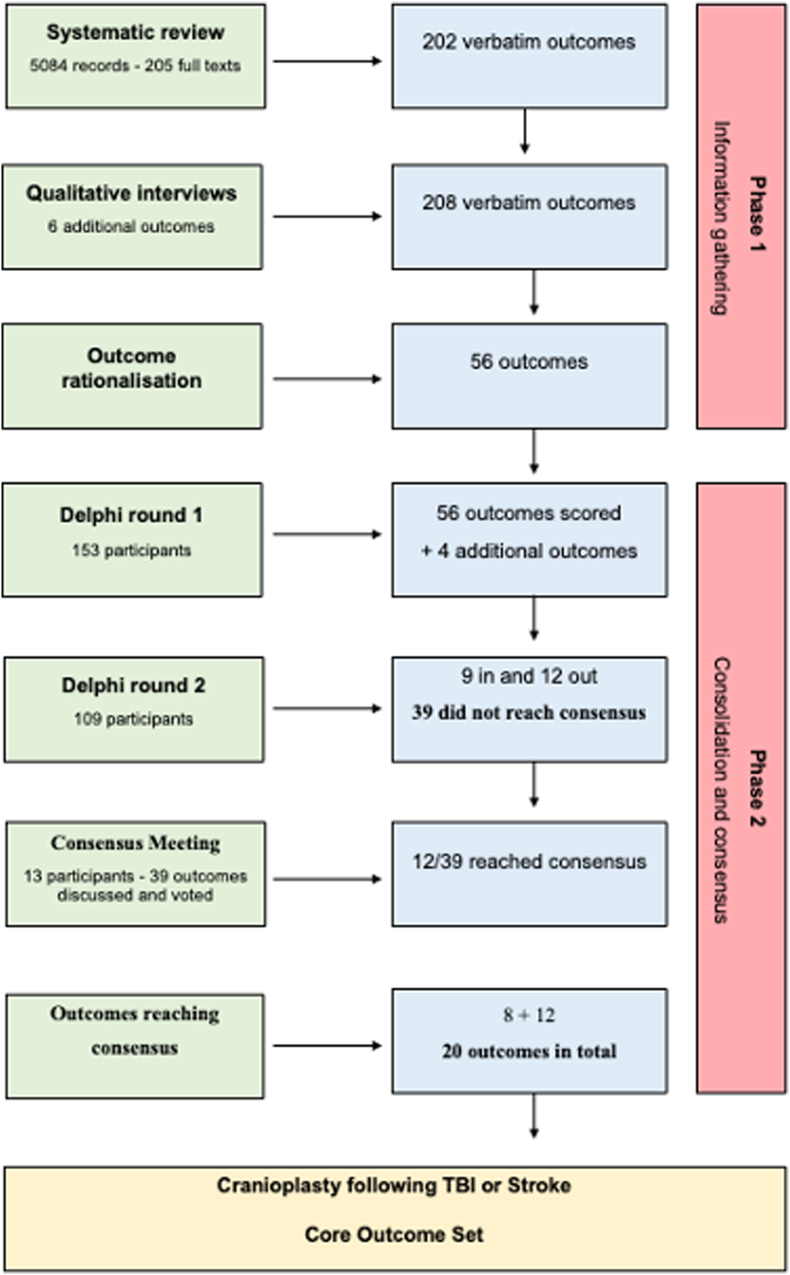 Figure 1
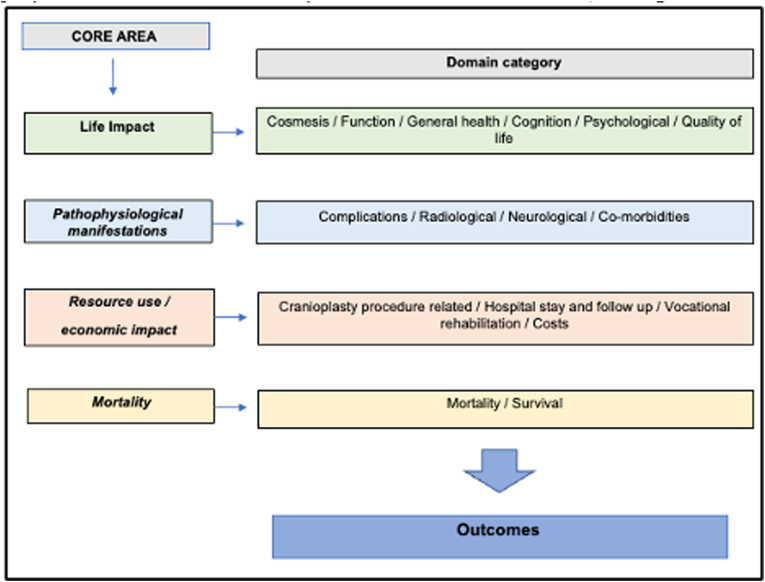 Figure 2
Peer Reviews
No public reviews on file for this paper yet. If you reviewed it on a platform where reviews are public (OpenReview, ICLR, NeurIPS, ICML), you can paste yours below so the community can read it here.
Videos
No videos yet. Explain this paper in a talk, walkthrough, or lecture? Add one.
Taxonomy
TopicsDelphi Technique in Research · Hip and Femur Fractures · Clinical practice guidelines implementation