The effects of different types of RAGT on balance function in stroke patients with low levels of independent walking in a convalescent rehabilitation hospital
Dae-Hwan Lee, Bong-sik Woo, Jong-hyeon Lim, Jin-ook Choi, Yong-Hwa Park

TL;DR
This study compares two robotic gait training methods to improve balance and walking in stroke patients with limited mobility.
Contribution
The study directly compares fixed end-effector and mobile robotic gait devices for balance and motor recovery in stroke patients.
Findings
Both robotic methods improved balance and motor recovery, but mobile robots showed greater gains.
Mobile robots enhanced volitional movement and coordination more effectively.
Improvements in reflex activities correlated with better balance and functional outcomes.
Abstract
Stroke patients with low levels of walking independence often experience persistent deficits in gait and balance, which significantly limit their functional mobility and quality of life. Robotic-assist gait training (RAGT) has emerged as a promising intervention to promote motor recovery and improve postural control in this patients. While previous studies have demonstrated the benefits of RAGT, few have directly compared the effects of fixed end-effector type and mobile robotic gait devices in patients with severely impaired ambulation. This study aimed to investigate and compare the effects of these two robotic gait training on balance and lower extremities motor recovery in stroke patients classified as functional ambulation category 0 to 2. Twenty-eight stroke patients were randomly assigned to either end-effector or mobile robot groups, undergoing 12 weeks of therapy with one…
Genes, proteins, chemicals, diseases, species, mutations and cell lines named across the full text — each resolved to its canonical identifier and authoritative record.
Click any figure to enlarge with its caption.
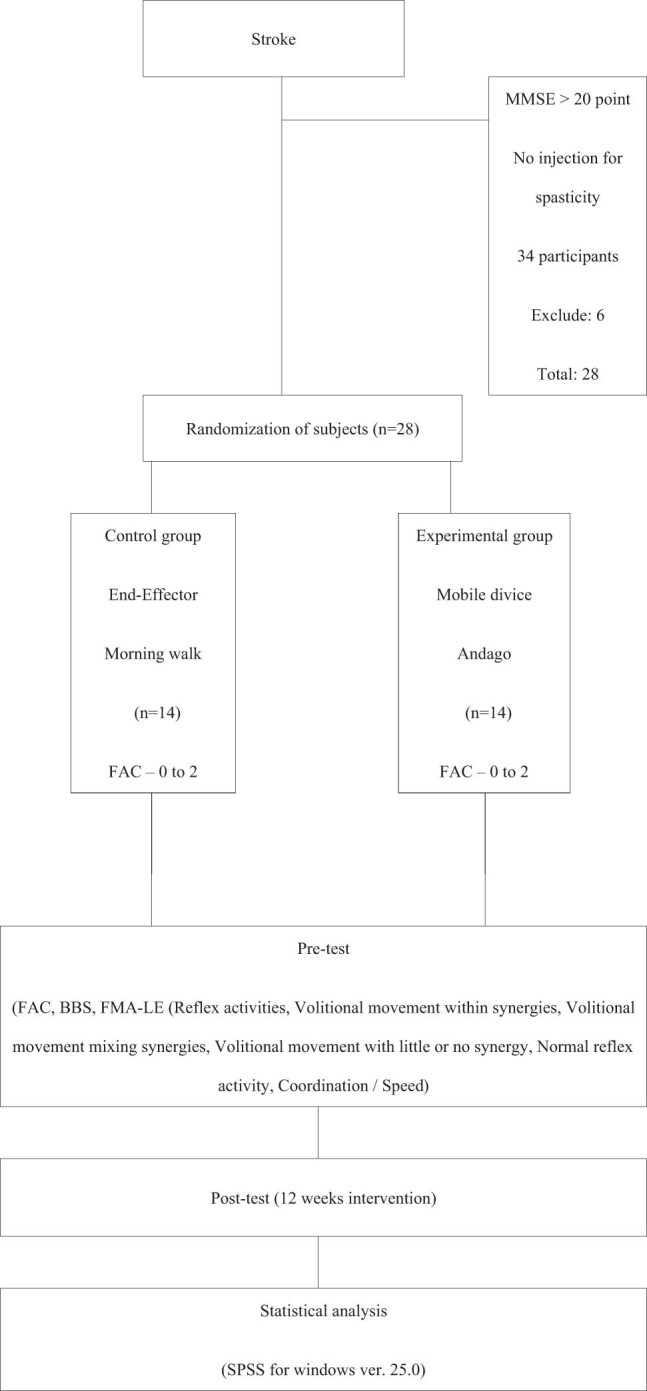 Figure 1
Peer Reviews
No public reviews on file for this paper yet. If you reviewed it on a platform where reviews are public (OpenReview, ICLR, NeurIPS, ICML), you can paste yours below so the community can read it here.
Videos
No videos yet. Explain this paper in a talk, walkthrough, or lecture? Add one.
Taxonomy
TopicsStroke Rehabilitation and Recovery · Cerebral Palsy and Movement Disorders · Botulinum Toxin and Related Neurological Disorders