Diagnostic accuracy of the international classification of disease “I26” code to detect acute pulmonary embolism in a surveillance network
Jeffrey A. Kline, Jesse O. Wrenn, Mazin F. Alam, Alexis N. Drinkhorn, Conner D. Slotnick, Fawas Shaman, Christopher E. Conn, Steven J. Korzeniewski, Christopher Kabrhel

TL;DR
This study evaluates how well the ICD-10 code I26 can detect acute pulmonary embolism in emergency departments using electronic medical records.
Contribution
The study demonstrates the diagnostic accuracy of the I26 code for real-time surveillance of pulmonary embolism in a large ED network.
Findings
The I26 code had high specificity (99.7%) but modest sensitivity (50.9%) for detecting acute pulmonary embolism.
The I26 code showed high likelihood ratio positive (191) for detecting pulmonary embolism in emergency departments.
The I26 code holds promise for low-latency surveillance of venous thromboembolism in the U.S.
Abstract
Emergency departments (EDs) offer a unique platform for a surveillance network for acute pulmonary embolism (PE) using International Classification of Disease (ICD-10) codes extracted from electronic medical records. Test the diagnostic accuracy of the I26 "leader" ICD-10 code for the detection of PE in near real-time in a large, ED-based surveillance network. Standardized structured language queries were deployed at 91 hospitals to extract data, including ICD-10 codes, on a weekly basis from electronic medical records on ED patients with acute respiratory complaints. We used 2 methods for coding computed tomography pulmonary angiogram (CTPA) reports to derive a criterion or gold standard for PE diagnosis: (1) research associates were trained to interpret the CTPA reports, and (2) a validated Regular Expression computer program was used to interpret PE on CTPA reports. These 2 methods…
Genes, proteins, chemicals, diseases, species, mutations and cell lines named across the full text — each resolved to its canonical identifier and authoritative record.
Click any figure to enlarge with its caption.
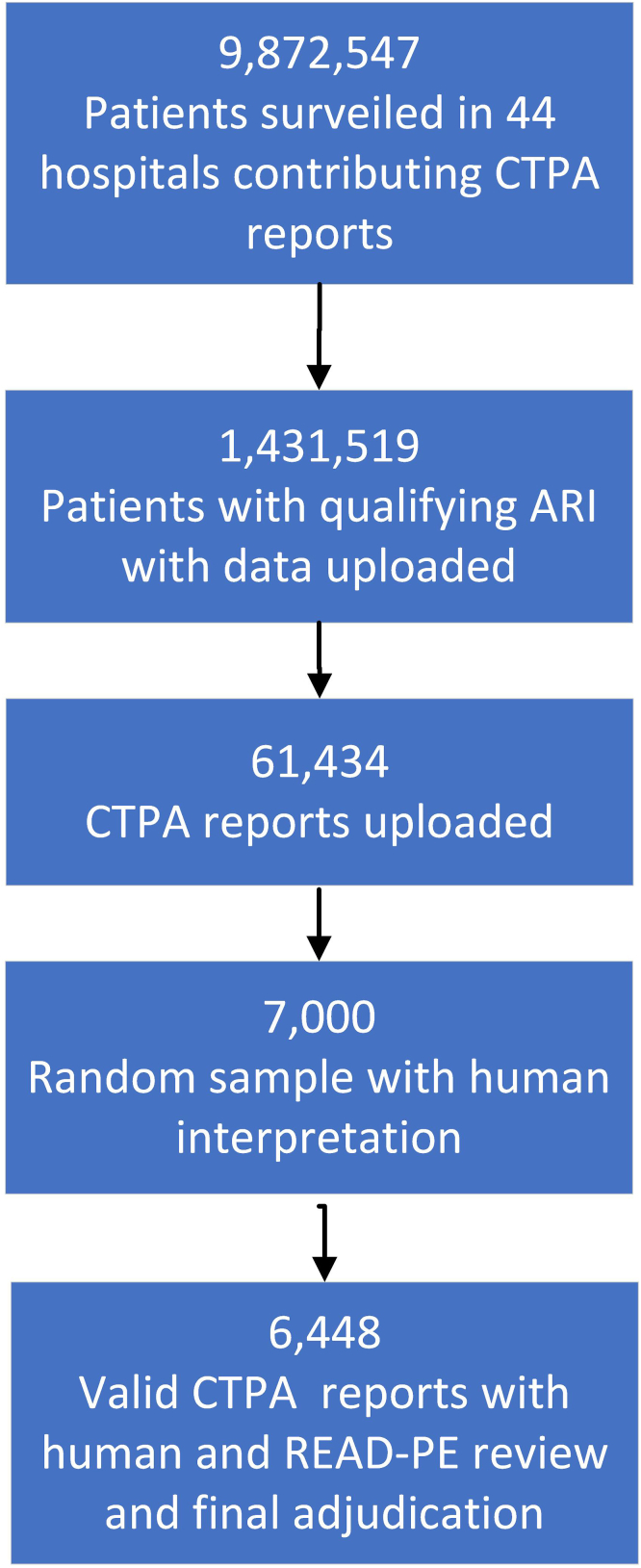 Figure 1
Peer Reviews
No public reviews on file for this paper yet. If you reviewed it on a platform where reviews are public (OpenReview, ICLR, NeurIPS, ICML), you can paste yours below so the community can read it here.
Videos
No videos yet. Explain this paper in a talk, walkthrough, or lecture? Add one.
Taxonomy
TopicsVenous Thromboembolism Diagnosis and Management · Acute Ischemic Stroke Management