Impacts of early postpartum behavioral patterns on the fertility and milk production of tropical dairy cows
Aqeel Raza, Kumail Abbas, Theerawat Swangchan-Uthai, Henk Hogeveen, Chaidate Inchaisri

TL;DR
This study explores how early postpartum behaviors in tropical dairy cows affect their fertility and milk production, using sensor data to identify behavioral patterns linked to reproductive and lactation outcomes.
Contribution
The study introduces a behavioral clustering approach using biosensor data to reveal parity-specific reproductive and lactation trajectories in tropical dairy cows.
Findings
Three distinct behavioral clusters were identified, with primiparous cows showing higher activity and restlessness ratios.
Multiparous cows in Cluster 0 had the highest cumulative milk yield at 305 DIM.
Higher activity and restlessness ratios may delay estrus and reduce milk yield, suggesting potential for targeted management.
Abstract
Early postpartum behavioral patterns are pivotal indicators of dairy cow health, reproductive success, and lactation performance, particularly under the environmental stressors of tropical climates. This study aimed to investigate how these behavioral patterns, as captured by smart biosensor data, influence reproductive outcomes, and milk yield in Holstein Friesian cows, with specific emphasis on parity differences and behavioral clustering. A total of 227 Holstein Friesian cows, categorized by parity (primiparous vs. multiparous), were monitored using AfiTag-II accelerometers from 3 days prepartum to 30 days postpartum. Behavioral variables – activity, rest time, rest per bout, and restlessness ratio – were subjected to K-means clustering to identify distinct behavioral profiles. Reproductive performance was analyzed using Cox proportional hazard models, while lactation dynamics were…
Genes, proteins, chemicals, diseases, species, mutations and cell lines named across the full text — each resolved to its canonical identifier and authoritative record.
Click any figure to enlarge with its caption.
 Figure 1
 Figure 2
 Figure 3
 Figure 4
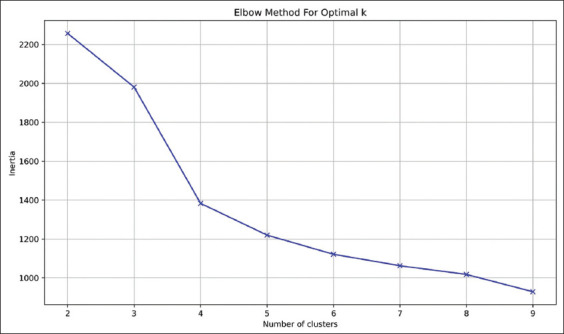 Figure 5
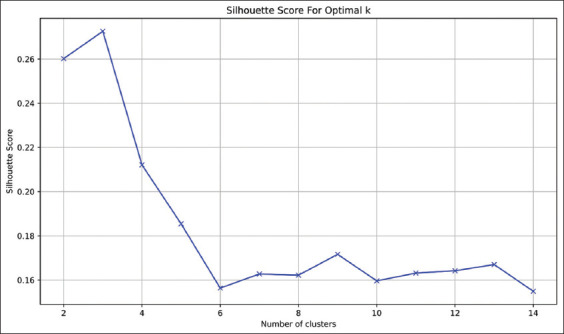 Figure 6
 Figure 7
 Figure 8
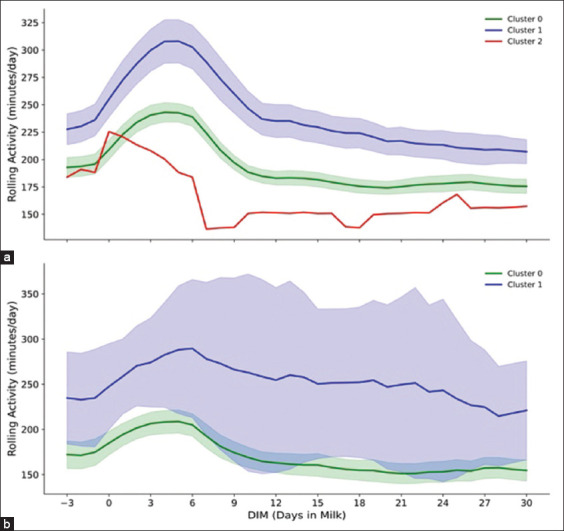 Figure 9
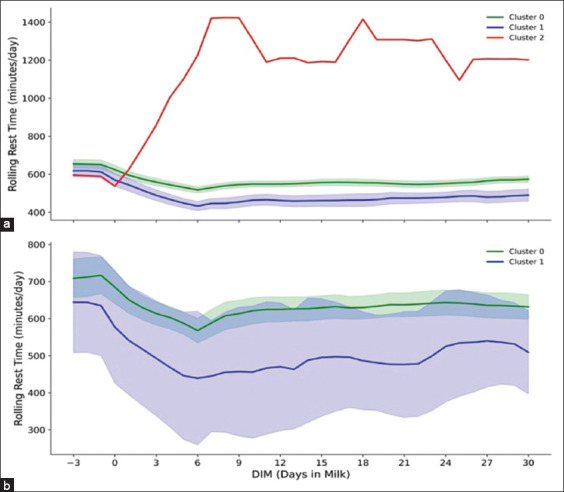 Figure 10
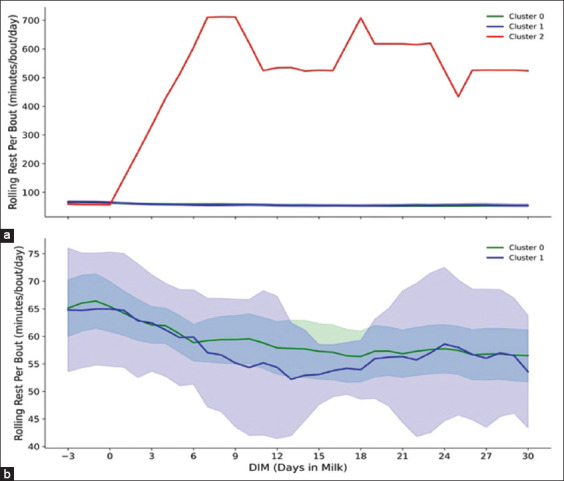 Figure 11
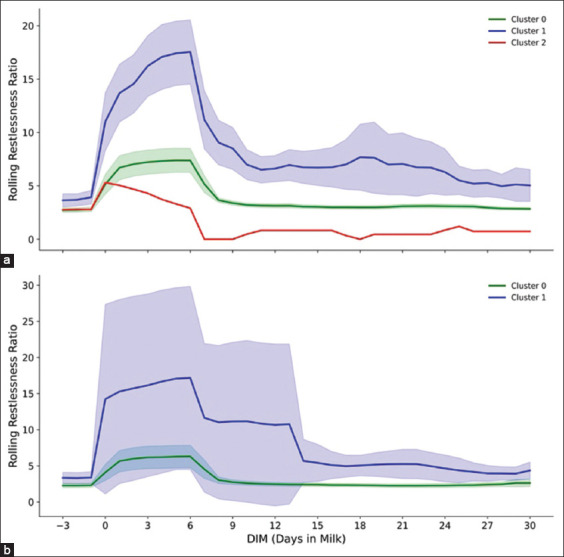 Figure 12
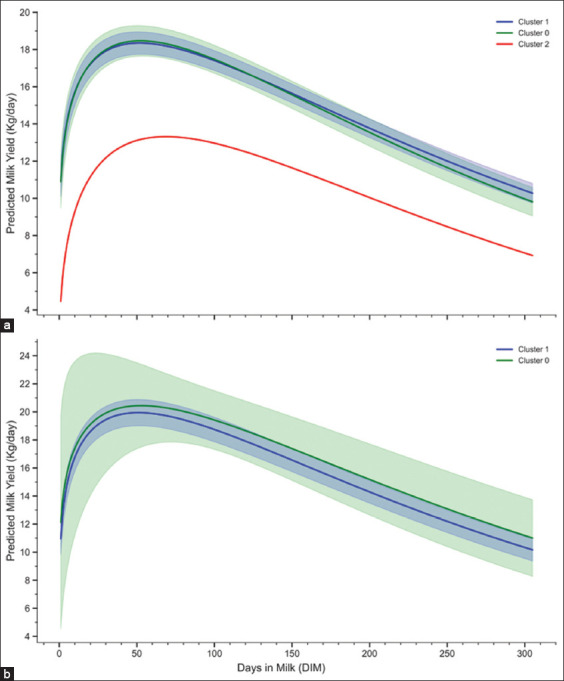 Figure 13
Peer Reviews
No public reviews on file for this paper yet. If you reviewed it on a platform where reviews are public (OpenReview, ICLR, NeurIPS, ICML), you can paste yours below so the community can read it here.
Videos
No videos yet. Explain this paper in a talk, walkthrough, or lecture? Add one.
Taxonomy
TopicsEffects of Environmental Stressors on Livestock · Reproductive Physiology in Livestock · Genetic and phenotypic traits in livestock