Lanthionine Ketimine Ethyl Ester Induces Proliferation and Maturation and Regulates Calcium Flux in Primary Mouse Oligodendrocyte Progenitor Cells
Veronica T. Cheli, Swathi G. Tumuluri, Zachary McDonald, Travis T. Denton, Jeffrey L. Dupree, Pablo M. Paez, Douglas L. Feinstein

TL;DR
LKE promotes the growth and maturation of oligodendrocyte progenitor cells and alters calcium signaling, which could help treat demyelinating diseases like multiple sclerosis.
Contribution
This study reveals that LKE regulates calcium flux in OPCs and suggests CRMP2 as a key mediator of its effects.
Findings
LKE increased OPC proliferation and maturation markers like Olig2+, CC1+, and PLP+.
LKE reduced calcium influx in response to ATP and glutamate but increased it with KCl.
A CRMP2-disrupting peptide produced similar calcium response effects as LKE.
Abstract
Previous studies have shown that lanthionine ketimine ethyl ester (LKE), a semi‐synthetic derivative of the endogenous amino acid lanthionine, can induce proliferation and maturation of oligodendrocyte progenitor cells (OPCs) in vivo. In the current study, we examined the effects of LKE on Ca2+ influx in primary mouse OPCs, as intracellular Ca2+ can regulate those processes. Treatment with LKE stimulated proliferation of OPCs and increased the number of Olig2+, CC1+, and PLP+ cells. LKE also reduced cell death (caspase‐3 expressing cells). Measurements of Ca2+ flux showed that LKE increased basal Ca2+ levels, reduced Ca2+ influx following stimulation with glutamate or ATP, and increased Ca2+ flux because of depolarization with KCl. Reduced Ca2+ responses were also observed following treatment with a peptide that disrupts interactions of collapsin response mediated protein 2 (CRMP2), a…
Genes, proteins, chemicals, diseases, species, mutations and cell lines named across the full text — each resolved to its canonical identifier and authoritative record.
Click any figure to enlarge with its caption.
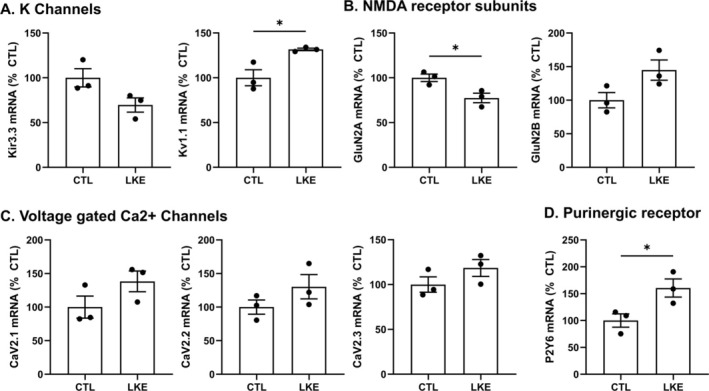 Figure 1
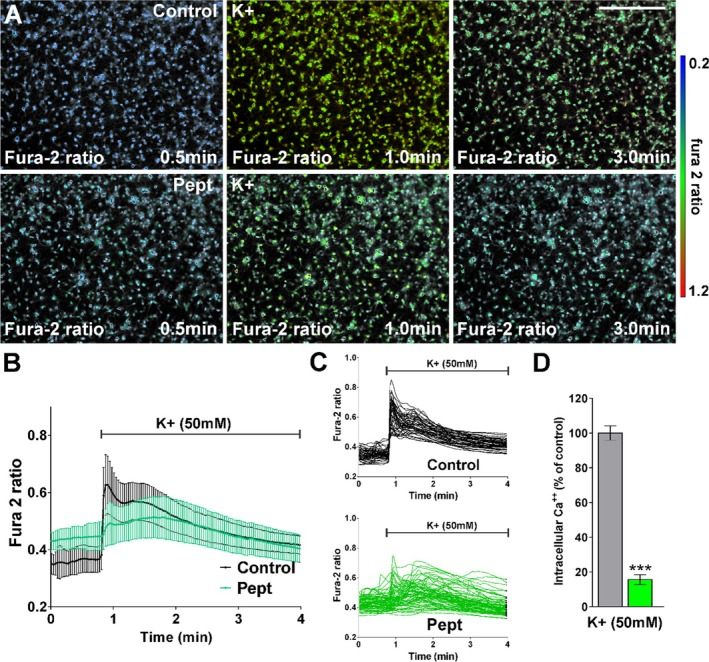 Figure 2
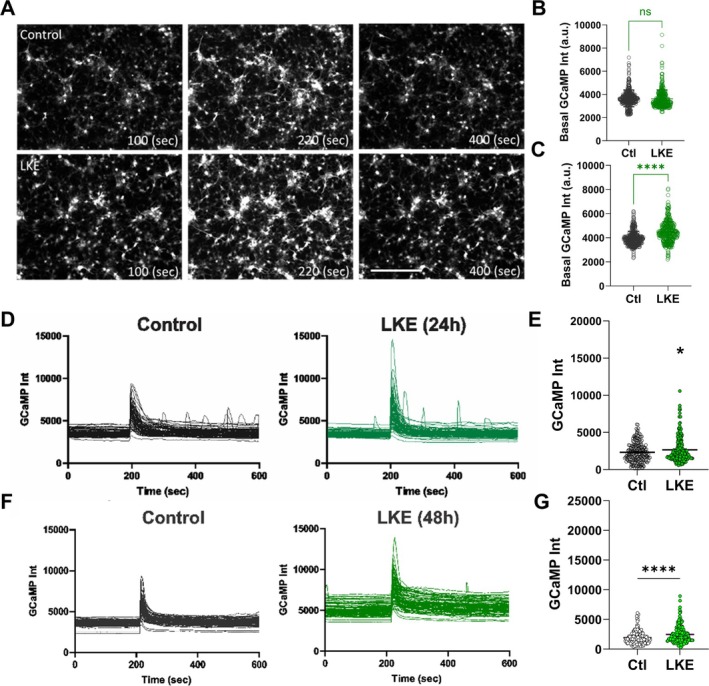 Figure 3
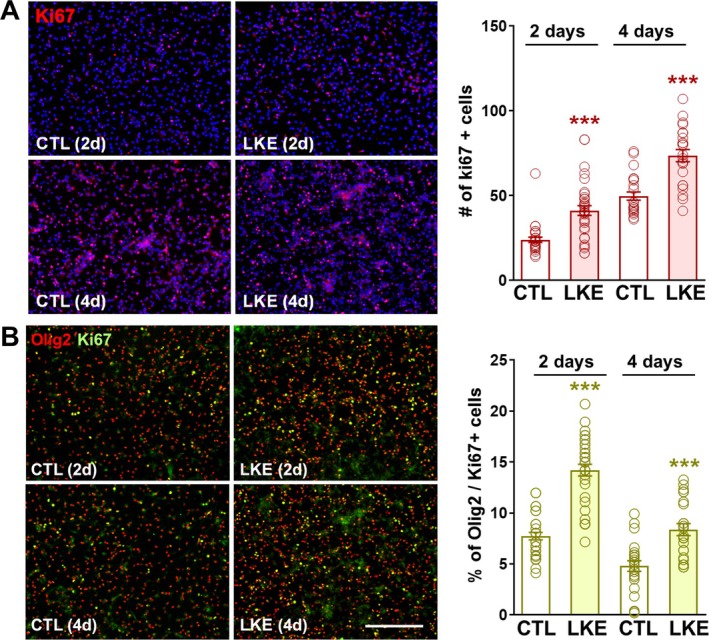 Figure 4
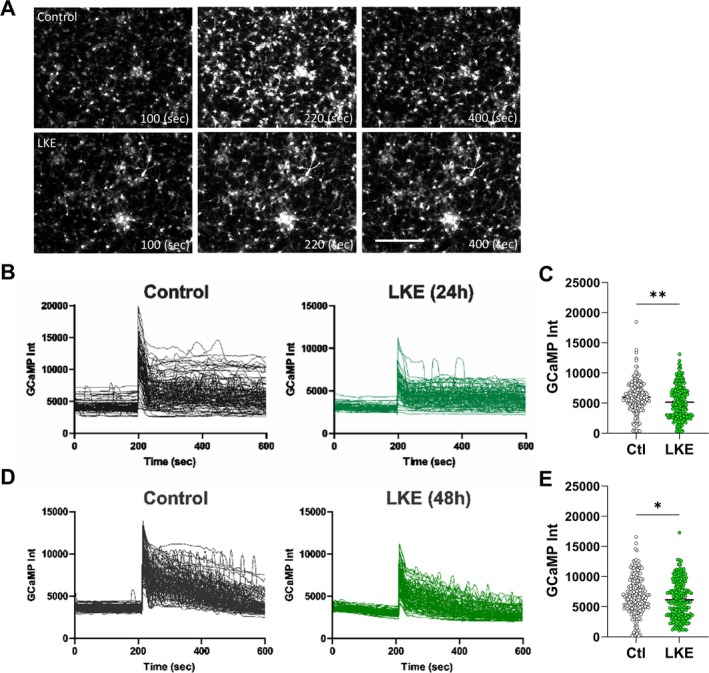 Figure 5
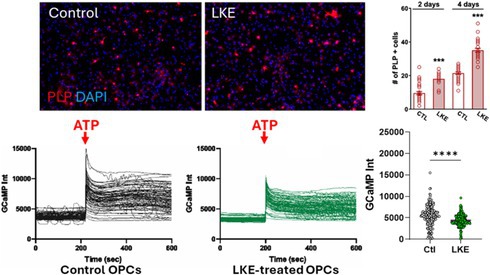 Figure 6
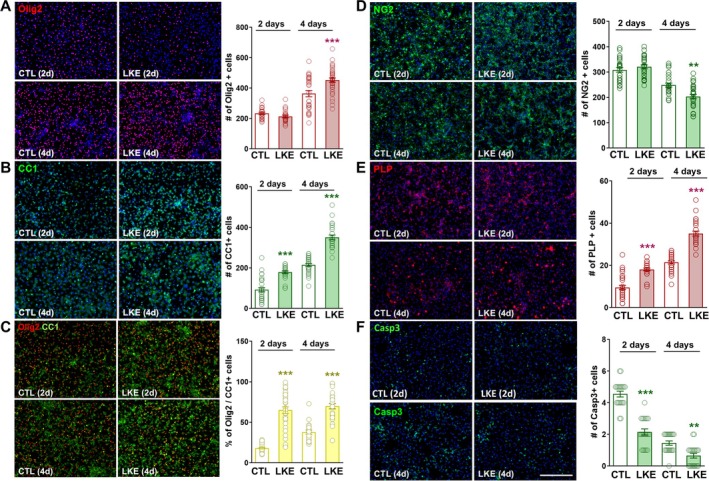 Figure 7
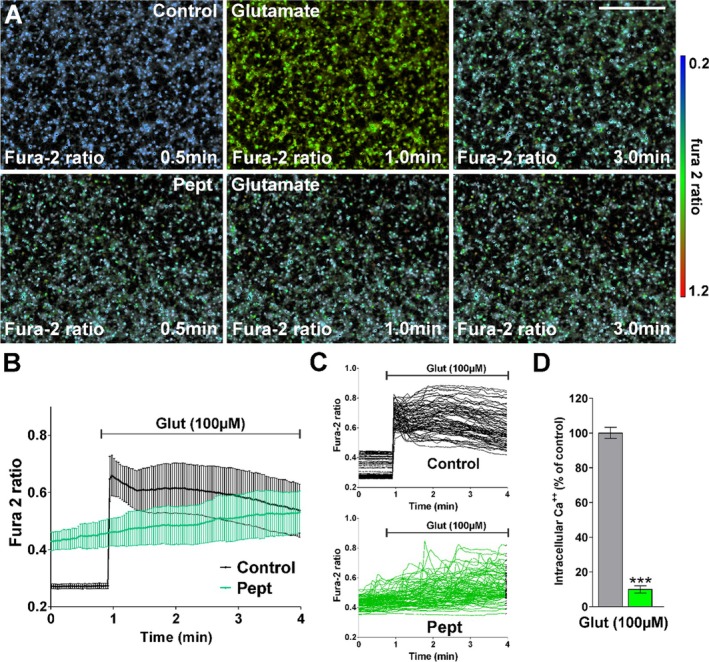 Figure 8
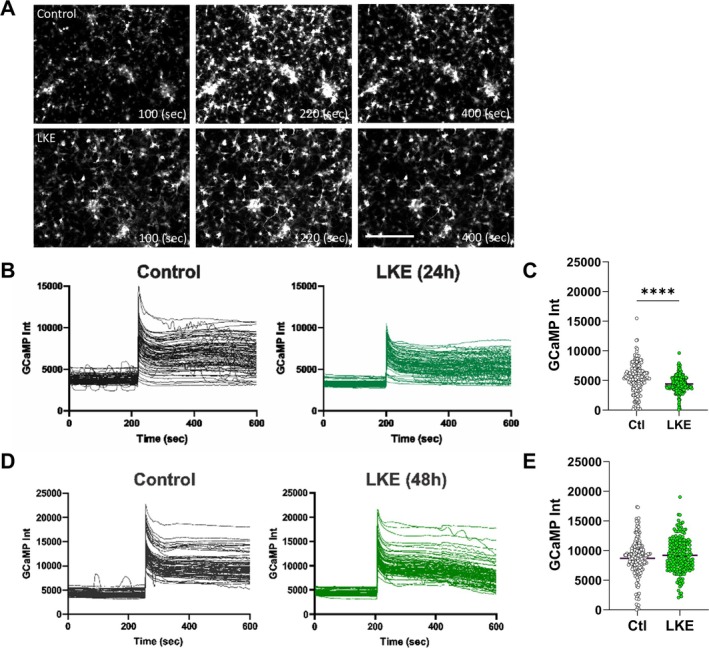 Figure 9
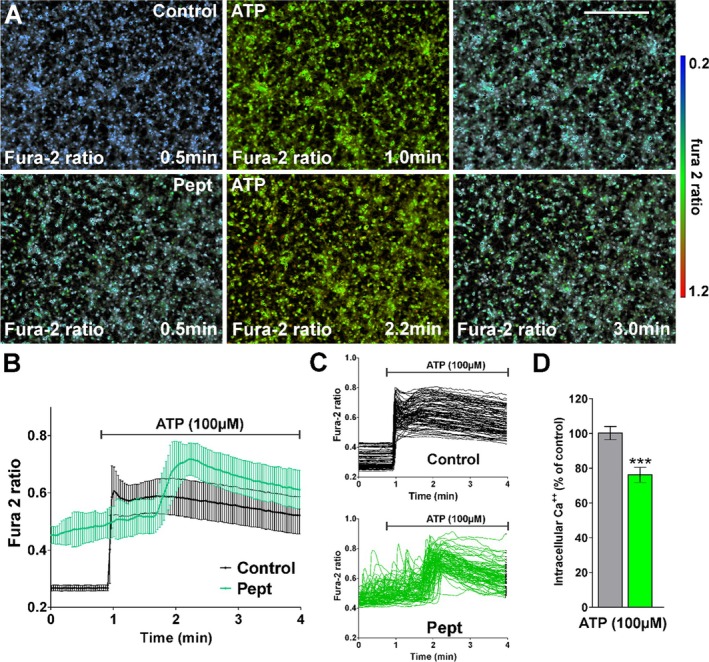 Figure 10
Peer Reviews
No public reviews on file for this paper yet. If you reviewed it on a platform where reviews are public (OpenReview, ICLR, NeurIPS, ICML), you can paste yours below so the community can read it here.
Videos
No videos yet. Explain this paper in a talk, walkthrough, or lecture? Add one.
Taxonomy
TopicsNeurogenesis and neuroplasticity mechanisms · Neuroscience and Neuropharmacology Research · MicroRNA in disease regulation