Protective effect of purple sweet potatoes (Ipomoea batatas L.) against rat breast cancer
Carmen R. Silva-Correa, Julio Hilario-Vargas, Abhel A. Calderón-Peña, Víctor E. Villarreal-La Torre, Cinthya L. Aspajo-Villalaz, Natalia Bailon-Moscoso, Juan Carlos Romero-Benavides, Oscar Herrera-Calderon, William A. Sagástegui-Guarniz, Julio A. Castañeda-Carranza

TL;DR
Purple sweet potato extract may help prevent breast cancer in rats by reducing tumor growth and improving tissue health.
Contribution
The study demonstrates the chemopreventive potential of purple sweet potato peels in a rat model of breast cancer.
Findings
The extract significantly prolonged tumor latency and reduced tumor volume in a dose-dependent manner.
Histological analysis showed improved ductal epithelial integrity and reduced necrosis in treated groups.
The extract exhibited strong antioxidant activity and high anthocyanin content.
Abstract
Breast cancer is one of the most prevalent and lethal malignancies affecting women worldwide. Given the limitations of conventional treatments, there is an increasing interest in exploring naturally derived compounds with chemoprotective properties. Purple sweet potatoes (Ipomoea batatas L.) are rich in anthocyanins and have been reported to possess antioxidant, anti-inflammatory, and anticancer activities. This study aimed to evaluate the chemopreventive potential of ethanolic extracts from purple sweet potato peels in a rat model of 7,12-dimethylbenz(a)anthracene (DMBA)-induced breast cancer. Fifty female Rattus norvegicus (170–200 g) were randomized into five groups. Breast tumors were induced through a single subcutaneous dose of DMBA (20 mg/rat). Three experimental groups received daily oral administration of the extract at 200, 400, and 600 mg/kg body weight, respectively, for 4…
Genes, proteins, chemicals, diseases, species, mutations and cell lines named across the full text — each resolved to its canonical identifier and authoritative record.
Click any figure to enlarge with its caption.
 Figure 1
 Figure 2
 Figure 3
 Figure 4
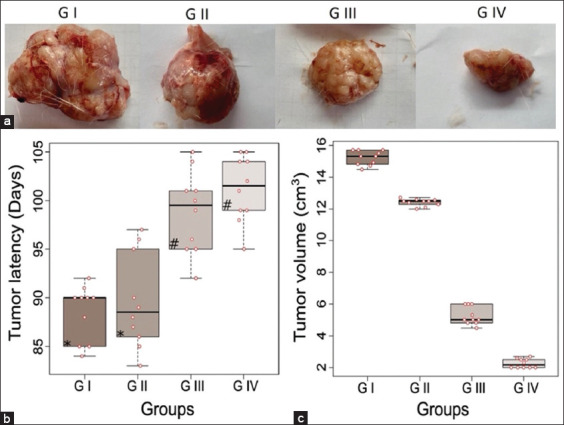 Figure 5
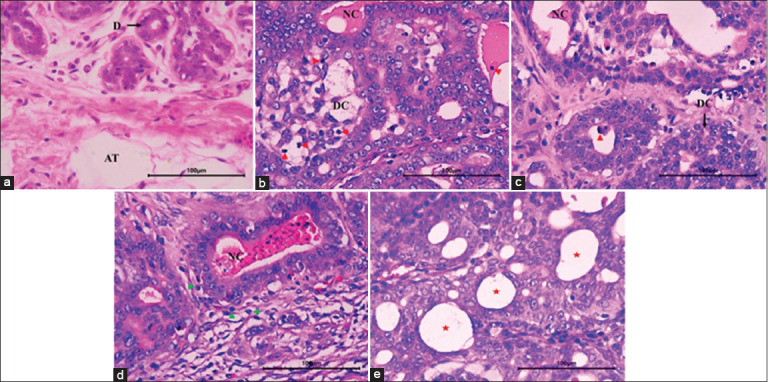 Figure 6
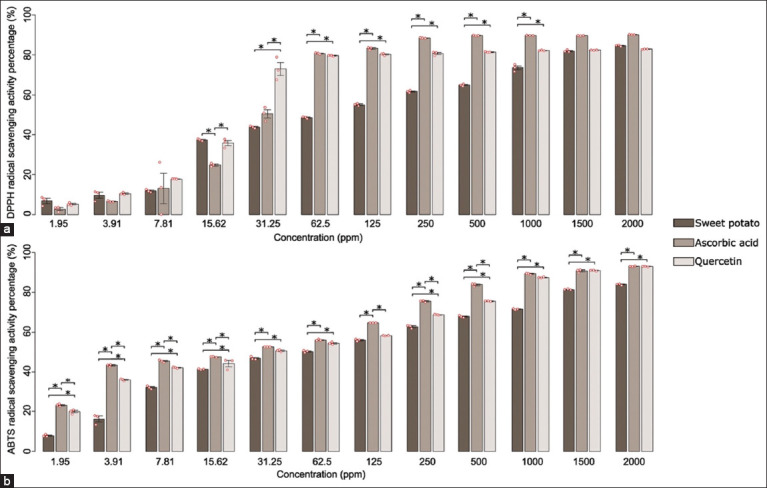 Figure 7
Peer Reviews
No public reviews on file for this paper yet. If you reviewed it on a platform where reviews are public (OpenReview, ICLR, NeurIPS, ICML), you can paste yours below so the community can read it here.
Videos
No videos yet. Explain this paper in a talk, walkthrough, or lecture? Add one.
Taxonomy
TopicsMedicinal Plant Research · Food and Agricultural Sciences · Papaya Research and Applications