Securing diagonal integration of multimodal single-cell data against ambiguous mapping
Han Zhou, Kai Cao, Yang Young Lu

TL;DR
This paper introduces SONATA, a new tool to detect and prevent misleading integrations in multimodal single-cell data analysis.
Contribution
SONATA is a novel diagnostic method that identifies ambiguous mappings in diagonal integration of multimodal single-cell data.
Findings
Artificial integrations are widespread but overlooked in diagonal data integration methods.
SONATA effectively detects and safeguards against misleading integrations in multimodal datasets.
SONATA is compatible with existing integration pipelines as an add-on diagnostic tool.
Abstract
Recent advances in single-cell multimodal omics technologies enable the exploration of cellular systems at unprecedented resolution, leading to the rapid generation of multimodal datasets that require sophisticated integration methods. Diagonal integration has emerged as a flexible solution for integrating heterogeneous single-cell data without relying on shared cells or features. However, the absence of anchoring elements introduces the risk of artificial integrations, where cells across modalities are incorrectly aligned due to ambiguous mapping. To address this challenge, we propose SONATA (Securing diagOnal iNtegrATion against Ambiguous) mapping, a novel diagnostic method designed to detect potential artificial integrations resulting from ambiguous mappings in diagonal data integration. SONATA identifies ambiguous alignments by quantifying cell–cell ambiguity within the data…
Genes, proteins, chemicals, diseases, species, mutations and cell lines named across the full text — each resolved to its canonical identifier and authoritative record.
Click any figure to enlarge with its caption.
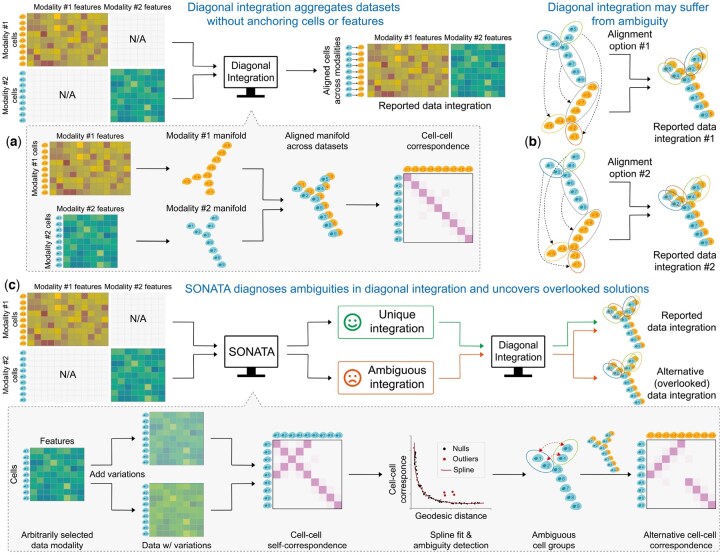 Figure 1
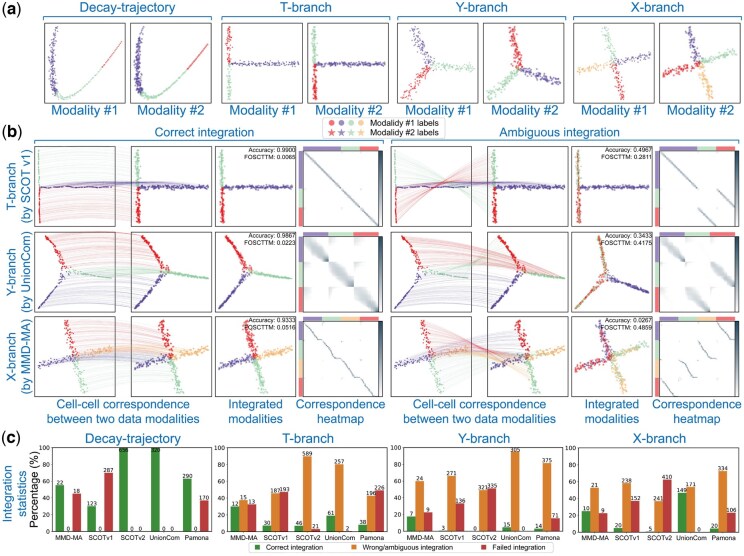 Figure 2
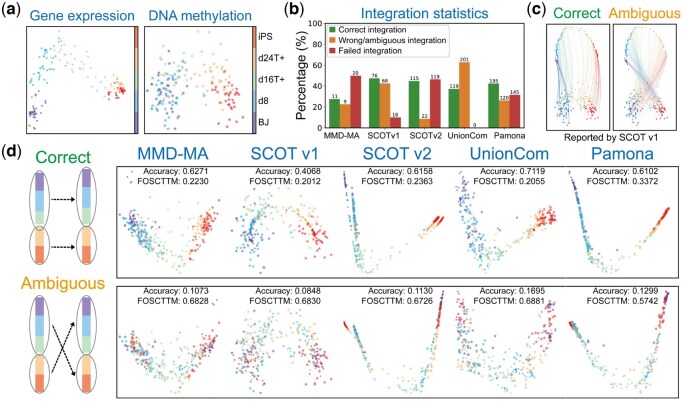 Figure 3
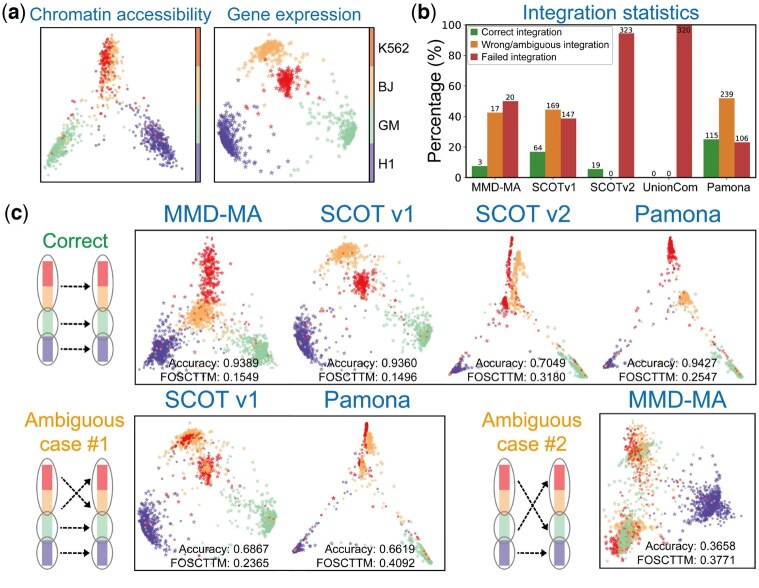 Figure 4
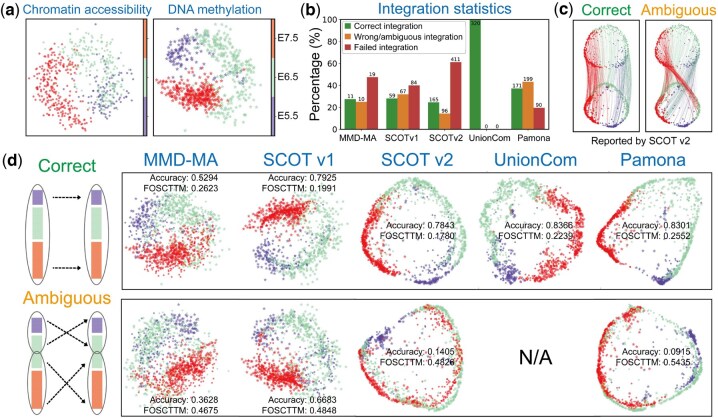 Figure 5
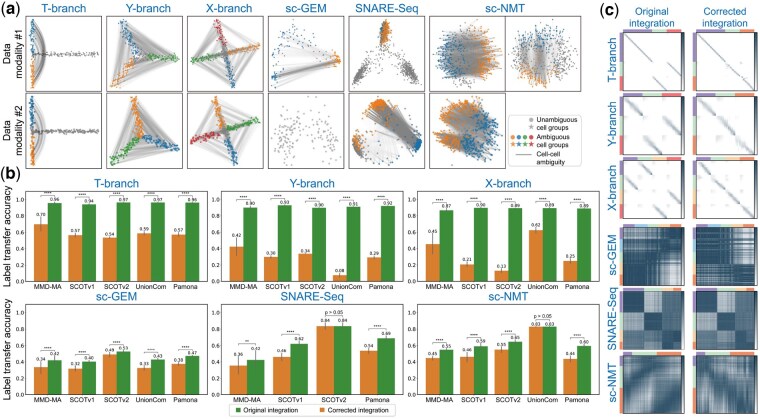 Figure 6
Peer Reviews
No public reviews on file for this paper yet. If you reviewed it on a platform where reviews are public (OpenReview, ICLR, NeurIPS, ICML), you can paste yours below so the community can read it here.
Videos
No videos yet. Explain this paper in a talk, walkthrough, or lecture? Add one.
Taxonomy
TopicsCellular Automata and Applications