Whole-Body Bone Scan for Detecting Bone Metastasis in the Prostate-Specific Membrane Antigen Positron Emission Tomography Era: A Retrospective Cohort Study of Post-Radical Prostatectomy Prostate Cancer Patients
Chanikarn Poenateetai, Achiraya Teyateeti, Pawana Pusuwan, Ajalaya Teyateeti

TL;DR
This study found that bone scans detect bone metastasis in only 5% of prostate cancer patients after surgery, but the chance increases with higher PSA levels and faster PSA rise.
Contribution
The study identifies tPSA >1 ng/mL and PSADT <6 months as strong predictors of bone metastasis in post-RP prostate cancer patients.
Findings
Only 5% of 120 bone scans showed bone metastasis in post-RP prostate cancer patients.
Higher tPSA and shorter PSADT were significantly associated with positive bone scan results.
tPSA >1 ng/mL and PSADT <6 months were the most significant predictors of bone metastasis.
Abstract
To determine the detection rate of bone metastasis on bone scan of prostate cancer patients with rising serum prostate-specific antigen (PSA) following radical prostatectomy (RP) and to identify the predictive factors associated with bone metastasis. A study was conducted in 120 patients with rising serum PSA after RP. The data collected were pre and post-RP clinical parameters, including a trigger PSA (tPSA) level that prompted the treating physician to request a bone scan and PSA doubling time (PSADT). Bone scans were classified as positive or negative in conjunction with follow-up imaging and clinical information. Of 120 bone scans, 6 (5%) were positive and 114 (95%) were negative for bone metastasis. In the median tPSA ranges of <0.5, 0.5-1.0, and >1.0 ng/mL, scan positivity was 2.1%, 6.3%, and 30%, respectively. Patients with positive scans showed higher tPSA (1.228 vs 0.256…
Genes, proteins, chemicals, diseases, species, mutations and cell lines named across the full text — each resolved to its canonical identifier and authoritative record.
Click any figure to enlarge with its caption.
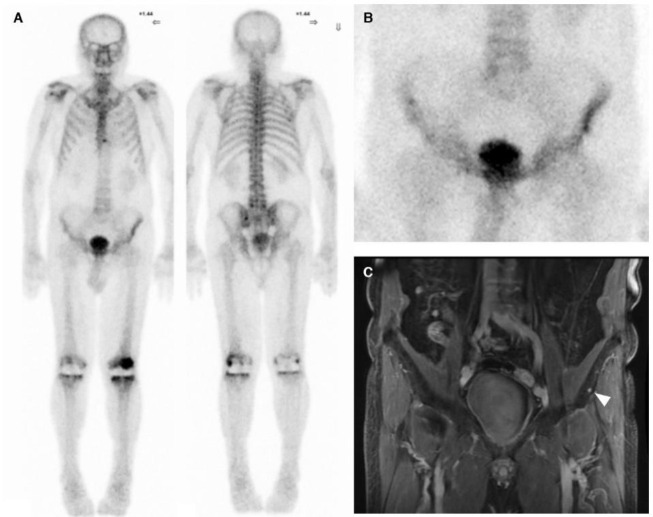 Figure 1
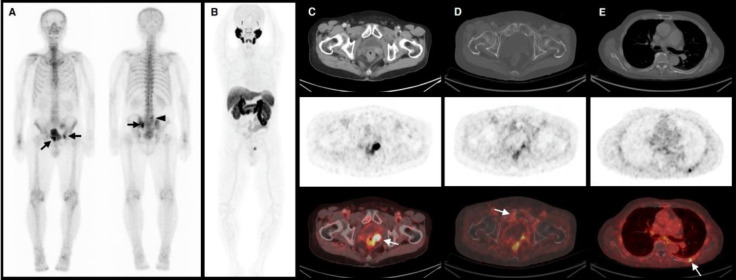 Figure 2
Peer Reviews
No public reviews on file for this paper yet. If you reviewed it on a platform where reviews are public (OpenReview, ICLR, NeurIPS, ICML), you can paste yours below so the community can read it here.
Videos
No videos yet. Explain this paper in a talk, walkthrough, or lecture? Add one.
Taxonomy
TopicsMedical Imaging and Pathology Studies · Bone health and treatments · Prostate Cancer Treatment and Research