[18F]FMISO PET in metastatic neuroendocrine tumours: a pilot study
David L Chan, Alice Conner, Nick Pavlakis, Elizabeth Bailey, Alireza Aslani, Kathy Willowson, Connie Diakos, Elizabeth J Bernard, Stephen Clarke, Alexander Engel, Paul J Roach, Dale L Bailey

TL;DR
This pilot study explores whether hypoxia explains the 'DONUT' phenomenon in neuroendocrine tumors using [18F]FMISO PET scans.
Contribution
The study introduces dynamic [18F]FMISO imaging to evaluate hypoxia in DONUT lesions of metastatic neuroendocrine tumors.
Findings
Dynamic [18F]FMISO imaging showed increased uptake in DONUT lesions for 8 out of 10 patients.
Only one patient showed [18F]FMISO uptake greater than normal liver on delayed static imaging.
Dynamic imaging is suggested as more effective than static imaging for detecting hypoxia in these lesions.
Abstract
The phenomenon of peripheral [68Ga]DOTATATE avidity without central avidity (which we have termed a “DONUT") has been observed in neuroendocrine neoplasm (NEN) lesions. There has been speculation as to whether this is due to hypoxia, de-differentiated disease or other causes. The presence of hypoxia may have prognostic and therapeutic implications, and was evaluated in these lesions using the PET hypoxia imaging biomarker [18F]FMISO. Prospective pilot study in patients with metastatic NENs with at least one DONUT lesion (central [68Ga]DOTATATE non-avidity). [18F]FDG and [18F]FMISO scans were acquired within 60 days of the [68Ga]DOTATATE PET/CT. [18F]FMISO scans were acquired as a dynamic scan over 20 mins from injection with a delayed image at 2 hours. The dynamic acquisition was analysed quantitatively using a graphical approach yielding parametric images of Influx Rate Constant and…
Genes, proteins, chemicals, diseases, species, mutations and cell lines named across the full text — each resolved to its canonical identifier and authoritative record.
Click any figure to enlarge with its caption.
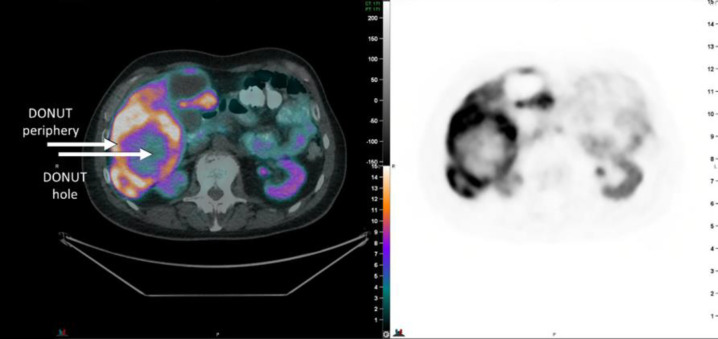 Figure 1
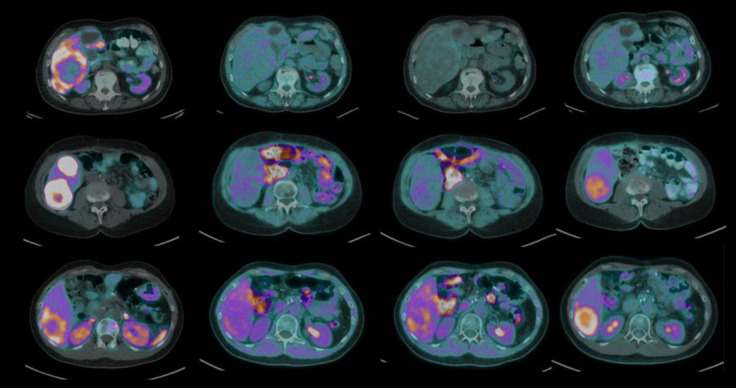 Figure 2
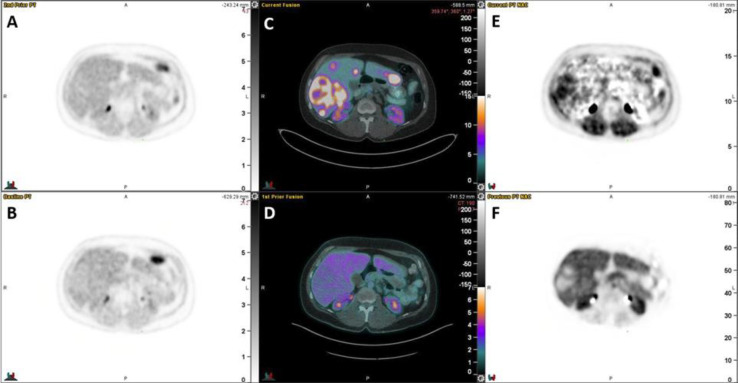 Figure 3
Peer Reviews
No public reviews on file for this paper yet. If you reviewed it on a platform where reviews are public (OpenReview, ICLR, NeurIPS, ICML), you can paste yours below so the community can read it here.
Videos
No videos yet. Explain this paper in a talk, walkthrough, or lecture? Add one.
Taxonomy
TopicsNeuroendocrine Tumor Research Advances · Medical Imaging Techniques and Applications · Adrenal and Paraganglionic Tumors