2-[18F]-FDG PET/CT in rasmussen encephalitis: guiding diagnosis and treatment in a young adult with sudden onset
Mattoli Maria Vittoria, Francesca Serani, Stefano L. Sensi

TL;DR
This paper discusses how 2-[18F]-FDG PET/CT helped diagnose Rasmussen encephalitis in a young adult with sudden seizures, offering a useful tool for uncertain cases.
Contribution
The paper highlights the usefulness of FDG-PET as a diagnostic adjunct in rare and uncertain cases of Rasmussen encephalitis.
Findings
FDG-PET aided in differentiating between autoimmune encephalitis and Rasmussen encephalitis in a 28-year-old patient.
FDG-PET is suggested as a reliable tool for diagnosing and monitoring Rasmussen encephalitis in challenging cases.
The case supports FDG-PET's value despite it not being a mandatory diagnostic criterion for RE.
Abstract
Rasmussen encephalitis (RE) is a rare condition characterized by a chronic inflammatory disorder due to unilateral inflammation of the cerebral cortex. Typically, it involves one cerebral hemisphere and manifests through intractable epileptic seizures. Its occurrence in adults is infrequent. We present a case of a 28-year-old woman who was brought to the emergency room due to the sudden onset of uncontrolled seizures. The use of 2-[18F]-FDG PET/CT (FDG-PET) helped in the differential diagnosis between autoimmune seronegative encephalitis and Rasmussen encephalitis. Even though FDG-PET is not a mandatory diagnostic criterion in the clinical evaluation of RE patients, the presented case and the available literature suggest its usefulness as a valuable diagnostic tool in patients with uncertain diagnosis, emphasizing its potential as a reliable adjunct in challenging diagnostic scenarios…
Genes, proteins, chemicals, diseases, species, mutations and cell lines named across the full text — each resolved to its canonical identifier and authoritative record.
Click any figure to enlarge with its caption.
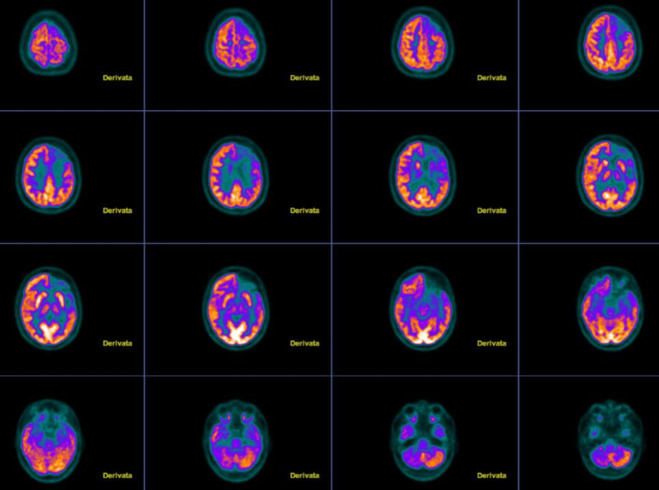 Figure 1
Peer Reviews
No public reviews on file for this paper yet. If you reviewed it on a platform where reviews are public (OpenReview, ICLR, NeurIPS, ICML), you can paste yours below so the community can read it here.
Videos
No videos yet. Explain this paper in a talk, walkthrough, or lecture? Add one.
Taxonomy
TopicsAutoimmune Neurological Disorders and Treatments · Epilepsy research and treatment · Multiple Sclerosis Research Studies