Care pathways and anorectal evaluation for obstetric anal sphincter injury‐related incontinence: A UK survey of obstetricians
N. Elsaid, G. P. Thomas, S. Dutta, R. J. Fernando, E. V. Carrington, C. J. Vaizey

TL;DR
This UK survey shows inconsistent care for women with childbirth-related anal injuries, highlighting the need for standardized treatment pathways.
Contribution
The study identifies variability in clinical practices for managing obstetric anal sphincter injury-related incontinence among UK obstetricians.
Findings
Most clinicians perform clinical and rectal exams but rarely use objective incontinence screening tools.
Endoanal ultrasound is the preferred diagnostic method, and asymptomatic patients are often discharged quickly.
Referral for physiotherapy is common, but follow-up specialty varies widely.
Abstract
To report on national clinical practice in relation to the post‐partum management of patients with obstetric anal sphincter injury (OASI)‐related incontinence in the UK. This was a cross‐sectional, observational study of maternity units in the National Health Service (NHS). Data were collected using a survey that was distributed, via the British Society of Urogynaecologists (BSUG), Royal College of Obstetricians & Gynaecologists (RCOG) and the NHS England email directory, to consultant obstetricians and urogynaecologists involved in the post‐partum care of patients with OASI. A descriptive, thematic analysis of the data was performed. One hundred and twenty‐six responses were included in the final analysis (estimated response rate~2.5%). The majority of respondents routinely conducted clinical and rectal examinations at the post‐partum clinic visit (81.7% and 57.6%, respectively) but…
Genes, proteins, chemicals, diseases, species, mutations and cell lines named across the full text — each resolved to its canonical identifier and authoritative record.
Click any figure to enlarge with its caption.
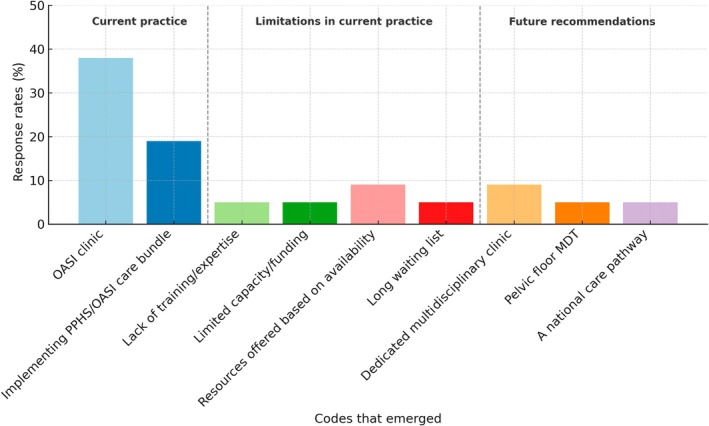 Figure 1
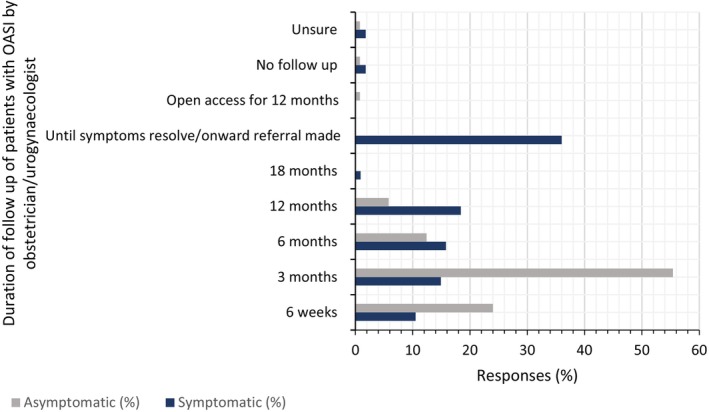 Figure 2
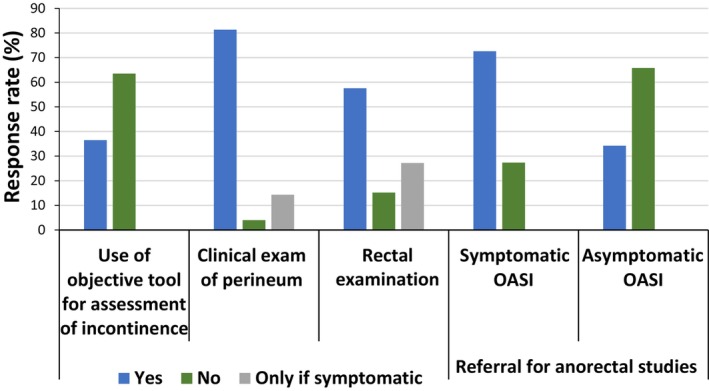 Figure 3
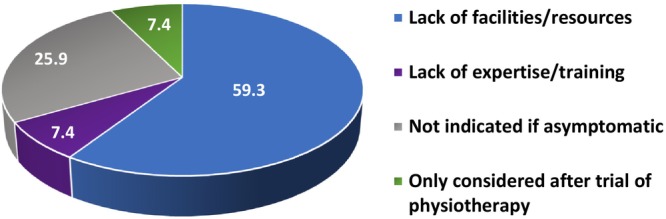 Figure 4
Peer Reviews
No public reviews on file for this paper yet. If you reviewed it on a platform where reviews are public (OpenReview, ICLR, NeurIPS, ICML), you can paste yours below so the community can read it here.
Videos
No videos yet. Explain this paper in a talk, walkthrough, or lecture? Add one.
Taxonomy
TopicsPelvic floor disorders treatments · Anorectal Disease Treatments and Outcomes · Pelvic and Acetabular Injuries