Identifying the optimal dose of cannabidiol by intrabuccal administration in Kramnik (C3HeB/FeJ) mice
Oluwadara Pelumi Omotayo, Siyethemba Bhengu, Kobus Venter, Yolandy Lemmer, Shayne Mason

TL;DR
This study finds that a 10 mg/kg dose of cannabidiol (CBD) administered intrabuccally in mice is optimal for brain penetration with minimal variation and no sex-based differences.
Contribution
The study identifies the optimal CBD dose via intrabuccal administration in mice and evaluates sex as a potential confounding factor.
Findings
CBD and its metabolites were detected in brain, urine, and blood samples after intrabuccal administration.
The 10 mg/kg dose showed the least variation in CBD metabolite concentrations.
Sex only became a confounding factor at the highest dose (30 mg/kg).
Abstract
Cannabidiol (CBD) has numerous therapeutic properties, and is used to treat neurological conditions, such as neuroinflammation. However, the optimal dose of CBD to penetrate the brain requires further investigation. The primary aim of this study was to use a mouse model and the intrabuccal route for CBD administration to determine the optimal dose at which CBD can penetrate the brain. The secondary aim was to determine whether sex is a confounding factor. Thirty adult Kramnik mice, divided equally into three groups, were administered CBD oil intrabuccally at three doses—10, 20, and 30 mg/kg, euthanized 6 h later, and whole brain, urine, and blood samples were collected. Liquid chromatography with tandem mass spectrometry was used to analyze the collected samples. CBD and its three metabolites—7‐carboxy cannabidiol (7‐COOH‐CBD), 7‐hydroxy cannabidiol (7‐OH‐CBD) and 6‐hydroxy…
Genes, proteins, chemicals, diseases, species, mutations and cell lines named across the full text — each resolved to its canonical identifier and authoritative record.
Click any figure to enlarge with its caption.
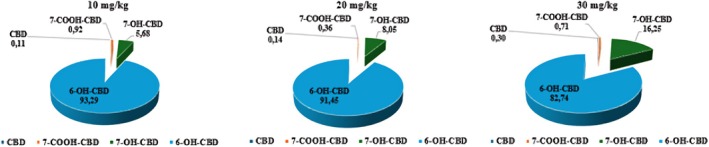 Figure 1
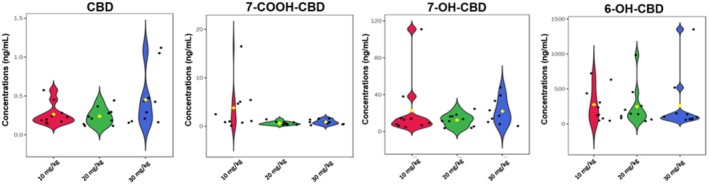 Figure 2
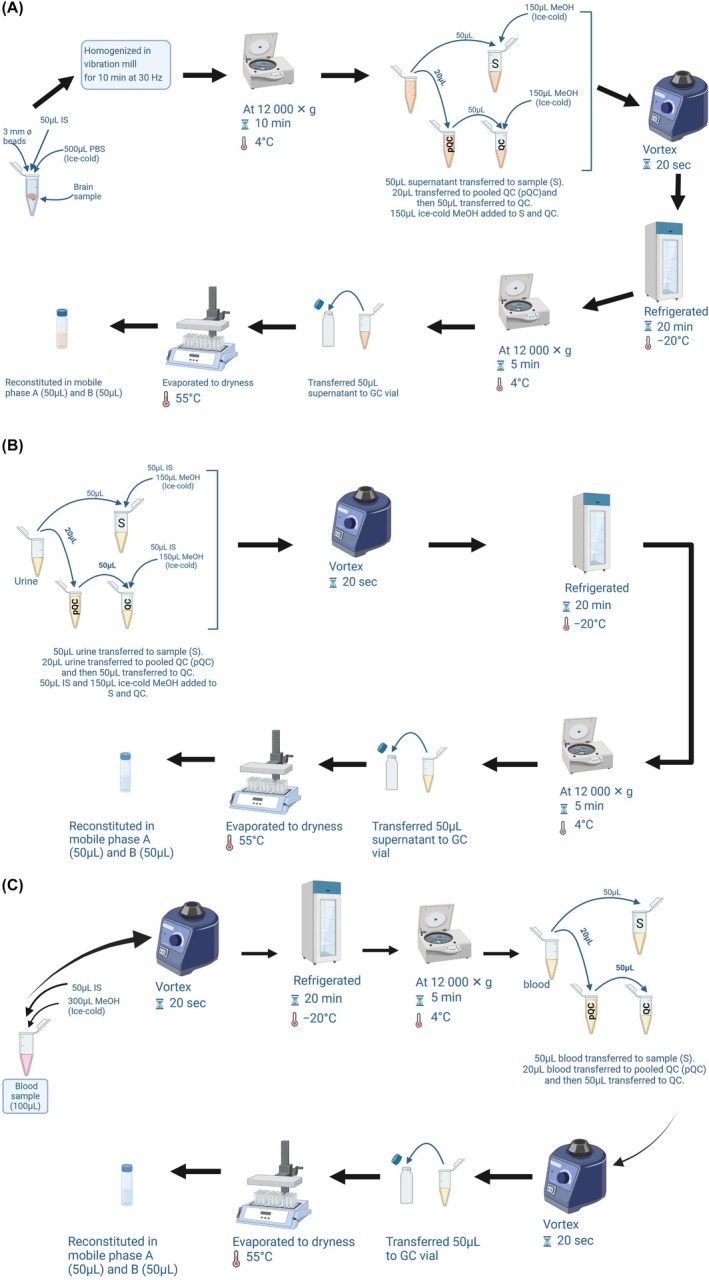 Figure 3
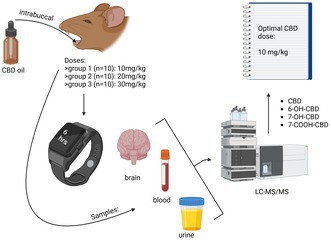 Figure 4
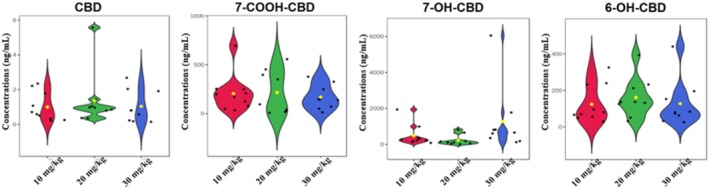 Figure 5
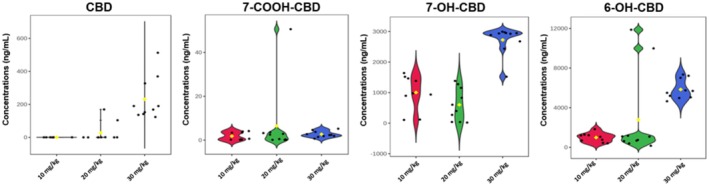 Figure 6
Peer Reviews
No public reviews on file for this paper yet. If you reviewed it on a platform where reviews are public (OpenReview, ICLR, NeurIPS, ICML), you can paste yours below so the community can read it here.
Videos
No videos yet. Explain this paper in a talk, walkthrough, or lecture? Add one.
Taxonomy
TopicsCannabis and Cannabinoid Research · Adenosine and Purinergic Signaling · Prenatal Substance Exposure Effects