Adding meaningful distal action effects in feature binding
Nicolas D. Münster, Philip Schmalbrock, Christian Beste, Alexander Münchau, Christian Frings

TL;DR
The study investigates whether meaningful distal action effects influence how features of actions are bound together in memory.
Contribution
The study introduces meaningful distal action effects in feature binding tasks to test their impact on action control theories.
Findings
Meaningful distal action effects did not significantly influence feature binding effects.
Results suggest that stimulus-based action modes dominate in standard S-R binding tasks.
Distal action effects may not be sufficient to terminate event files in these tasks.
Abstract
Event files that bind features of stimuli, responses, and action effects figure prominently in contemporary views of action control. When a feature repeats, the previous event file including this feature is retrieved and can then influence current performance. It is still unclear, however, what terminates an event file. A tacit assumption is that registering the distal (e.g., visual, or auditory) sensory consequences of an action (i.e., the “action effect”) terminates the event file, thereby making it available for retrieval. Yet recently Frings et al. (2023) tested different distal action-effect conditions in standard stimulus–response (S-R) binding tasks and observed no modulation of S-R binding effects. It is conceivable though that the impact of distal action effects on feature binding hinges on the action mode of agents with intention-based mode (as compared to a stimulus-based…
Genes, proteins, chemicals, diseases, species, mutations and cell lines named across the full text — each resolved to its canonical identifier and authoritative record.
Click any figure to enlarge with its caption.
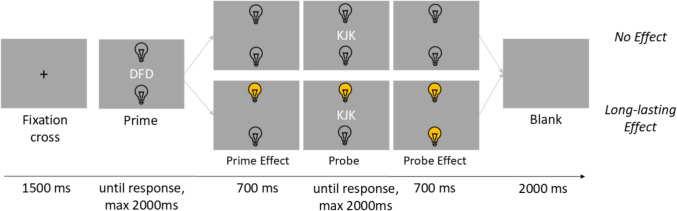 Figure 1
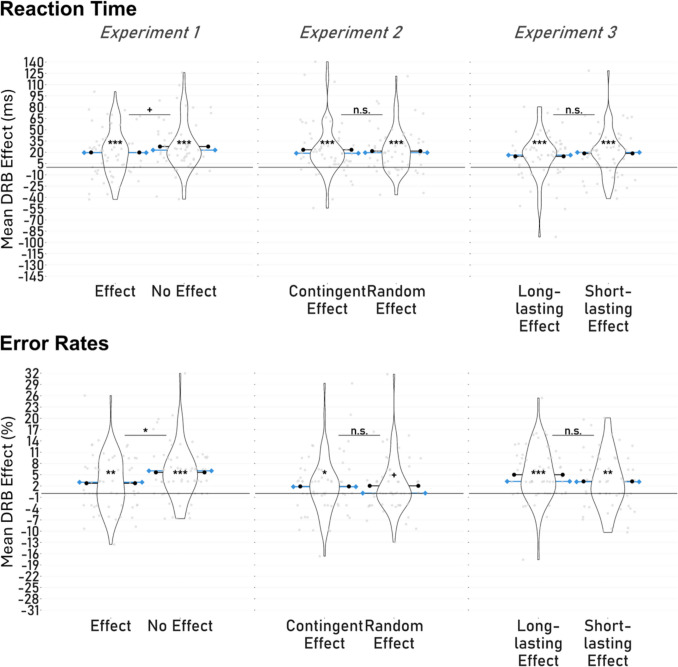 Figure 2
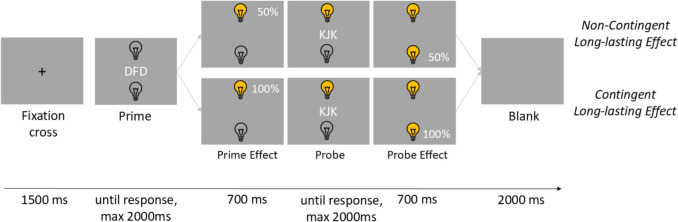 Figure 3
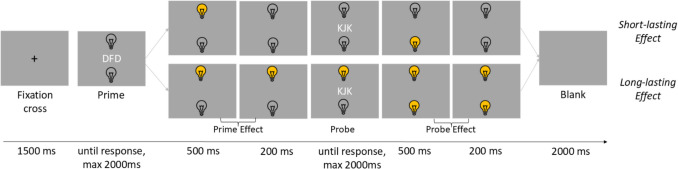 Figure 4
Peer Reviews
No public reviews on file for this paper yet. If you reviewed it on a platform where reviews are public (OpenReview, ICLR, NeurIPS, ICML), you can paste yours below so the community can read it here.
Videos
No videos yet. Explain this paper in a talk, walkthrough, or lecture? Add one.
Taxonomy
TopicsNeural and Behavioral Psychology Studies · Action Observation and Synchronization · Free Will and Agency