Cueing distractors is effective when the incentive to suppress is high
Anna Heuer, Anna Schubö

TL;DR
People can better suppress distractions when they are highly motivated, as shown by improved reaction times and brain activity patterns.
Contribution
The study demonstrates that voluntary suppression of salient distractors is possible when advance cues and high incentives are provided.
Findings
Predictive cues significantly reduced distraction and improved response times.
High-reward distractors required more suppression, as indicated by PD amplitude modulations.
Cueing benefits increased over time, suggesting learning or adaptation.
Abstract
Avoiding distraction is critical for our ability to focus, and recent years have seen an increased interest in attentional suppression mechanisms. We now know that we implicitly learn about statistical regularities of our environment, which facilitates inhibition, but it remains unclear if distractors can also be suppressed voluntarily when advance information about their occurrence becomes available. Reasoning that such top-down suppression is likely an effortful process requiring a certain degree of motivation, we aimed to show that distractor cueing can effectively reduce distraction when the incentive is high. In an additional singleton search task, we maximized the incentive to suppress by presenting cues that validly indicated the distractor’s specific location and colour, and by rewarding successful suppression. For correct responses, participants received either a low or high…
Genes, proteins, chemicals, diseases, species, mutations and cell lines named across the full text — each resolved to its canonical identifier and authoritative record.
Click any figure to enlarge with its caption.
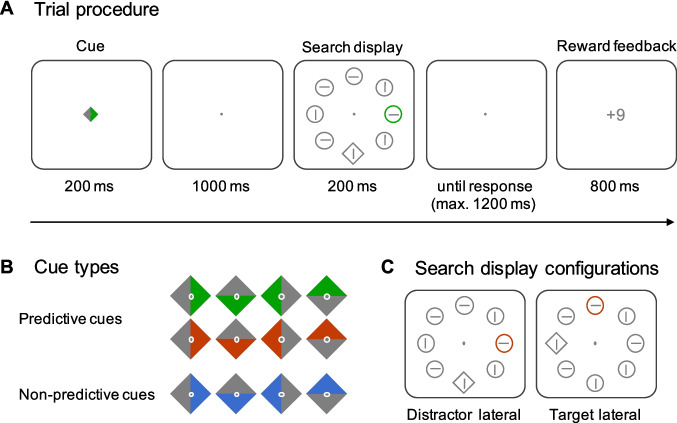 Figure 1
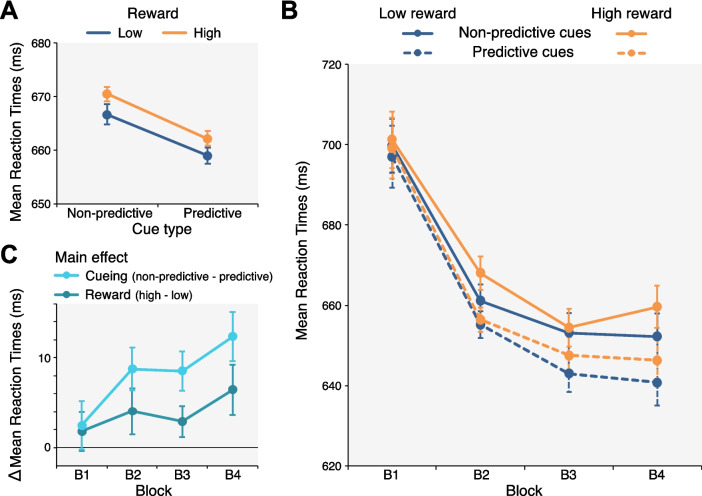 Figure 2
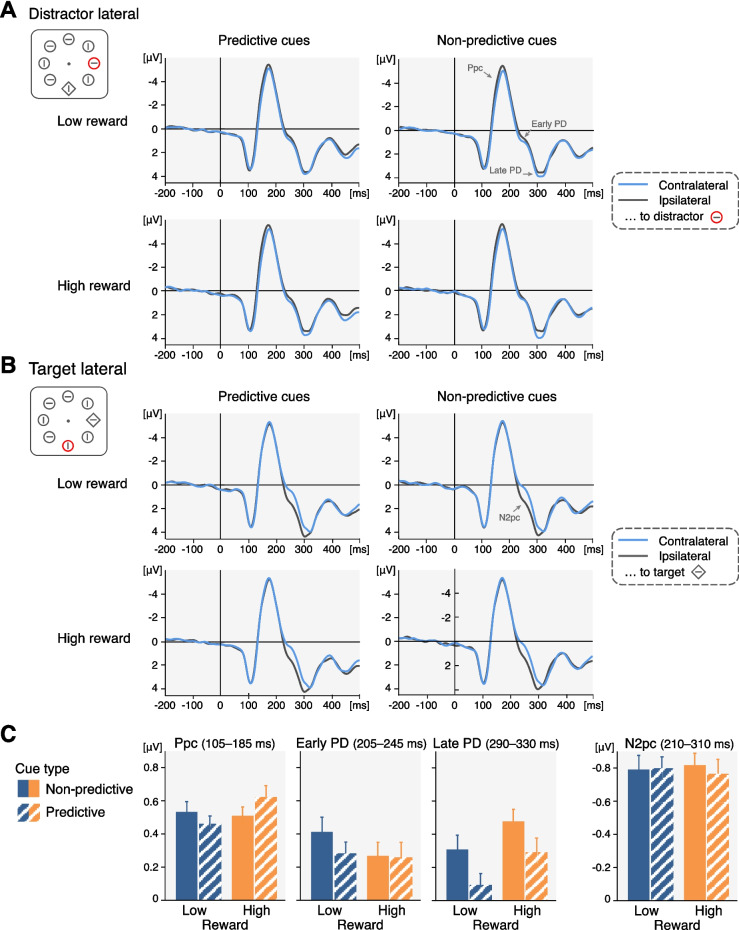 Figure 3
Peer Reviews
No public reviews on file for this paper yet. If you reviewed it on a platform where reviews are public (OpenReview, ICLR, NeurIPS, ICML), you can paste yours below so the community can read it here.
Videos
No videos yet. Explain this paper in a talk, walkthrough, or lecture? Add one.
Taxonomy
TopicsNeural and Behavioral Psychology Studies · EEG and Brain-Computer Interfaces · Neural dynamics and brain function