It’s about location, location, location: Absolute and relative stimulus positions in action control
Nicolas D. Münster, Philip Schmalbrock, Christian Frings

TL;DR
This study explores how stimulus location—either absolute or relative—is used in action control processes, revealing a flexible system that adapts based on context.
Contribution
The paper introduces a novel framework for understanding how absolute and relative stimulus positions influence binding and retrieval in action control.
Findings
Absolute stimulus location is used when each relative location has a unique absolute position.
Relative stimulus locations are used when absolute positions are ambiguous.
The results highlight context-dependent processing and prioritization in action control.
Abstract
In action control research, stimulus features are assumed to get bound to response features and integrated into an event file. Repetition of any feature leads to retrieval of this event file, causing interference with the current action, depending on whether features repeat or change. It is known that the location of a stimulus works as a feature in these processes. Location is usually operationalized as the absolute position of the stimulus; however, the significance of a particular stimulus location is often only revealed when its position relative to other context stimuli is considered as well. In two experiments (Ntotal = 100), we investigated under which conditions which form of location—absolute or relative—is used for binding and retrieval processes. It was shown that solely absolute stimulus location is used when there is a unique absolute target stimulus position for each…
Genes, proteins, chemicals, diseases, species, mutations and cell lines named across the full text — each resolved to its canonical identifier and authoritative record.
Click any figure to enlarge with its caption.
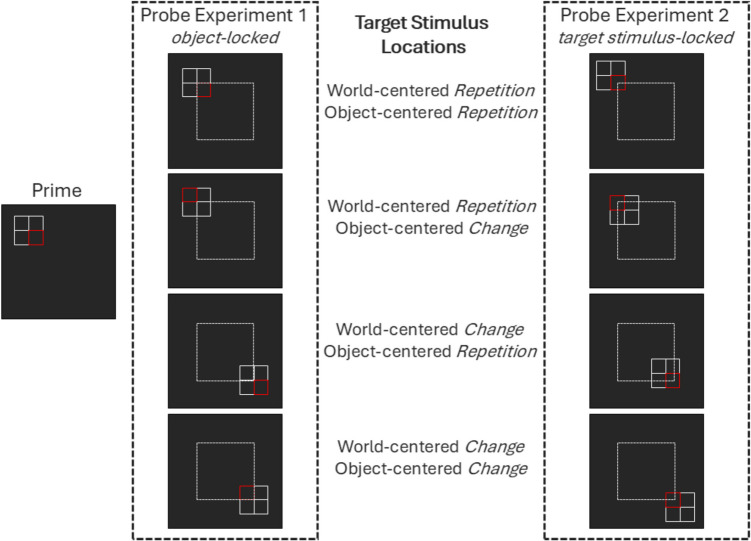 Figure 1
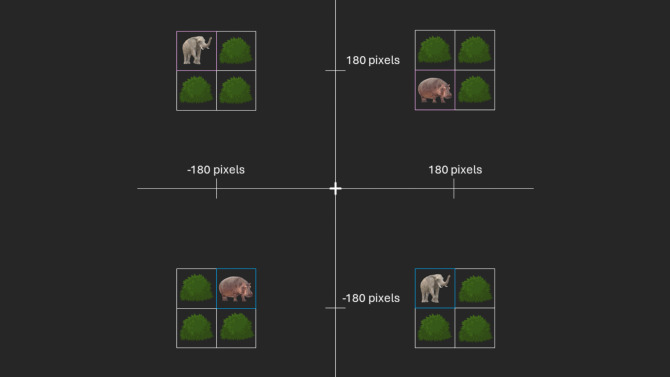 Figure 2
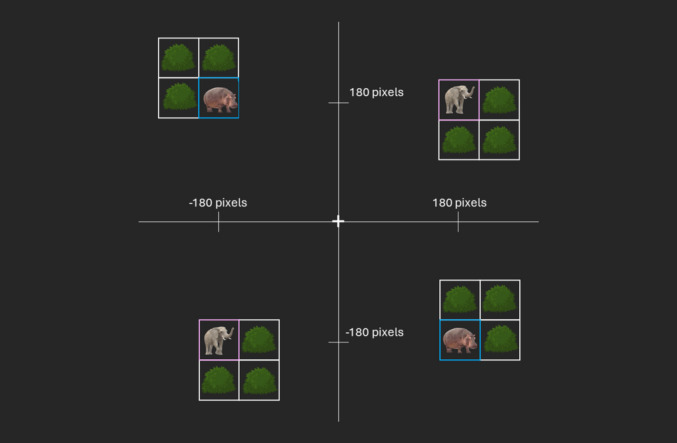 Figure 3
 Figure 4
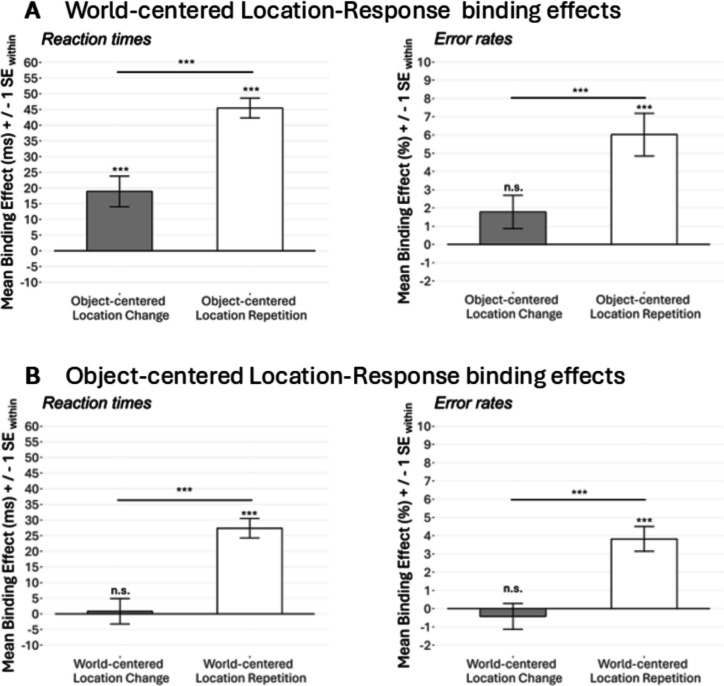 Figure 5
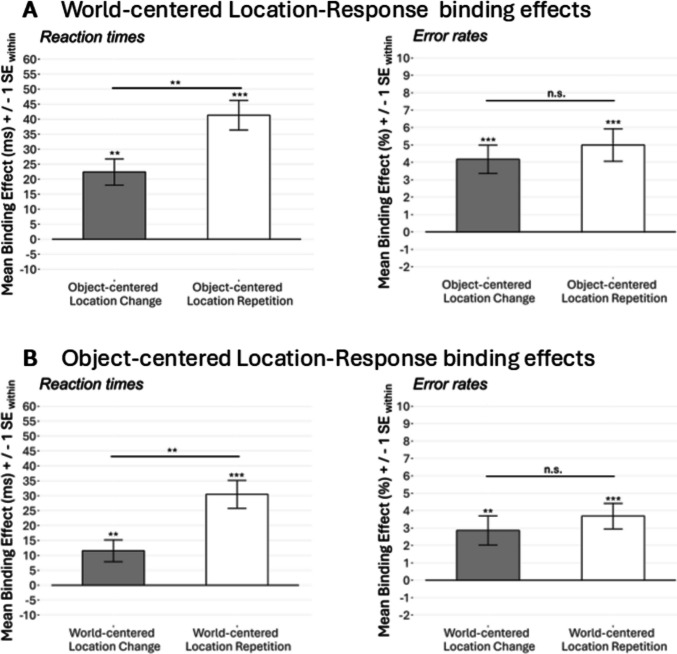 Figure 6
Peer Reviews
No public reviews on file for this paper yet. If you reviewed it on a platform where reviews are public (OpenReview, ICLR, NeurIPS, ICML), you can paste yours below so the community can read it here.
Videos
No videos yet. Explain this paper in a talk, walkthrough, or lecture? Add one.
Taxonomy
TopicsNeural and Behavioral Psychology Studies · Action Observation and Synchronization · Memory and Neural Mechanisms