A Neighborhood Approach for Using Remotely Sensed Data to Estimate Current Ranges for Conservation Assessments
Bethany A. Johnson, Gonzalo E. Pinilla‐Buitrago, Robert P. Anderson

TL;DR
A new method called the neighborhood approach improves conservation assessments by refining habitat data to account for geolocation uncertainty in species range estimates.
Contribution
The novel neighborhood approach processes habitat data to maintain fine resolution while accounting for larger surrounding areas, improving conservation range estimates.
Findings
The neighborhood approach was applied to a forest-dwelling species, suggesting it should be removed from threatened categories based on refined habitat metrics.
Localized habitat loss patterns were revealed that are not captured by standard IUCN metrics like EOO and AOO.
The method is broadly applicable to various habitats and species with high georeferencing uncertainty.
Abstract
Species distribution modeling can be used to predict environmental suitability, and removing areas currently lacking appropriate vegetation can refine range estimates for conservation assessments. However, the uncertainty around geographic coordinates can exceed the fine resolution of remotely sensed habitat data. Here, we present a novel methodological approach to reflect this reality by processing habitat data to maintain its fine resolution, but with new values characterizing a larger surrounding area (the “neighborhood”). We implement its use for a forest‐dwelling species (Handleyomys chapmani) considered threatened by the IUCN. We determined deforestation tolerance threshold values by matching occurrence records with forest cover data using two methods: (1) extracting the exact pixel value where a record fell; and (2) using the neighborhood value (more likely to characterize…
Genes, proteins, chemicals, diseases, species, mutations and cell lines named across the full text — each resolved to its canonical identifier and authoritative record.
Click any figure to enlarge with its caption.
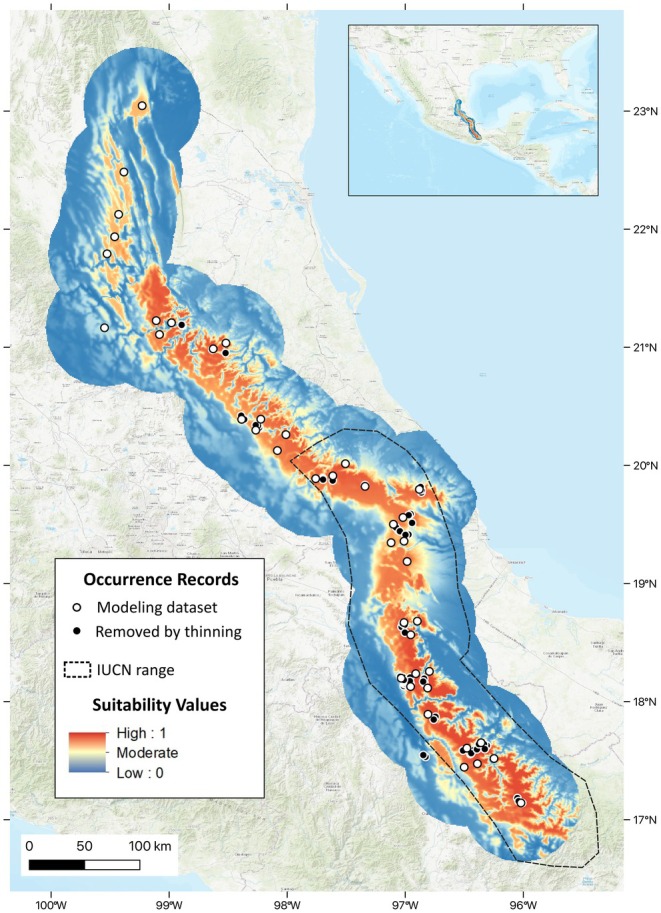 Figure 1
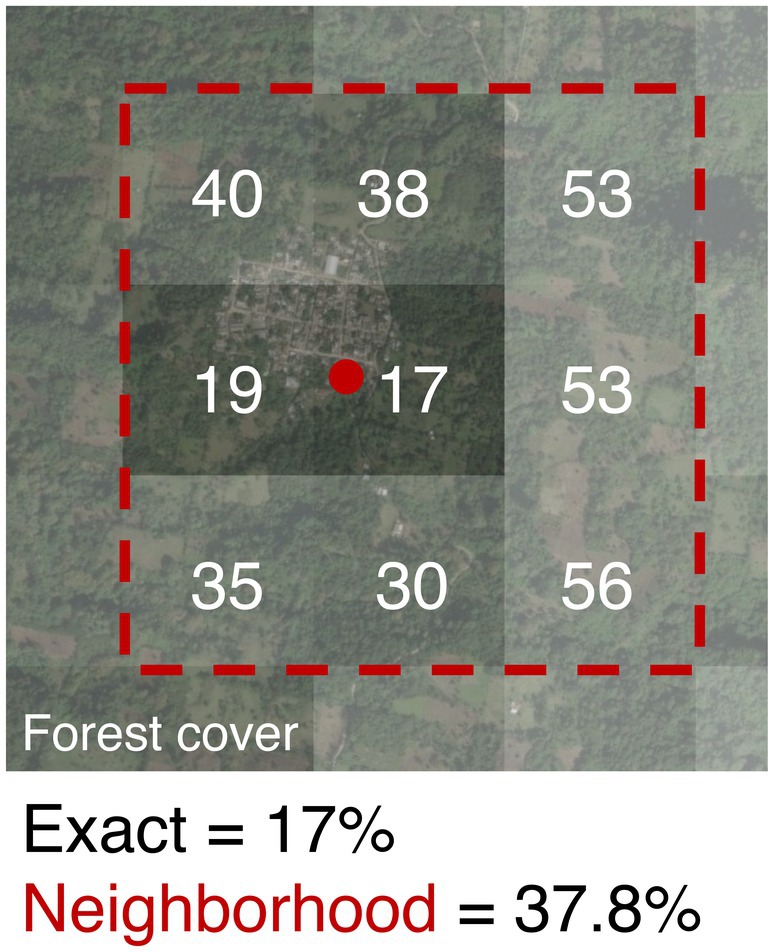 Figure 2
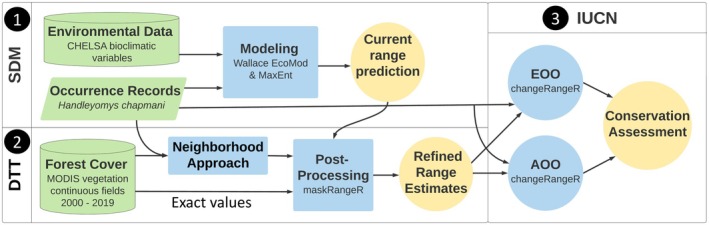 Figure 3
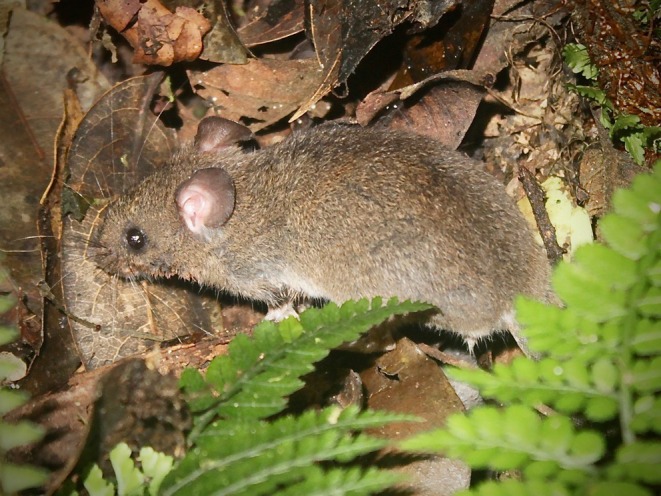 Figure 4
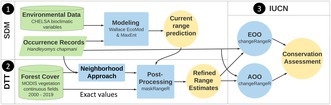 Figure 5
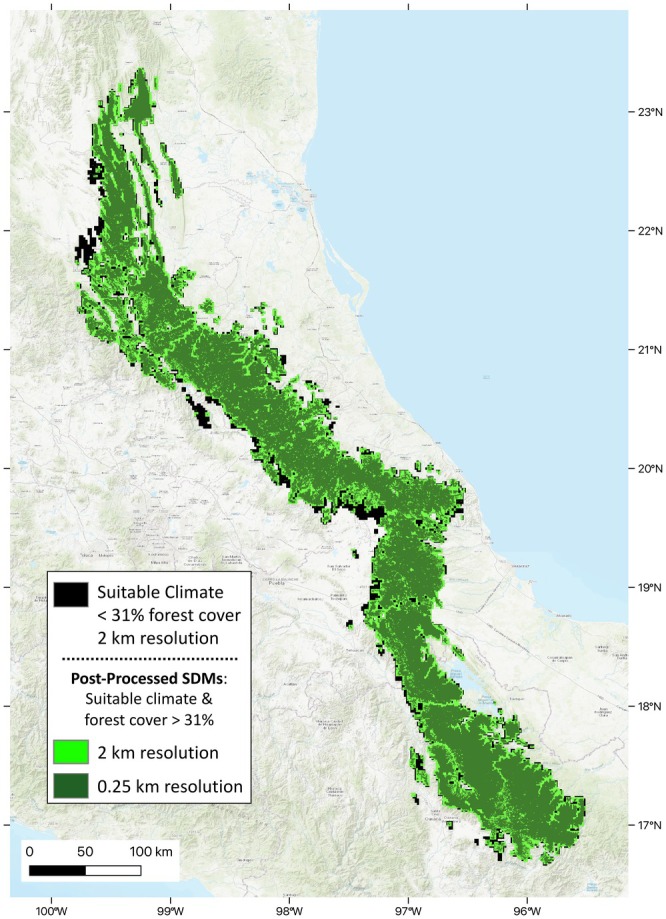 Figure 6
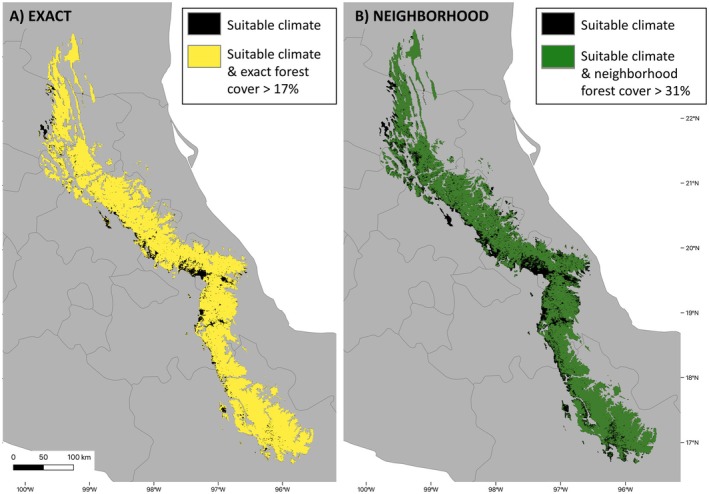 Figure 7
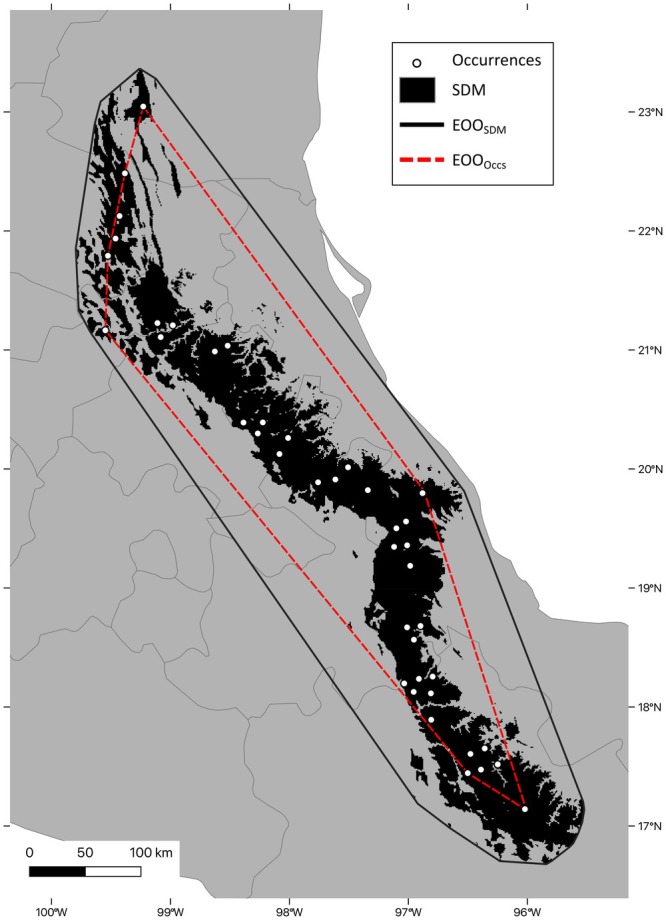 Figure 8
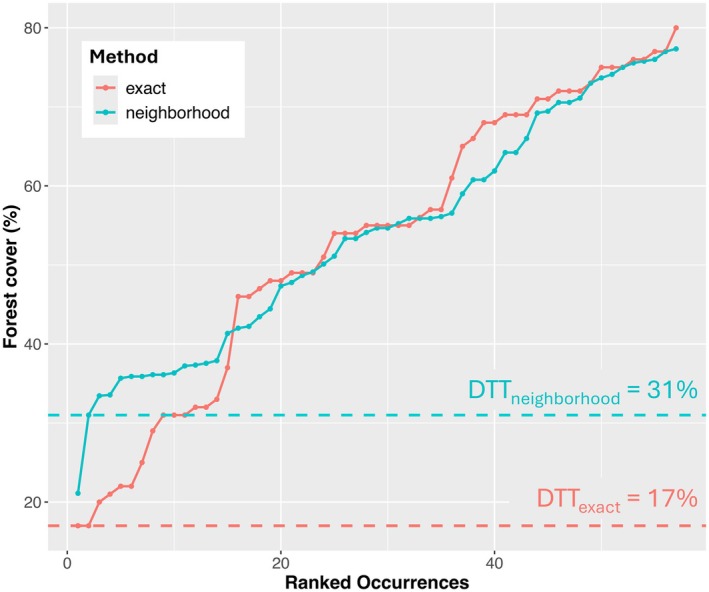 Figure 9
Peer Reviews
No public reviews on file for this paper yet. If you reviewed it on a platform where reviews are public (OpenReview, ICLR, NeurIPS, ICML), you can paste yours below so the community can read it here.
Videos
No videos yet. Explain this paper in a talk, walkthrough, or lecture? Add one.
Taxonomy
TopicsSpecies Distribution and Climate Change · Ecology and Vegetation Dynamics Studies · Wildlife Ecology and Conservation