Role of Metabolic Parameters of 18F-Fluorodeoxyglucose Positron Emission Tomography-Computed Tomography (18F-FDG PET-CT) Imaging in Predicting Progression-Free Survival of Radioiodine-Refractory Differentiated Thyroid Cancer: A Single-Center Study
Alireza Khatami, Duncan Sutherland, Jonathan Romsa

TL;DR
This study shows that PET-CT metabolic parameters can help predict how long patients with a specific type of thyroid cancer will remain free of disease progression.
Contribution
The study identifies TgDT as the strongest predictor of progression-free survival in RR-DTC patients using PET-CT metabolic parameters.
Findings
TgDT ≤ 100 days was the sole predictor of reduced progression-free survival in multivariate analysis.
Higher SUVmax and TLV were associated with worse progression-free survival in patients with metastatic disease.
Kaplan-Meier analysis confirmed that elevated metabolic parameters and Tg levels correlated with worse outcomes.
Abstract
Introduction: Most cases of thyroid cancer are differentiated thyroid cancers, which typically have a high survival rate due to the effectiveness of radioactive iodine (RAI) therapy. However, a subset of these cancers, known as radioactive iodine-refractory differentiated thyroid cancer (RR-DTC), is resistant to RAI and is associated with lower survival rates, necessitating alternative therapeutic approaches. As RR-DTC develops, there is an increase in glucose utilization and metabolic activity of the tumor. The technique of 18F-fluorodeoxyglucose positron emission tomography-computed tomography (18F-FDG PET/CT) is well-known for assessing the metabolic activity of tumors, and in this case, the RR-DTC. This study explores the relationship between 18F-FDG PET/CT imaging and associated metabolic parameters of RR-DTC to progression-free survival (PFS). Methods: A retrospective analysis…
Genes, proteins, chemicals, diseases, species, mutations and cell lines named across the full text — each resolved to its canonical identifier and authoritative record.
Click any figure to enlarge with its caption.
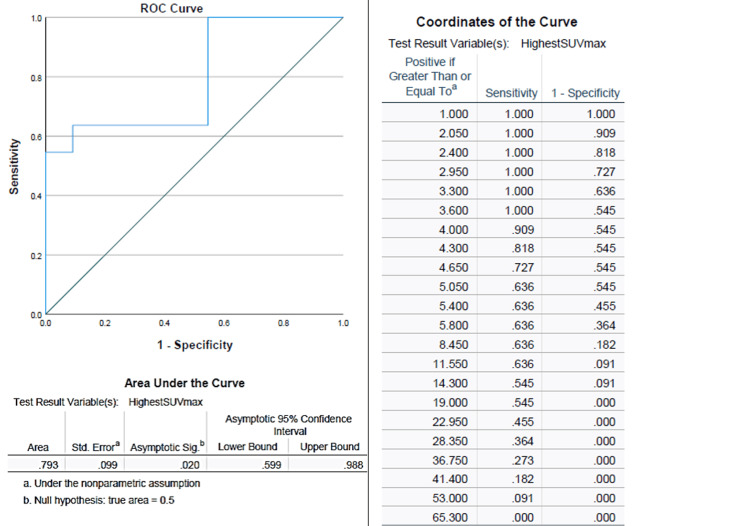 Figure 1
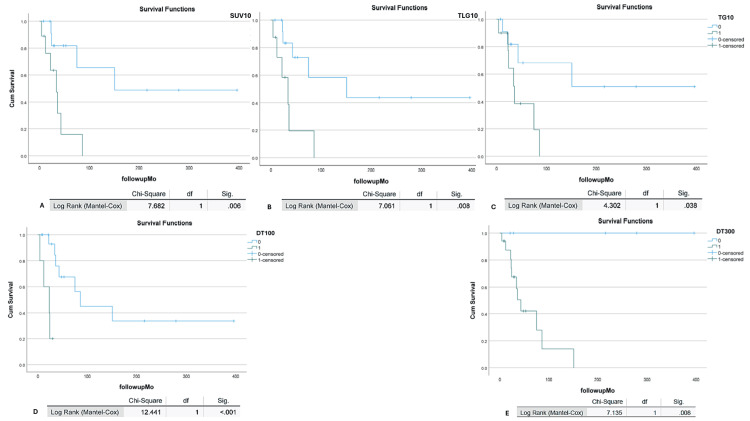 Figure 2
Peer Reviews
No public reviews on file for this paper yet. If you reviewed it on a platform where reviews are public (OpenReview, ICLR, NeurIPS, ICML), you can paste yours below so the community can read it here.
Videos
No videos yet. Explain this paper in a talk, walkthrough, or lecture? Add one.
Taxonomy
TopicsThyroid Cancer Diagnosis and Treatment · Radiomics and Machine Learning in Medical Imaging · Medical Imaging Techniques and Applications